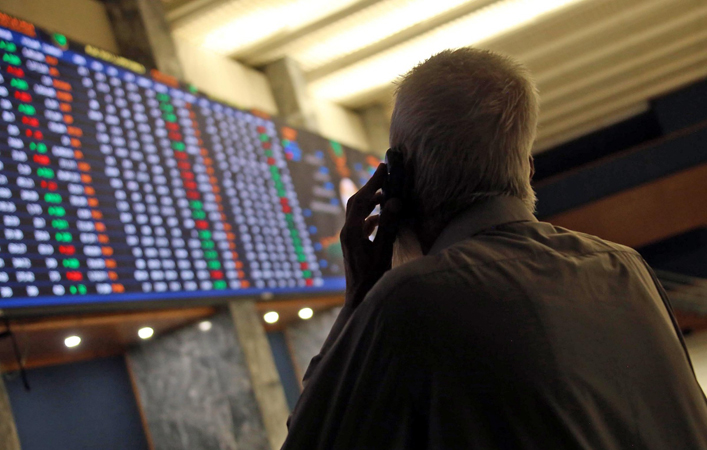
The Pakistan Stock Exchange witnessed a sharp decline on Monday as its benchmark KSE-100 Index plunged by more than 3,000 points during intraday trading, reflecting heightened investor concerns over regional uncertainty.
Read More: PSX gains over 4,000 points on hopes of improved ME situation
By 1:39pm, the KSE-100 index had fallen by 3,145.02 points, or 1.81%, to 170,793.99, down from the previous close of 173,939.01. The sudden drop erased part of the gains made last week, when the market had staged a notable recovery.
Market analysts linked the decline to uncertainty surrounding the expected second round of talks between the United States and Iran, which are anticipated to take place in Islamabad. Concerns over geopolitical stability, particularly tensions involving the Strait of Hormuz, have continued to weigh heavily on investor sentiment.
The PSX had recently shown signs of resilience, climbing 4% week-on-week and gaining 6,748 points, supported by easing Middle East tensions and expectations of a softer monetary policy. Lower global oil prices had also contributed to optimism by reducing inflationary pressures in Pakistan’s import-dependent economy.
Despite last week’s recovery, the benchmark index remains significantly below its all-time high of 189,166.83 points recorded earlier this year. The current volatility highlights the market’s sensitivity to external developments, particularly those affecting global energy supply routes and diplomatic negotiations.
Experts note that Pakistan’s stock market is closely tied to international developments, especially given the country’s reliance on imported fuel and exposure to global financial trends. Any disruption or uncertainty in key regions can quickly translate into fluctuations in investor confidence.
Read More: PSX stays bullish, gains over 2,885 points
Investors are now expected to closely monitor upcoming diplomatic developments and global market signals. Analysts suggest that a positive outcome from the ongoing negotiations could help stabilise the market, while prolonged uncertainty may continue to drive volatility in the coming sessions.