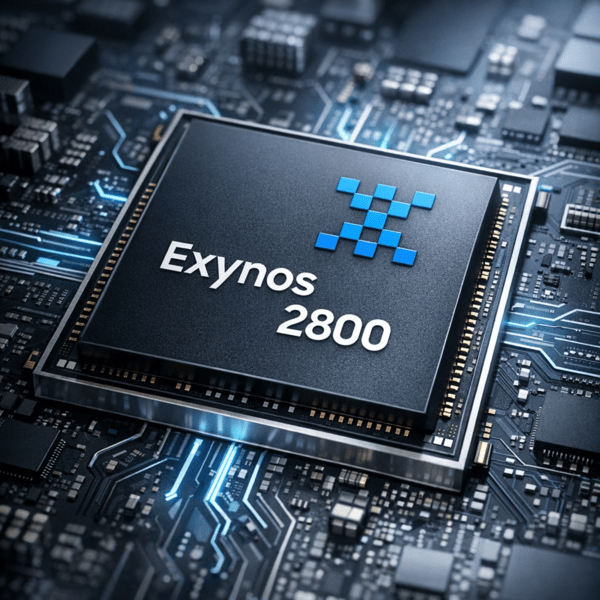
Samsung is taking a new direction with its upcoming Exynos 2800 processor, aiming for stability, efficiency, and long-term reliability rather than pushing aggressive innovation. The Exynos 2800, expected to power the Galaxy S28 series in 2028, follows the trailblazing Exynos 2600, the world’s first 2nm smartphone chip.
Read More: Samsung is expected to keep the starting price of the Galaxy S26
According to ZDNet Korea, Samsung has abandoned plans for a 1.4nm manufacturing node, opting instead for an upgraded 2nm SF2P+ process. This move is designed to improve production yields, enhance power efficiency, and boost overall reliability, reflecting Samsung’s focus on practical performance over headline-grabbing specifications.
The Exynos 2800 may also mark a broader shift in Samsung’s chip-making strategy. Reports suggest the company is working on a fully in-house GPU architecture and could revisit custom CPU cores. Samsung previously relied on AMD RDNA-based GPUs and ARM cores after discontinuing its Mongoose cores, which underperformed in earlier chips. A return to custom designs could improve optimization and reduce production costs.
This strategic pivot addresses long-standing criticisms of Exynos chips, which have struggled with performance, power efficiency, and thermal management compared to Snapdragon-based Galaxy devices in the U.S. and China. If successful, the combination of a refined 2nm process and an enhanced in-house ecosystem could position Samsung more competitively against Qualcomm and Apple.
However, the approach carries risks. Samsung’s last custom-core processor, the Exynos 990, which powered the Galaxy S20 and Note 20 in Europe, faced performance and efficiency challenges. Any repeat of past issues could hinder the Exynos 2800’s success.
Read More: Galaxy S26 ultra set to outshine iPhone 17 pro max
Overall, Samsung’s strategy signals a shift from purely innovation-driven design to a more balanced approach that prioritizes stability, efficiency, and long-term reliability, potentially setting a new standard for the company’s flagship chip offerings.