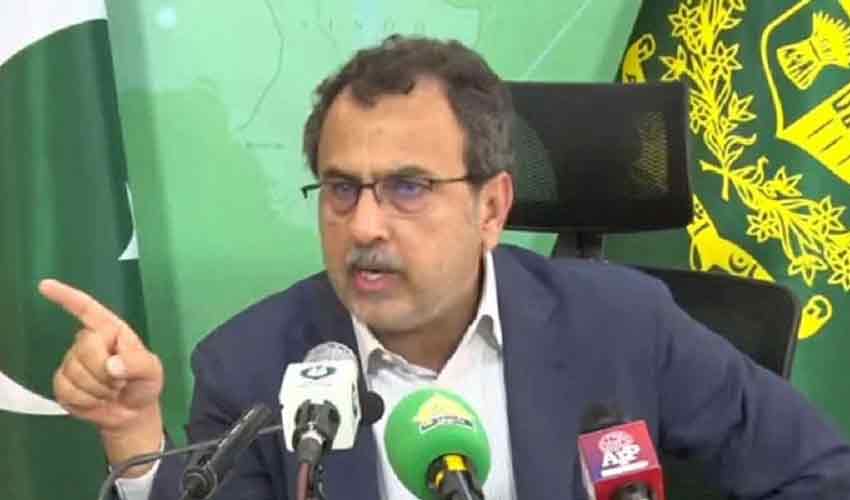
Islamabad: Federal Minister for Power Division Awais Ahmad Khan Leghari has reaffirmed the government support for solar energy while emphasizing the need for a fair approach that does not burden non-solar consumers.
Read More: Pakistan rapidly advancing towards clean energy: minister
In a statement on Saturday, the minister dismissed claims that the government opposes solar power as “false and misleading,” stressing that solarization must be implemented in a way that ensures grid stability and reliable power supply. He noted that solar generation is limited to daylight hours and that stable, dispatchable sources—such as gas and coal plants—remain essential, particularly during nighttime and peak demand periods.
Federal Minister for Energy (Power Division) Awais Leghari has defended the government’s energy policy and rejected claims that his team is discouraging solar adoption.
Read More: https://t.co/Gl5ahtU1nd pic.twitter.com/8IJbhX59yG— ProPakistani (@ProPakistaniPK) March 22, 2026
Leghari highlighted that unmanaged rooftop solar proliferation can create steep evening ramp requirements, increasing reliance on flexible gas-based generation. He added that recent disruptions in LNG supplies, following a force majeure by QatarEnergy amid the US–Israel–Iran conflict, make demand management unavoidable. Any curtailments, he said, will be targeted and temporary, with critical sectors such as fertilizer carefully managed due to food security concerns.
The minister also addressed concerns over industrial electricity pricing, stating that the surplus power package has retained industrial demand on the national grid, with significant savings of around Rs12 billion recorded in the first two months of 2026. January saw a record 12.1 percent year-on-year increase in electricity demand, while February showed an 11 percent rise.
Read More: No change in govt’s solar energy policy, says PM Shehbaz
Leghari further emphasized ongoing reforms, including privatization of state-owned enterprises and third-party access under a liberalized electricity market. He reiterated that a balanced dispatch strategy—coal for base load and gas for flexibility—remains critical for reliable operations.
“Consumers are encouraged to adopt solar and clean energy solutions in a balanced manner,” he said, adding that the government continues to prioritize energy security, grid stability, and economic continuity amid global energy uncertainties.