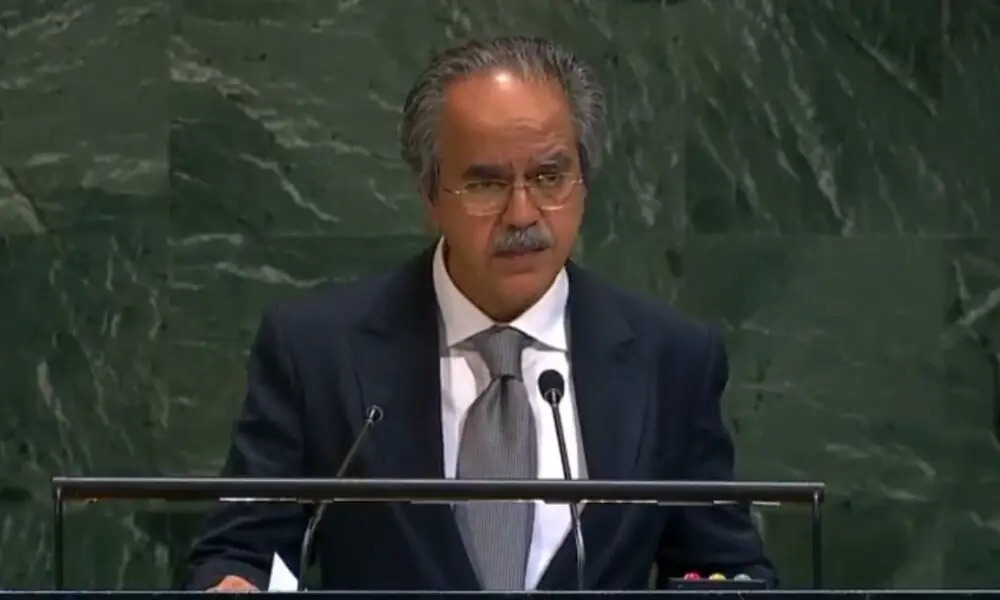
Pakistan has reaffirmed its commitment to responsible development of energy and mineral resources at the United Nations. The statement highlighted efforts to expand exploration while ensuring sustainability and transparency. Officials say the strategy aims to boost industrial growth and long-term economic stability.
Speaking at the UN Security Council briefing in New York City, Pakistan’s envoy Asim Iftikhar Ahmad outlined the country’s policy priorities. He said Pakistan stands ready to cooperate with UN members to ensure critical minerals support global development. The discussion focused on energy security and mineral supply chains.
Read more: Pakistan calls for stronger protection of UN peacekeepers
The ambassador said Pakistan has launched targeted initiatives to accelerate exploration and development of critical minerals. Authorities are modernising geological mapping and improving transparency in licensing systems. The government is also strengthening regulatory frameworks to encourage responsible mining.
The concentration of critical minerals supply chains, price volatility, export restrictions and geopolitical competition are creating new vulnerabilities in global energy and economic security framework. Efforts to secure supply must not devolve into bloc-politics, economic…
— Asim Iftikhar Ahmad, PR of Pakistan to the UN (@PakistanPR_UN) March 6, 2026
He added that the objective is to convert resource potential into industrial growth and social progress. Pakistan aims to move beyond exporting raw materials toward processing and refining minerals domestically. Such steps could help developing countries capture greater economic value.
Read more: Pakistan accuses India of ‘water terrorism’ at UN Security Council
The envoy also warned that supply chain concentration and price volatility threaten global energy security. He cautioned that geopolitical competition and export restrictions could create new vulnerabilities. According to him, fragmented global markets may undermine energy transition goals and collective security.