Securities and Exchange Commission of Pakistan (SECP) has rejected reports suggesting a large-scale foreign business exit. It clarifies that only 19 foreign companies ceased operations between 2022 and 2025, while 79 new foreign companies were registered in the same period. Widely quoted 125 companies exiting Pakistan reflects cumulative cessations since 1977, not the last three years.
Foreign investment was recorded in 82 local companies in the past month, coming from a broad set of economies (including China, the US, UK, Germany, Australia, Turkey, South Korea, Spain, and others). As of February 2026, 1157 foreign companies remain registered with SECP, pointing to continued international presence in Pakistan’s corporate landscape.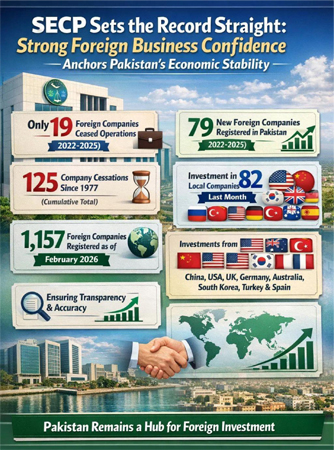
Contrary to the narrative of capital flight, Pakistan has attracted a substantial Rs40.7 billion in foreign investment over the last three years. This capital injection is spread across a diverse array of sectors, including energy, logistics, information technology, and agriculture. The entry of 79 new foreign firms since 2022 underscores a resilient interest in Pakistan’s market potential. These entities are entering through various channels, including greenfield investments, joint ventures, and the strategic acquisition of local firms. The year-on-year data reveals a steady growth trajectory. In 2023, 31 new companies entered against 6 exits. In 2024, the market saw 21 entries and 9 exits, while 2025 recorded 27 new registrations against only 4 closures. This data suggests that for every company leaving the market, more than four new international players are taking their place.
The corporate landscape is currently defined by significant restructuring and consolidation. A primary driver of exits has not been a withdrawal from the economy, but rather a transfer of ownership to more specialized or regional players.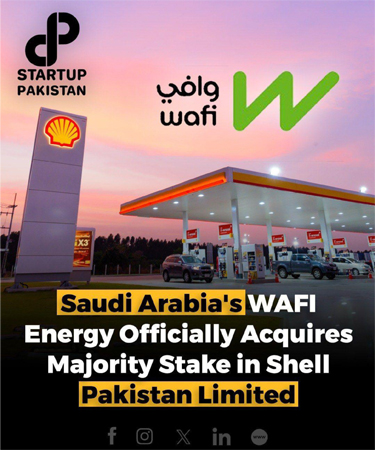
In the energy sector, Saudi Arabia’s Wafi Energy acquired Shell Pakistan’s operations, and Saudi Aramco secured a 40% equity stake in Gas & Oil Pakistan Limited (GO).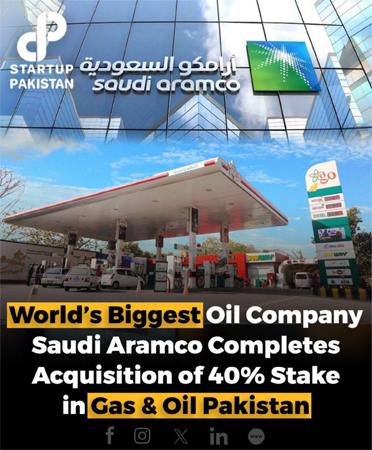
Similarly, the logistics sector saw a milestone partnership between UAE’s DP World and the National Logistics Corporation (NLC).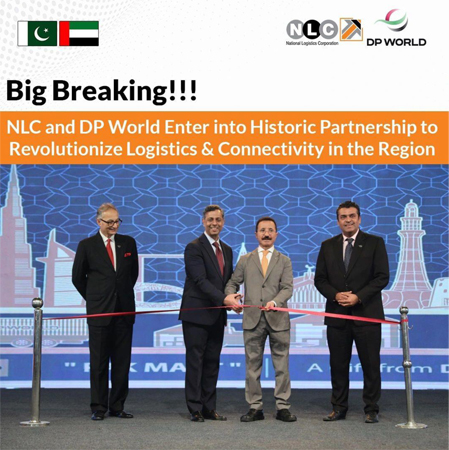
While traditional sectors remain strong, new industries are gaining traction. The electric vehicle (EV) industry has seen a surge with global giants like BYD, Chery Automobile, and NWTN Motors establishing a presence.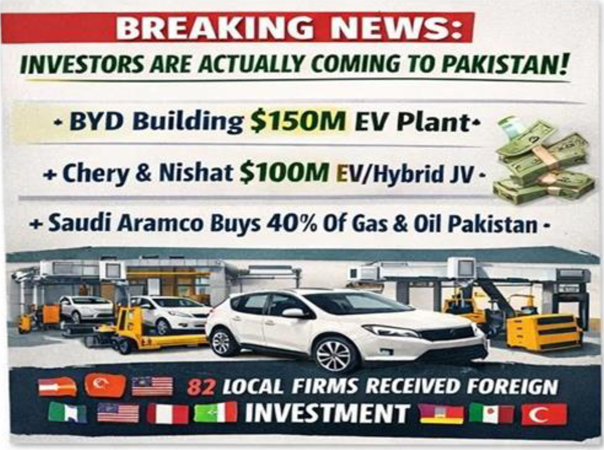
In the technology and infrastructure sectors, companies such as Google, Samsung, and Portugal’s Mota-Engil Group have expanded their footprints.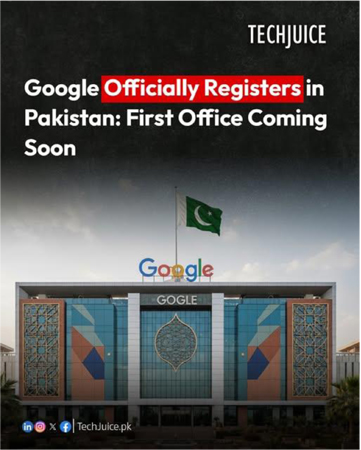

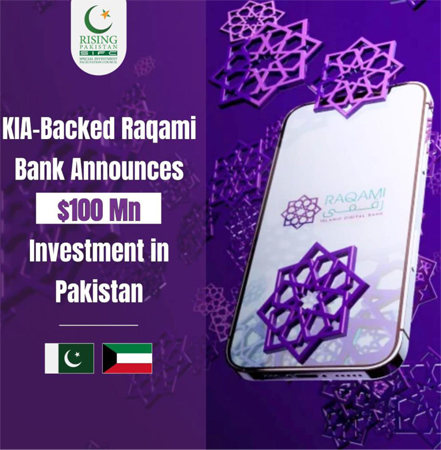
Furthermore, existing investors are deepening their roots. Mashreq Bank has launched Pakistan’s first digital bank, and Kuwait-backed Raqami Digital Bank has committed $100 million.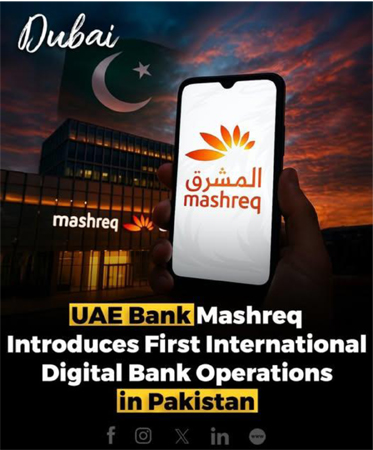
Nestlé has announced an additional $60 million investment, while the Engro-Jazz consortium is directing over $550 million toward digital infrastructure.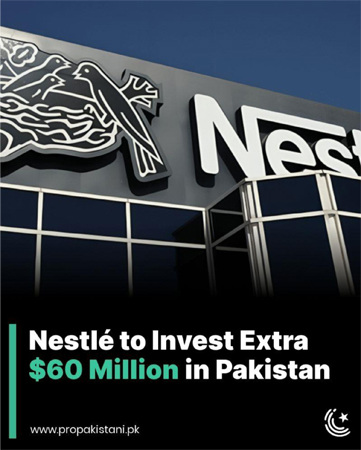

The China-Pakistan Economic Corridor (CPEC) Phase II remains a cornerstone of industrial growth.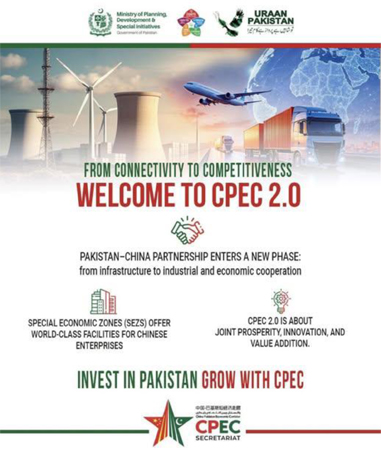
Over the recent period, 24 business-to-business (B2B) agreements worth $1.5 billion and memoranda of understanding (MoUs) exceeding $7 billion have been signed.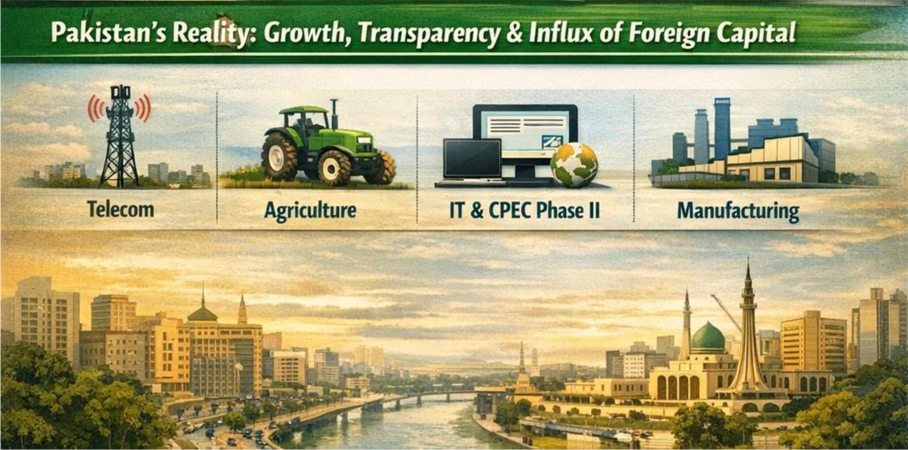
These agreements span agriculture, renewable energy, and mineral relocation, promising a sustained pipeline of foreign capital.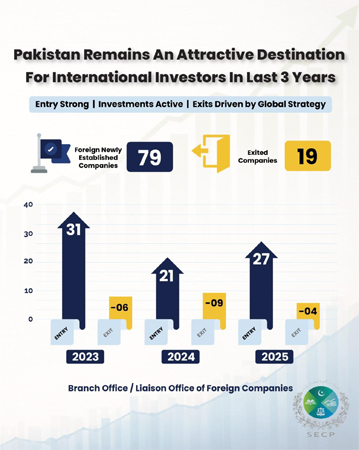
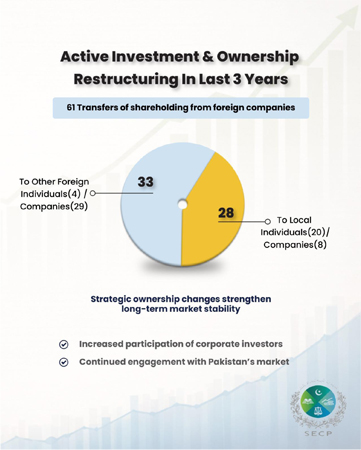
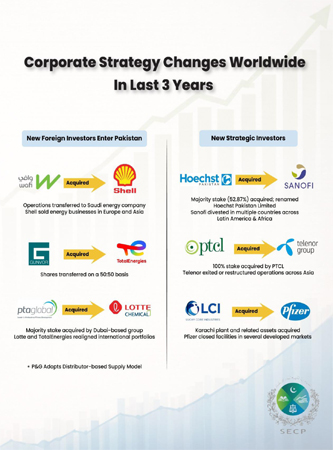
The SECP data provides a corrective to the mass exit narrative. The Pakistani corporate sector is undergoing a transition where multinational portfolios are being reorganized, often replaced by Gulf-based or regional conglomerates with a higher risk appetite and long-term strategic interests in South Asia. With over 1150 foreign firms operational and billions in new commitments from the UAE, Saudi Arabia, and China, the evidence suggests a maturing market characterized by strategic reinvestment rather than decline.