European leaders are openly reassessing their long-standing reliance on the United States after growing concerns about Washington’s commitment to protect the continent through NATO. The shift gained momentum after Donald Trump renewed controversial foreign policy positions, including remarks about Greenland, which deepened doubts across Europe.
At the Munich Security Conference, European Commission President Ursula von der Leyen said that political boundaries had been crossed and could not be reversed. Meanwhile, transatlantic relations have remained tense since Trump returned to the White House, prompting European leaders to prepare for a future where US support may not be guaranteed.
Read more : Five European countries say Russia ‘poisoned’ Putin critic Navalny
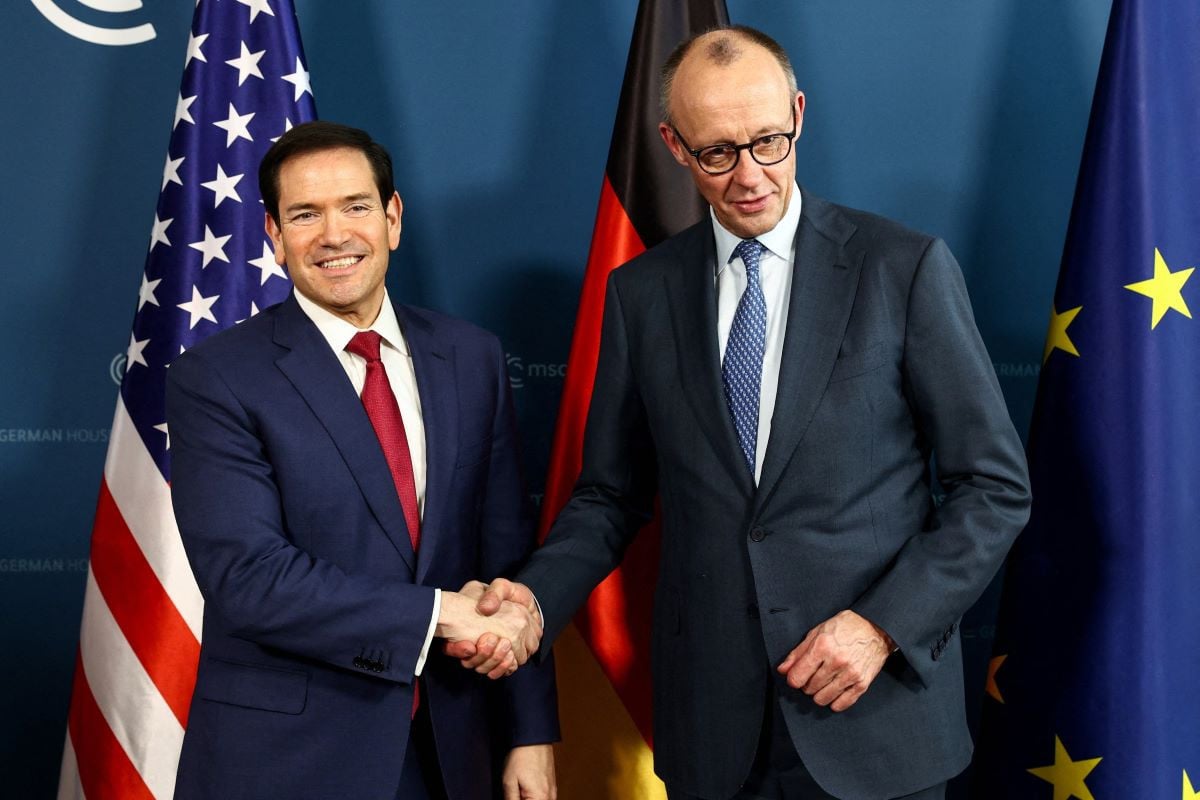
Although US Secretary of State Marco Rubio attempted to reassure allies, his speech avoided direct commitments to NATO and the war in Ukraine. As a result, European officials felt the gap between Washington and its partners growing wider, especially regarding Russia and long-term security responsibilities.
Consequently, key European figures such as Friedrich Merz, Emmanuel Macron and Keir Starmer pledged to strengthen a “European pillar” within NATO. They argued that Europe must become capable of defending itself, regardless of future US political changes.
Read more : Europe to launch Ariane 64, its most powerful rocket yet –
In practice, defence spending across Europe has already increased sharply, with NATO members agreeing to raise military budgets to 3.5 percent of GDP, plus additional security investments. European defence spending has risen nearly 80 percent since the start of the Ukraine war, showing a clear shift from words to action.
However, major defence projects still face internal disputes, as countries disagree over leadership, funding, and whether weapons should be produced only within the European Union. Meanwhile, Volodymyr Zelenskyy warned that modern warfare evolves faster than political decisions, urging Europe to act quickly before security risks grow even more severe.