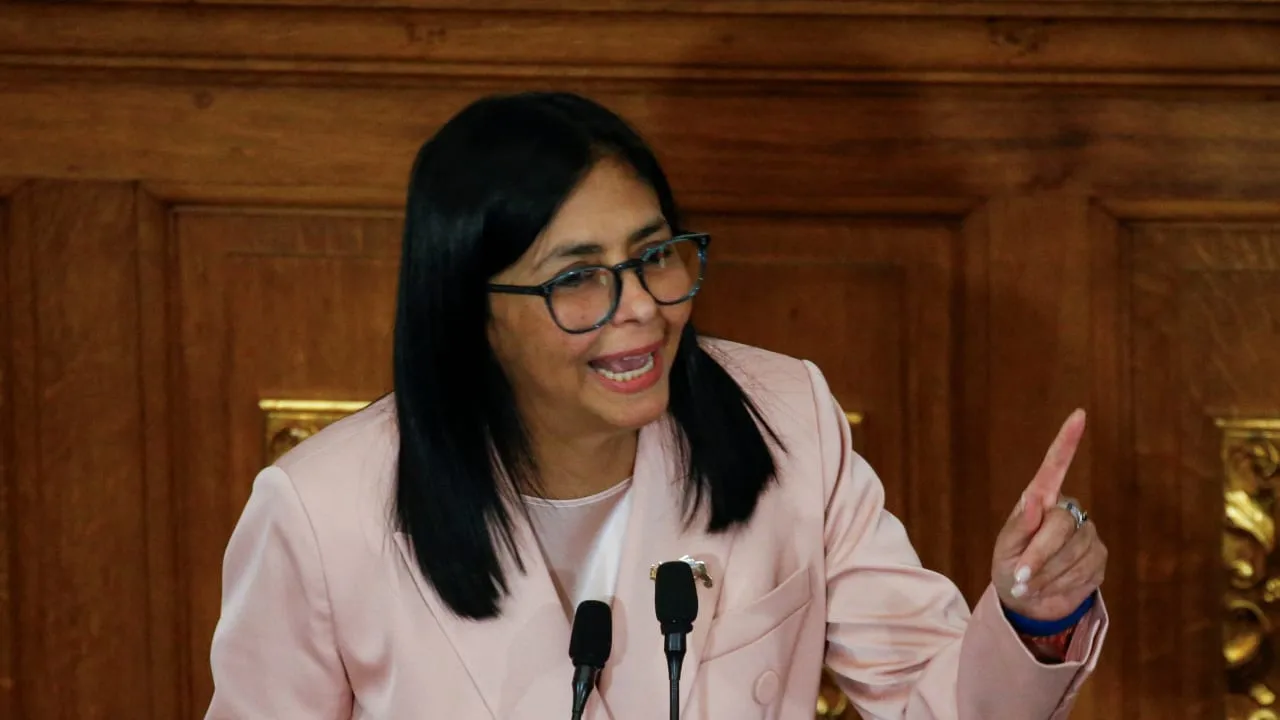
Venezuela’s Supreme Court ordered Vice President Delcy Rodríguez to assume interim leadership, aiming to ensure state continuity after President Nicolás Maduro was detained during a sudden United States operation. The court stressed that the move was necessary to protect governance, national defense, and sovereignty during what it described as the president’s forced absence from office.
According to officials, Maduro was transferred to the United States under heavy security and is expected to face multiple criminal charges, including allegations linked to drug trafficking. His arrival near New York marked a dramatic escalation in years of hostility between Caracas and Washington, while legal proceedings are expected to begin within days.
Read more : Moscow calls US attack on Venezuela “armed aggression”
Earlier, U.S. President Donald Trump announced that Washington would temporarily oversee Venezuela, arguing that the intervention was required to prevent chaos and ensure a controlled political transition. He said American officials would manage oversight until stability returned, though he provided few operational details and left many questions unanswered.
Inside Venezuela, the situation remained tense but largely calm, with security forces patrolling key areas and limited demonstrations reported. Rodríguez denounced Maduro’s detention as an illegal kidnapping, reaffirming her loyalty to him even as she accepted the court-mandated interim role to manage government affairs during the crisis.
Read more : Khamenei warns US: Iran won’t back down
Globally, reactions were sharply divided as some governments welcomed Maduro’s removal, while others condemned the U.S. action as a violation of international law. Major world powers warned that the move could destabilize Latin America, revive painful memories of past interventions, and deepen geopolitical rivalries.
As uncertainty grows, analysts warn that Venezuela now faces serious political and economic risks, including the possibility of a power vacuum. With leadership contested, institutions under strain, and foreign pressure mounting, the country enters a volatile phase that could reshape its future and regional balance.