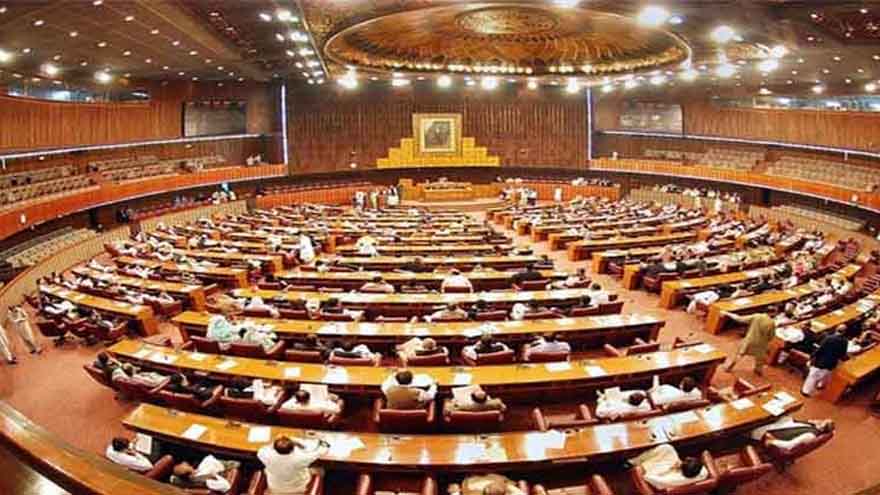
ISLAMABAD: The performance report of Pakistan’s National Assembly for 2025 has revealed significant gaps in legislative activity and parliamentary oversight. According to the report, the government maintained a clear edge in pushing legislation, while the opposition struggled to make substantial contributions.
Read More: Assembly clears every government bill
During the year, a total of 42 government bills and 49 private members’ bills were presented in the National Assembly, but only 31 laws were passed. Eleven adjournment motions were submitted, all of which were rejected. The report also highlighted that out of 6,694 starred questions submitted by lawmakers, answers were provided to only 1,442, indicating limited accountability.
Public attention and calling attention notices faced similar challenges. A total of 336 public attention notices were submitted, but most could not be discussed, while only 53 calling attention notices were debated. Assembly sessions were frequently adjourned, reflecting procedural inefficiencies. Privilege motions also remained largely unresolved, with six referred to committees, nine rejected, and 16 still pending.
The report underlined numerical imbalances in the House, with the government largely able to dictate legislative priorities. Only 55 out of 295 motions under Rule 259 were included in the agenda, limiting parliamentary scrutiny. The opposition, meanwhile, was observed to rely heavily on slogans, protests, and speeches rather than tangible legislative action.
Read More: NA panel calls for smartphone tax review
Experts analyzing the report noted that while the government demonstrated efficiency in advancing bills, the overall functioning of the National Assembly reflected shortcomings in question responses, debate facilitation, and minority participation. The report calls attention to the need for stronger parliamentary oversight mechanisms to ensure a more balanced and accountable legislative process in Pakistan.