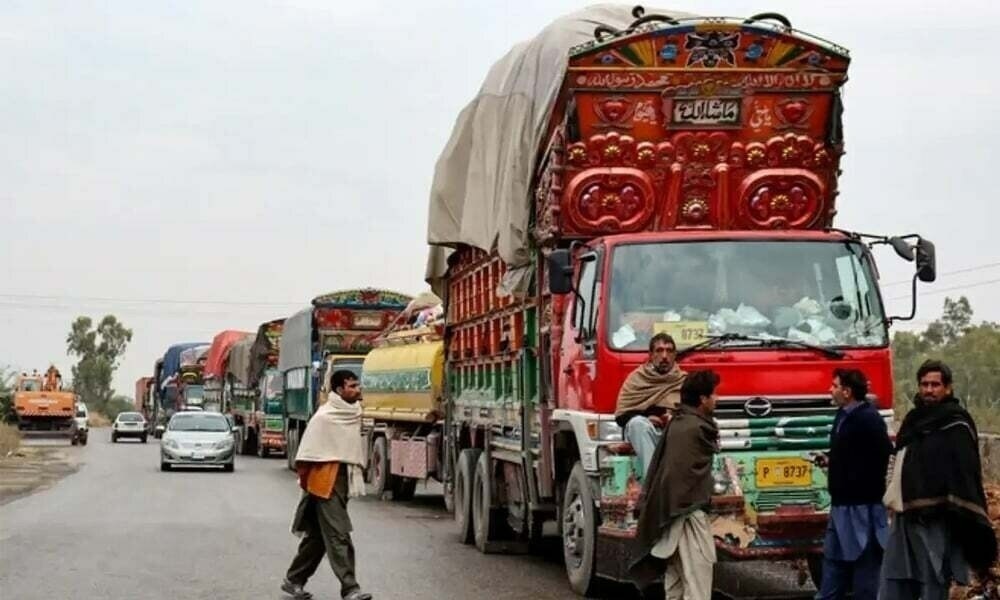
The wheel-jam strike by goods transporters in Punjab has entered its ninth day, severely disrupting freight movement and commercial activity across key districts, including Multan.
As a result, truck terminals and Mazda addas remain largely deserted, creating delays in supply chains and growing concern among traders and businesses. Meanwhile, transporters insist the strike will continue until the disputed vehicle ordinance is withdrawn.
Protesting transporters argue that the ordinance places unfair restrictions and penalties on goods vehicles, making daily operations financially unsustainable. Therefore, they have halted transport services completely, using the wheel-jam as pressure to force policy reversal by the authorities. Consequently, essential goods movement has slowed, affecting markets and intercity trade.
Read more : Punjab announces winter holidays for all schools 2025
At the same time, the Punjab Transport Authority has moved forward with stricter enforcement by introducing real-time monitoring of transport vehicles. For this purpose, the authority signed an agreement with the Safe Cities Authority to monitor route permits, fitness certificates, and overloading violations. Thus, officials aim to improve road safety and regulatory compliance through technology-based oversight.
Under the new plan, barricades will be set up near Safe Cities Authority points to inspect vehicles violating traffic laws. Records of public and goods transporters will be checked using surveillance cameras, ensuring transparent and centralized monitoring. However, RTA staff will not be allowed to stop or inspect vehicles independently through Safe City camera systems.
Read more : Punjab schools to close for winter break from Dec 22 –
In the first phase, only public and goods transport vehicles will fall under camera-based monitoring and documentation checks. Authorities have also warned that strict action will be taken against any officials found violating the new monitoring policy. Ultimately, the situation highlights rising tension between transporters and regulators as enforcement tightens during the ongoing strike.