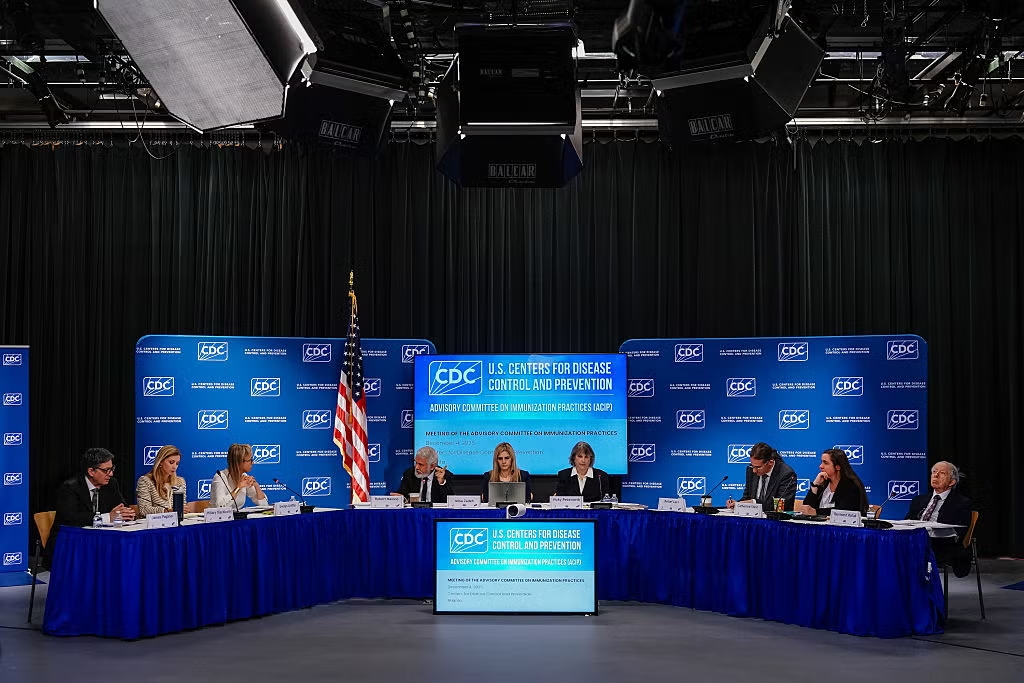
The Advisory Committee on Immunization Practices (ACIP) voted on December 5, 2025, to stop recommending universal hepatitis B vaccination for newborns. The decision marks a significant shift in U.S. vaccine policy, following changes made by Health Secretary Robert F. Kennedy Jr. Critics warn this could lead to more hepatitis B infections in children.
Under the new guidance, vaccination decisions will be made on an individual basis, particularly for babies born to hepatitis B-negative mothers. Previously, all newborns received the vaccine at birth to prevent potential transmission. The change now requires parents and healthcare providers to weigh vaccine risks and benefits.
Read more: HPV vaccine added to Punjab’s immunisation schedule
The vote, passed 8-3, was praised by President Trump but condemned by medical groups like the American Academy of Pediatrics. Experts fear this shift could reverse progress in controlling hepatitis B among U.S. children. The CDC is expected to formally adopt the new guidelines soon.
This decision is part of a broader review of U.S. childhood vaccines under Kennedy’s leadership. Some Republican lawmakers, including Senator Bill Cassidy, have expressed concern, urging the CDC to maintain the current guidelines. The move could impact vaccination rates and insurance coverage in the U.S.
Read more: Pakistan Rolls Out HPV Vaccine Amid Myths and Misconceptions
The shift in policy has sparked a divide within the Republican Party and raised concerns about public health risks, with experts urging caution before making such significant changes.