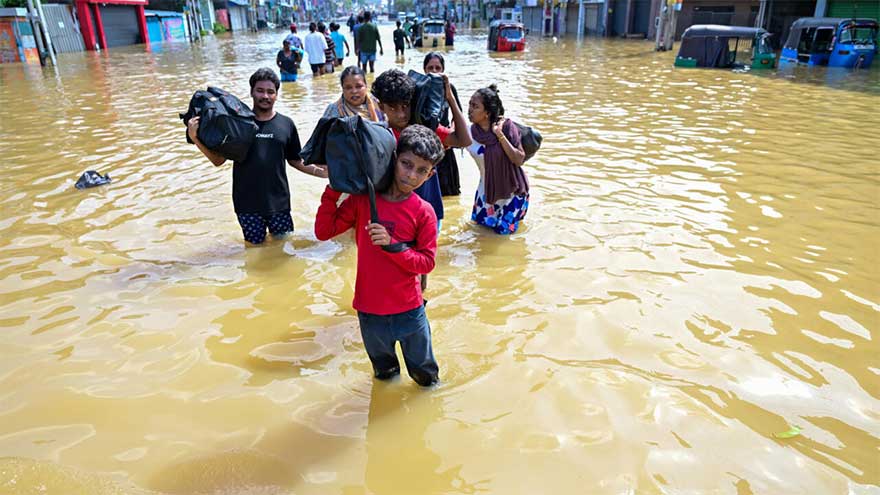
KOLONNAWA, Sri Lanka – Heavy rains and surging waters from the Kelani River have left residents of Sri Lanka’s northern capital stunned, as rapid floods inundated homes and disrupted lives. The floods followed Cyclone Ditwah, which had already moved on, catching many off guard despite repeated warnings from authorities.
Read More: Pakistan navy sends lifesaving aid to cyclone-hit Sri Lanka
Delivery driver Dinusha Sanjaya, 37, described watching his two-storey house disappear under water within an hour. “Every year we experience minor floods, but this is something else. It is not just the amount of water, but how quickly everything went under,” he said from a makeshift camp at Vidyawardana school.
Entire areas of Sri Lanka’s capital flooded after powerful cyclone triggered heavy rains and mudslides across island, with authorities reporting nearly 200 dead and dozens more missing pic.twitter.com/ZRIzfs9gZ2
— TRT World Now (@TRTWorldNow) November 30, 2025
Many residents lost all their belongings, including valuables and livelihoods. Seamstress Nirushika, 44, said both her sewing machines were destroyed, leaving her without an income. Elderly evacuees, like C.V. Ariyaratne and his wife Emalin, struggled to flee due to health challenges, highlighting the vulnerability of older residents in disasters.
#WATCH | A massive humanitarian crisis is unfolding in Sri Lanka as Cyclone Ditwah forces over 100,000 Colombo residents to flee their homes. Vast neighbourhoods remain underwater, with families wading through flooded streets or waiting on rooftops as rescue teams struggle to… pic.twitter.com/0hixPTrQLW
— Hindustan Times (@htTweets) November 30, 2025
The mountainous central region suffered the worst, with mudslides burying scores of people under record rainfall exceeding 500 millimetres in some areas. Official figures show 250 of the 340 deaths so far occurred in the tea-growing hills, with nearly 200,000 people housed in emergency camps and another 1.12 million requiring government aid.
President Anura Kumara Dissanayake declared a state of emergency and promised to “build back better” with international assistance. Government and volunteer efforts have provided food and shelter for evacuees, with classrooms in schools repurposed to accommodate hundreds, including children.
Read More: Lahore declared ‘safe’ amid raging floods
As floodwaters in Colombo peak, authorities expect levels to recede soon. Survivors like G. Patrick, 70, fear the long road ahead. “For me, the biggest problem is getting help for the clean-up,” he said, reflecting the challenges of recovery in the wake of one of the city’s most rapid and destructive floods.