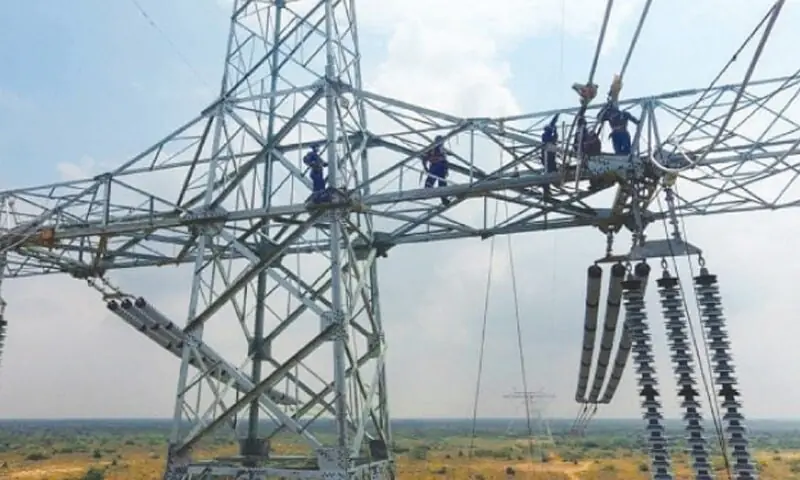
ISLAMABAD: The National Electric Power Regulatory Authority (Nepra) has imposed a Rs10 million fine on the National Grid Company (NGC) after concluding that the company failed to upgrade and properly maintain its transmission network in Sindh’s Jhimpir region, despite being allowed sufficient investment under health, safety and environment (HSE) requirements.
Read More: NEPRA fines power companies Rs57.5m over electrocution deaths
The decision was reached with a three-one majority after more than three years of legal proceedings, including investigations, show-cause notices and hearings.
According to Nepra’s order, the authority’s inspection team visited Hyderabad’s Jhimpir area in May 2022 to assess the progress of improvement works. The team found that the 220/132kV grid stations were energised even though construction had not been formally completed, and no official handover or takeover procedure had taken place by the project director. This lack of formal process exposed significant procedural lapses within NGC’s operational framework.
The inquiry further revealed that NGC did not have approved standard operating procedures (SOPs) for the handover and takeover of newly built transmission lines, grid stations or other related infrastructure. Officials also discovered that only two shift engineers were managing the 220/132kV grid station continuously for two days without adequate rest or supporting staff — a clear violation of operational and safety guidelines. This shortage of personnel was found across the entire South region of NGC.
Nepra highlighted that NGC had failed to fill the sanctioned staff positions required to operate and maintain the expanding grid network in southern Pakistan, even after nearly three years. As a result, newly constructed transmission assets were left vulnerable due to a lack of manpower, vehicles and essential safety equipment.
Read More: Nepra plans major cut in solar net metering rates
Additionally, the regulatory authority noted that officers posted at the remote Jhimpir grid station were deprived of basic amenities, including water, gas and electricity, while the area itself lacked proper road access. These conditions further underscored NGC’s failure to meet safety and operational standards mandated under national regulations.