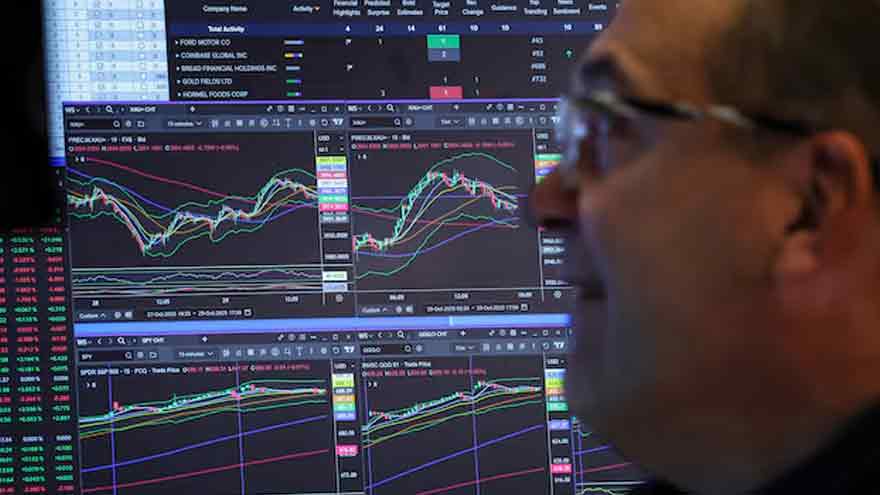
NEW YORK — U.S. stocks ended mixed on Friday, with the Nasdaq closing lower while the S&P 500 and Dow eked out modest gains, as investors digested a week marked by the longest federal government shutdown in history and concerns over stretched tech stock valuations. The Dow rose 74.80 points, or 0.16%, to 46,987.10, while the S&P 500 gained 8.48 points, or 0.13%, to 6,728.80. The Nasdaq Composite fell 49.45 points, or 0.21%, to 23,004.54.
Early losses were trimmed after reports of progress on the congressional impasse. Analysts said a resolution to the shutdown could boost sentiment, particularly amid high stock valuations. However, the shutdown has caused a blackout of official economic indicators, compounding investor uncertainty and affecting confidence, with the University of Michigan’s preliminary November Consumer Sentiment survey plunging to its lowest level in over three years.
Read More: Asian Markets Wobble as Wall Street Slips and Commodities Pause
Tech stocks weighed heavily on the Nasdaq. Microchip Technology shares dropped 5.2% after forecasting quarterly net sales below estimates, while Tesla fell 3.7% despite approving a historic CEO pay package. Conversely, Expedia surged 17.6% following strong bookings from its business-to-business segment, while Block and Take-Two Interactive saw declines due to earnings misses and product delays.
Third-quarter earnings reporting is nearing completion, with 446 S&P 500 companies having reported so far. Of these, 83% beat expectations, and analysts forecast 16.8% year-on-year earnings growth for the S&P 500 in Q3, up from 8.0% growth last year. Market breadth was positive on the NYSE, with advancing issues outnumbering decliners by a 1.44-to-1 ratio, while the Nasdaq saw a narrower 1.1-to-1 ratio.
Read More: Asian markets rebound as strong U.S. data boosts investor confidence
Trading volume totaled 20.15 billion shares, slightly below the 20-day average. Investors continue to weigh a mixture of strong corporate earnings, economic uncertainty, and geopolitical developments, including U.S.-China tensions over rare earth exports, which could influence market direction in the near term.