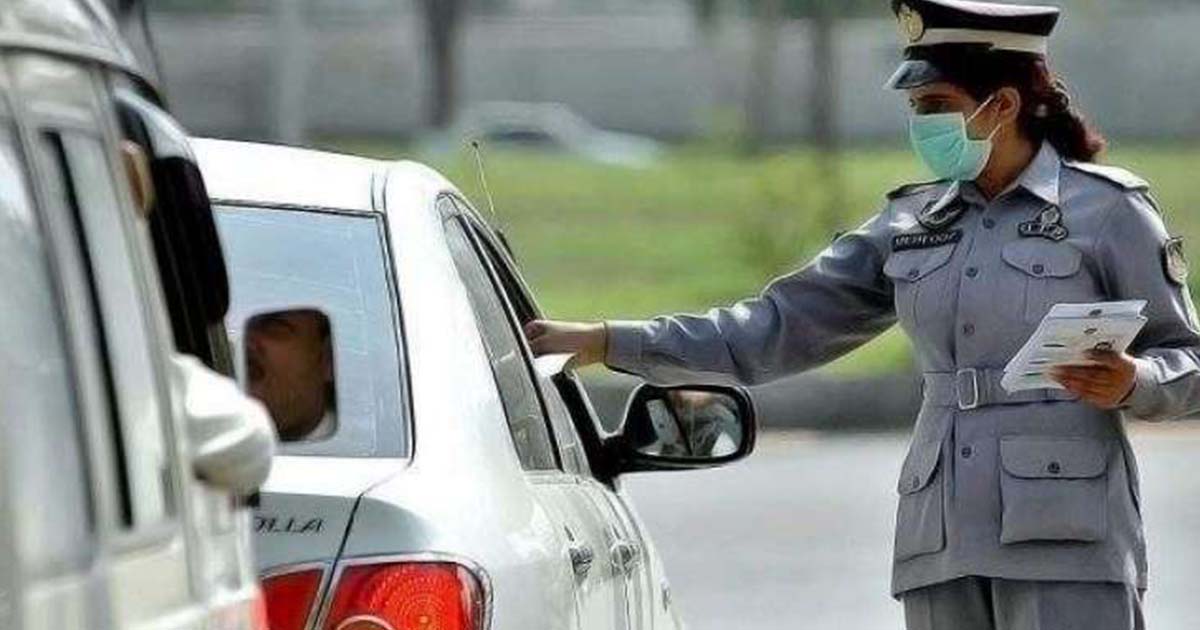
KARACHI: The Karachi Traffic Police have set up 11 facilitation centers across the city to address public complaints and provide assistance regarding the newly launched E-challan system, ARY News reported on Thursday.
According to officials, citizens can visit these centers to lodge complaints, verify challans, or obtain information about the E-ticketing system. The centers are open from Monday to Saturday, 9:00 am to 9:00 pm.
The facilitation centers are located in various districts, including the SP East Traffic Office near Munawar Chowrangi (Gulistan-e-Jauhar), SP West Office on Hub River Road, SP Central Traffic Office near Nazimabad License Branch, and SP Malir Office near Quaidabad Chowk, among others. Additional centers have been established at Korangi Road near McDonald’s, Aiwan-e-Sadar Road, Preedy Police Station, Ferozabad (Nursery), Drig Road, and Brookes Chowrangi (Korangi Industrial Area).
Read More: Karachi’s new e-challan system nets over Rs 12.5 million in six hours
The faceless E-Ticketing System, officially inaugurated earlier this week, marks a significant step toward transparent and automated traffic management in Karachi. Chief Minister Murad Ali Shah stated that the system aims to eliminate human interference and corruption by using advanced cameras to automatically detect traffic violations.
Violations such as signal jumping, speeding, wrong-way driving, helmet and seat belt violations, and tinted windows will be monitored digitally. When detected, a challan containing photo evidence is sent to the vehicle owner’s registered address and mobile number, with a QR code for online verification.
First-time offenders will receive a warning, while repeat offenders face fines that double after 21 days if unpaid. A 50% discount applies for payments made within 14 days. The system also includes a penalty points mechanism, where licenses may be suspended upon reaching 30 points.
Read More: E–challan system officially launched in Punjab!
Officials say the initiative will enhance road safety, reduce corruption, and promote accountability, with traffic officers receiving incentives for legitimate enforcement and penalties for issuing false challans.