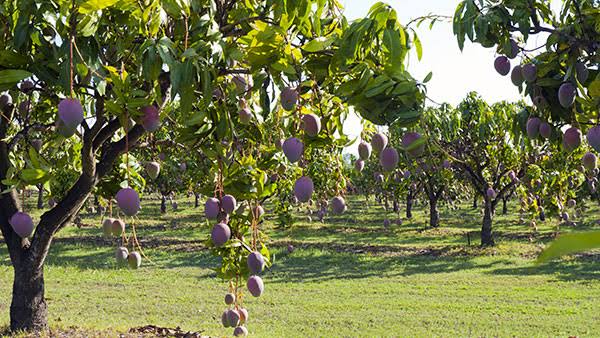
Severe flooding across southern Punjab has devastated mango orchards in Multan, Khanewal, and Muzaffargarh, dealing a major blow to Pakistan’s world-famous mango industry. The floods have not only disrupted agricultural operations but also endangered the long-term sustainability of mango cultivation, a defining symbol of Multan’s cultural and economic identity. Officials have warned that if immediate restoration efforts are not undertaken, the region’s mango output could face a prolonged decline in the coming years.
Read more : /pakistan-launches-first-hyperspectral-satellite-hs-1-into-orbit/
According to data from the Mango Research Institute (MRI) Multan, around 22.7% of orchards across the three districts have been damaged. In Multan alone, 31,505 acres out of 112,475 acres of orchards were severely affected, while Khanewal lost nearly 6,808 acres from a total of 47,473 acres. In Muzaffargarh, 24,600 acres were impacted out of 170,128 acres, reflecting widespread agricultural distress. Experts fear that these losses could translate into substantial economic setbacks for thousands of farmers who rely heavily on mango exports and domestic sales.
Director Mango Research Institute Multan, Dr. Hafiz Asif-ur-Rehman, said the institute is closely monitoring the damage under directives from the Punjab government and the provincial agriculture department. He explained that data collection is in its final stages, and decisions regarding financial compensation and supply of new plants will be made soon. “Affected farmers will be compensated proportionately, and rehabilitation programmes will begin shortly,” he assured, emphasizing that restoring mango production remains a top government priority.
Dr. Asif noted that mango trees, unlike seasonal crops, take between 15 and 20 years to mature fully, making the recovery process particularly challenging. However, he expressed confidence that institutional support and upcoming rehabilitation schemes could help revive the region’s orchards. The MRI, in collaboration with Nawaz Sharif Agricultural University and other agricultural institutions, is working on strategies to rehabilitate damaged orchards and enhance productivity through improved farming techniques and pest control training.
Flood damage was particularly severe in riverine areas, where standing water destroyed root systems and weakened soil fertility, making a production decline inevitable. Dr. Asif said final assessments will determine the scale of intervention required to stabilize mango yields and protect Pakistan’s export commitments. “We are determined to ensure that mango exports and production targets are not compromised,” he added, noting that training programmes and awareness drives for orchard owners will soon be launched.
Once known for its 250,000 acres of mango orchards, Punjab now boasts nearly 350,000 acres thanks to institutional efforts and farmer participation. However, this year’s floods have posed one of the toughest challenges yet to the province’s agricultural resilience. With coordinated government response and farmer cooperation, experts hope the “King of Fruits” will once again flourish in Multan’s fertile plains, preserving the city’s legacy as Pakistan’s mango capital.