Such is the federal government’s sprawl, and its power to establish new governing precedents, mere Washington twitches can jeopardize venerable principles and institutions. This is illustrated by a seemingly small but actually momentous provision of the Republicans’ tax bill – a 1.4 percent excise tax on the endowment earnings of approximately 70 colleges and universities with the largest per-student endowments. To raise less than $3 billion in a decade – less than 0.005 percent of projected federal spending of $53 trillion – Republicans would blur important distinctions and abandon their defining mission.
Private foundations, which are generally run by small coteries, pay a “supervisory tax” on investment income to defray the cost of Internal Revenue Service oversight to guarantee that their resources are used for charitable purposes. In 1984, however, Congress created a new entity, an “operating foundation.” Such organizations – often museums or libraries – are exempt from the tax on investment earnings because they apply their assets directly to their charitable activities rather than making grants to other organizations, as do foundations that therefore must pay the supervisory tax.
Most university endowments are compounds of thousands of individual funds that often are restricted to particular uses, all of which further the institutions’ educational purposes. Hence these endowments are akin to the untaxed “operating foundations.” Yet the Republicans, without public deliberations, and without offering reasons, would arbitrarily make university endowments uniquely subject to a tax not applied to similar entities.
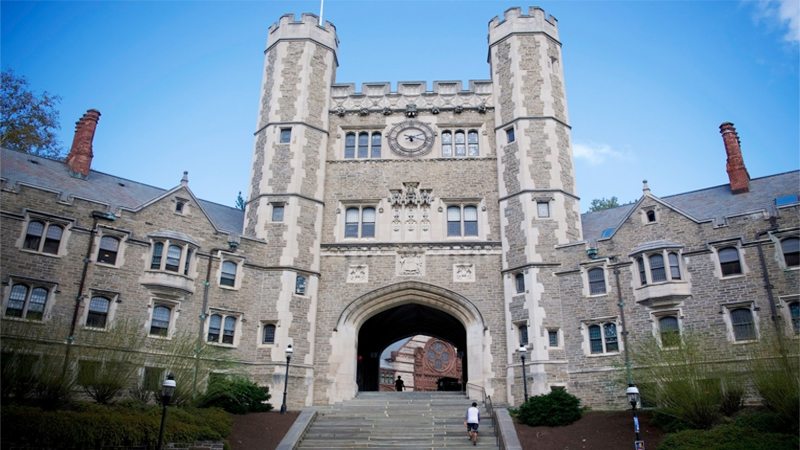
Are Republicans aware, for example, that Princeton University’s endowment earnings fund more than half its annual budget and will support expansion of the student body? They also enable “need-blind” admissions: More than 60 percent of undergraduates receive financial assistance; those from families with incomes below $65,000 pay no tuition, room or board; those from families with incomes below $160,000 pay no tuition. No loans are required. PhD candidates receive tuition and a stipend for living costs. Furthermore, the endowment has funded a significant increase in students from low-income families: Princeton has recently tripled to 22 percent the portion of freshmen from families with the most substantial financial needs. The idea that Princeton is largely populated by children of alumni is a canard slain by this fact: Such “legacies” are only 13 percent of this year’s freshman class.
 For eight centuries, surviving thickets of ecclesiastical and political interferences, the world’s great research universities have enabled the liberal arts to flourish, the sciences to advance and innovation to propel economic betterment. Increasingly, they foster upward mobility that fulfils democratic aspirations and combats the stagnation of elites. It is astonishingly shortsighted to jeopardize all of this, and it is unseemly to do so in a scramble for resources to make a tax bill conform to the transitory arithmetic of a budget process that is a labyrinth of trickery.
Great universities are great because philanthropic generations have borne the cost of sustaining private institutions that seed the nation with excellence. Donors have done this in the expectation that earnings accruing from their investments will be devoted solely to educational purposes, in perpetuity. This expectation will disappear, and the generosity that it has sustained will diminish, if Republicans siphon away a portion of endowments’ earnings in order to fund the federal government’s general operations.
Its appetite whetted by 1.4 percent, the political class will not stop there. Once the understanding that until now has protected endowments is shredded, there will be no limiting principle to constrain governments – those of the states, too – in their unsleeping search for revenue to expand their power. Public appetites are limitless, as is the political class’s desire to satisfy them. Hence there is a perennial danger that democracy will degenerate into looting – scrounging for resources, such as universities’ endowments, that are part of society’s seed corn for prosperous tomorrows.
Government having long ago slipped the leash of restraint, the public sector’s sprawl threatens to enfeeble the private institutions of civil society that mediate between the individual and the state and that leaven society with energy and creativity that government cannot supply. Time was, conservatism’s central argument for limiting government was to defend these institutions from being starved of resources and functions by government. Abandonment of this argument is apparent in the vandalism that Republicans are mounting against universities’ endowments.
This raid against little platoons of independent excellence would be unsurprising were it proposed by progressives, who are ever eager to extend government’s reach and to break private institutions to the state’s saddle. Coming from Republicans, it is acutely discouraging.
Published in Daily Times, November 13th 2017.