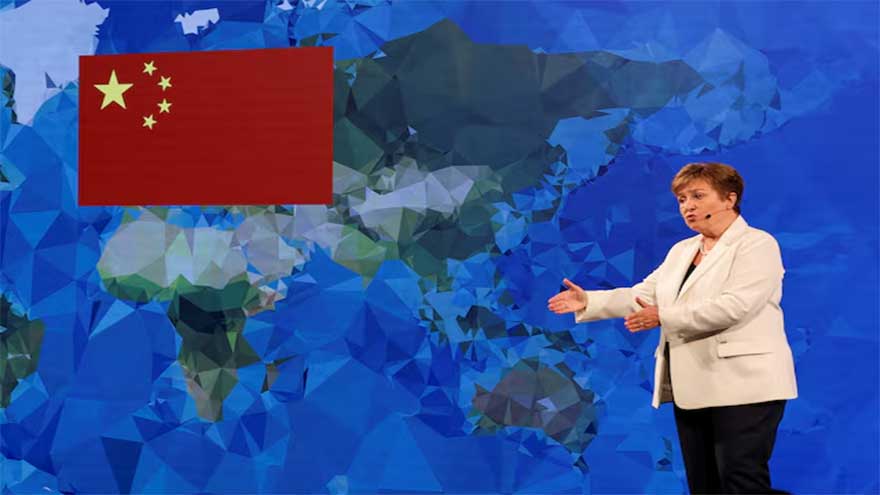
WASHINGTON– Finance ministers and central bankers gathering in Washington this week for the IMF and World Bank annual meetings are facing renewed global uncertainty after Donald Trump reignited the US-China trade war, threatening 100% tariffs on Chinese imports.
The move has rattled markets and overshadowed what was expected to be a week focused on the world economy’s resilience amid inflation, high debt, and AI-driven changes.
The truce between Washington and Beijing, built over five months, had led to lower tariffs and improved global growth forecasts. However, Trump’s sudden escalation — coupled with China’s retaliatory port levies — now threatens to derail that progress.
Read More: China to Boost Practical Cooperation With North Korea
Former IMF strategist Martin Muehleisen warned that the threat could be “posturing,” but said renewed tariff wars would bring “a lot of pain in the markets.”
IMF chief Kristalina Georgieva said global GDP growth is expected to remain near 3.0% in 2025, but she cautioned against complacency amid “exceptional uncertainty.”
Read More: Beijing Targets U.S. Ships With Special Port Fees
Meanwhile, G7 finance ministers plan to discuss tightening sanctions on Russia and using frozen Russian assets to support Ukraine.
The meetings will also spotlight US Treasury Secretary Scott Bessent’s push for the IMF and World Bank to focus on “core missions” like financial stability rather than climate or gender issues.
Analysts warn the US influence could reshape the institutions’ agendas — and rekindle concerns about geopolitics driving global finance.