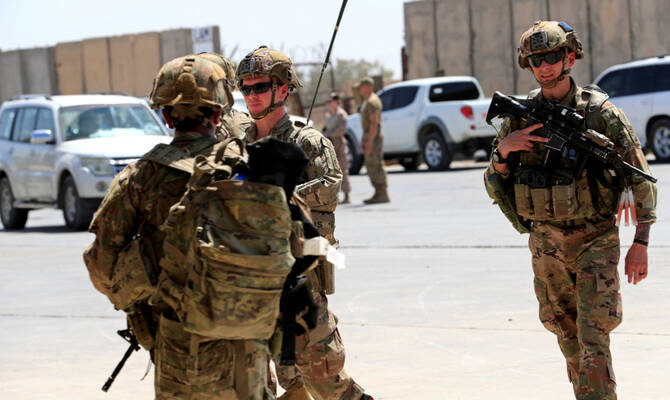
The Pentagon announced on Tuesday that it is scaling back its military mission in Iraq, handing over greater responsibility to Baghdad for combating remnants of the Islamic State within the country. A US defense official confirmed that the remaining American forces will transition away from direct counter-ISIS operations, instead focusing on bilateral security cooperation with Iraq’s government. This marks a significant step in shifting control of the country’s security to Iraqi authorities after years of reliance on coalition support.
Under the new plan, US and coalition allies will redirect their focus toward combating Islamic State remnants in Syria, where the threat remains more persistent. Most US troops currently stationed in Iraq will be relocated to the Kurdistan region, primarily Erbil, to continue counterterrorism operations across the border. This realignment reflects Washington’s assessment that ISIS no longer poses a sustained threat from Iraqi territory, though the risk in Syria remains concerning.
Read more : US president mentions ‘massive’ Pakistan oil deal but no finds …
At the beginning of 2025, the US had around 2,500 troops in Iraq and more than 900 in Syria, as part of the coalition created in 2014 to stop ISIS expansion. Following the transition, fewer than 2,000 US troops will remain in Iraq, with the majority stationed in Erbil. While an exact number and timeline have not been finalized, Pentagon officials stress that the drawdown will be implemented carefully to avoid destabilizing the fragile security environment.
Baghdad has long expressed concerns that the presence of US forces can attract attacks from Iran-aligned groups, raising instability rather than easing it. The latest decision is expected to strengthen Iraq’s sovereignty, allowing its security forces to lead operations within their own borders. Last year, Washington agreed to withdraw from the Ain al-Asad airbase in Anbar province, though that transition remains in progress with no final date announced. This handover represents another step toward Iraq’s military independence.
Despite the reduction in Iraq, US officials emphasize that the situation in Syria remains far from stable, particularly as Islamic State fighters continue to operate in pockets across the country. The risk of thousands of detained ISIS members escaping from overcrowded prisons further complicates the security picture. With Syria still facing political turmoil following the overthrow of Bashar al-Assad by forces led by President Ahmed al-Sharaa, Western and regional leaders fear ISIS could exploit instability to regain influence.
Read more : US to deport 400 Iranians after immigration deal
The Pentagon reaffirmed that the US mission in Syria will remain conditions-based, with no immediate timeline for a troop withdrawal. Middle Eastern leaders and international allies continue to stress that preventing a resurgence of ISIS requires coordinated efforts and sustained military presence. As Iraq steps into a larger security role at home, Washington’s shift signals a new phase of counterterrorism strategy—one that prioritizes stability in Syria while empowering Baghdad to lead its own fight.