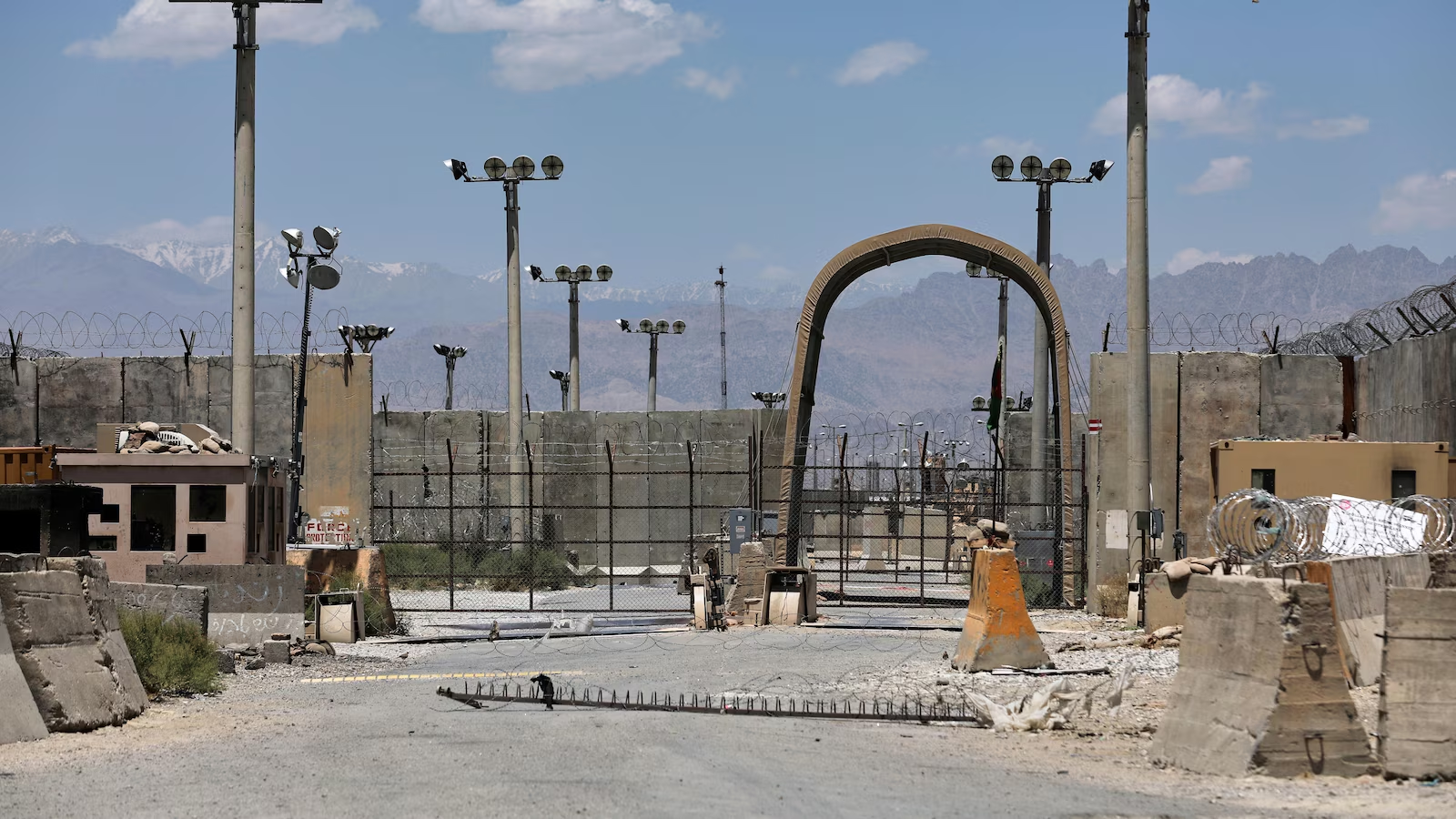
Afghanistan’s Taliban government has firmly rejected the possibility of any deal over Bagram air base, following US President Donald Trump’s remarks that he wanted the former American-controlled facility back. Located north of Kabul, Bagram served as the largest US military base during Washington’s two-decade war in Afghanistan and remains a symbol of America’s withdrawal.
Chief of Staff of Afghanistan’s Ministry of Defence, Fasihuddin Fitrat, stated that “some people” had suggested political negotiations regarding the return of the base, but stressed such an agreement was out of the question. He declared that a deal involving “even an inch of Afghanistan’s soil” was not possible, underlining that Afghanistan no longer required foreign involvement in its territory.
The response came shortly after Trump warned of “bad things” if Afghanistan refused to hand over Bagram to the United States. Speaking at the White House last week, the 79-year-old leader reiterated his desire to regain control of the base, saying talks were ongoing. However, he avoided directly answering whether sending US troops back to Afghanistan was under consideration.
The Afghan government later released an official statement stressing that “Afghanistan’s independence and territorial integrity are of the utmost importance.” The message was seen as a clear rejection of any foreign control. The Taliban’s stance reflects their longstanding position that no outside power will be allowed to reclaim facilities or influence Afghan sovereignty.
Bagram’s history runs deep in Afghanistan’s conflicts, having been developed by the Soviet Union in the 1950s, expanded during the Cold War, and later transformed by the United States into a vast hub of military operations. At its height in 2010, it resembled a small town, housing supermarkets, restaurants, and tens of thousands of troops. Human rights groups, however, have long accused US forces of abuses against detainees held at the base.
Trump has repeatedly criticized the loss of Bagram, highlighting its strategic location near China. Yet, Afghanistan’s leadership remains resolute in its refusal to return the base, viewing the demand as an infringement on national sovereignty. The dispute now risks fueling renewed tensions between Washington and Kabul at a time when regional stability remains fragile.