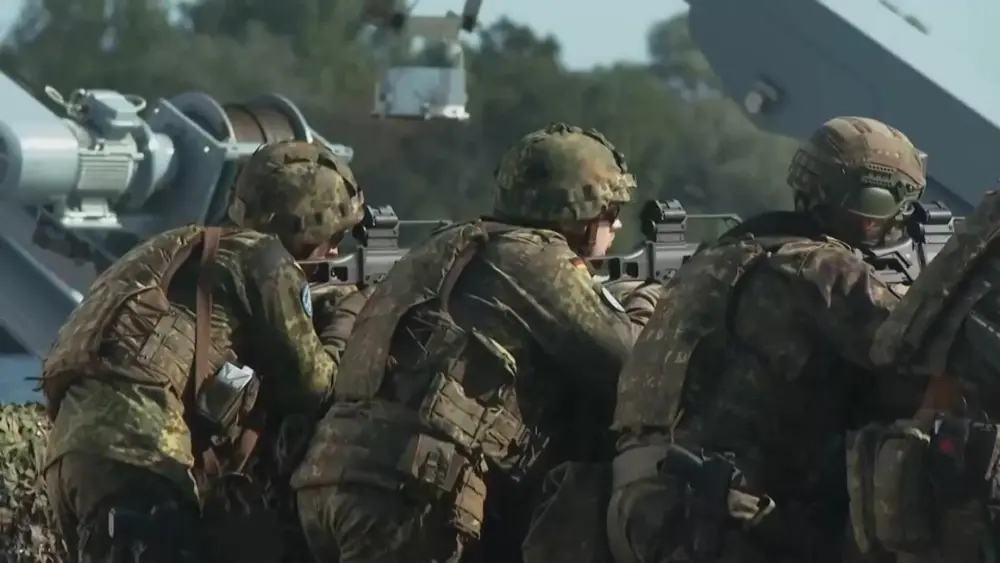
Germany leads a major military drill in the Baltic region as tensions rise between NATO and Russia. The exercise, called Quadriga, involves moving troops and equipment to Lithuania. On Thursday, officials watched a ferry carrying military vehicles depart from Rostock to Klaipeda. The ferry was escorted by a helicopter, a corvette, a minesweeper, and police forces.
More than 8,000 troops from 14 NATO countries are taking part in the drill. The German navy leads the exercise, with support from the army and air force. In total, 40 ships, 20 aircraft, and 1,800 vehicles are involved. Eurofighter jets flew over the harbor as drone defense tactics were shown. The drill demonstrates NATO’s ability to respond quickly in the region.
Germany’s top general, Carsten Breuer, said Germany is now a key supply hub for NATO’s eastern defenses. Most of the alliance’s supply routes pass through German territory. Breuer said Germany is stepping up its military role after years of underinvestment. In May, Germany established a permanent brigade in Lithuania. That country borders Russia’s Kaliningrad and Belarus.
Quadriga will run for several weeks and partly overlap with a Russian-Belarusian drill called Zapad. That exercise is expected to include over 13,000 troops. Breuer warned that Russia could use the timing to raise tensions. However, he made it clear that NATO wants deterrence, not conflict. Leaders are watching closely for any sign of provocation.
As Germany leads this Baltic exercise, NATO shows it is united and ready. The region remains tense as Russia holds its own drills. Still, Germany’s actions highlight its growing defense role in Europe. With NATO support, Germany leads the way in strengthening Baltic security.