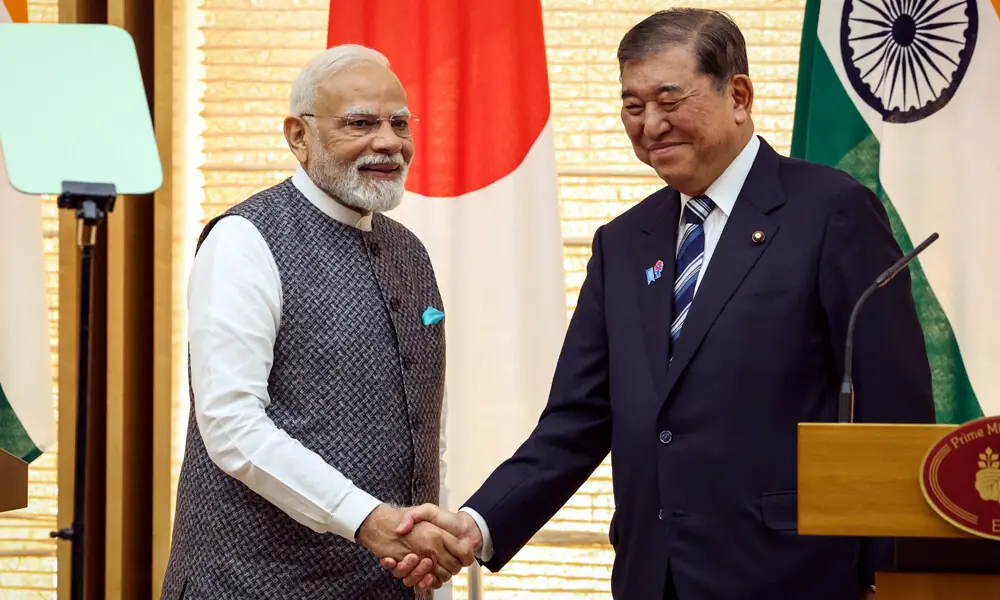
Japan’s Prime Minister Shigeru Ishiba and India’s Prime Minister Narendra Modi agreed on Friday to strengthen their economic and security partnership. This comes as India faces new U.S. tariffs, and Japan seeks to counter China’s rising influence. Both leaders highlighted the need to support each other and tackle future challenges together.
They pledged to boost defense cooperation in the Indo-Pacific region over the next decade. Additionally, they agreed to enhance supply chains, investment, and collaborate on technologies like AI, space, and high-speed rail. Both nations will also increase skilled worker exchanges to deepen ties.
Japan announced plans to invest 10 trillion yen (about $67.9 billion) in India’s private sector. This investment signals Japan’s commitment to supporting India amid changing global trade dynamics. Japan and India’s partnership has grown stronger as they share concerns about regional security and economic stability.
Modi emphasized the shared commitment to a free, open, and rules-based Indo-Pacific region. He also noted mutual concerns about terrorism and cybersecurity. Modi’s visit aims to build diplomatic support for India’s “Make in India” initiative, especially after the U.S. raised tariffs on Indian goods.
Following Japan, Modi will visit China for a two-day Shanghai Cooperation Organisation summit. This marks his first visit to China in seven years. He is expected to meet Chinese President Xi Jinping and Russian President Vladimir Putin to discuss regional security and cooperation.