
Authorities in Indonesia’s East Java province have moved to curb the rising trend of deafening street parties, where towering loudspeaker stacks often blast music at noise levels powerful enough to crack windows. Officials imposed new restrictions this month after residents complained of sleepless nights, damaged homes, and health risks from what locals call sound horeg — a noise impact strong enough to shake buildings and vibrate rooftops.
The new rules came after videos on social media showed cracked walls, falling roof tiles, and damaged shops caused by booming music. The East Java governor said the order was designed to protect both public health and peace, setting clear limits on sound levels and restricting the use of mobile loudspeaker towers near schools, hospitals, and mosques during worship sessions.
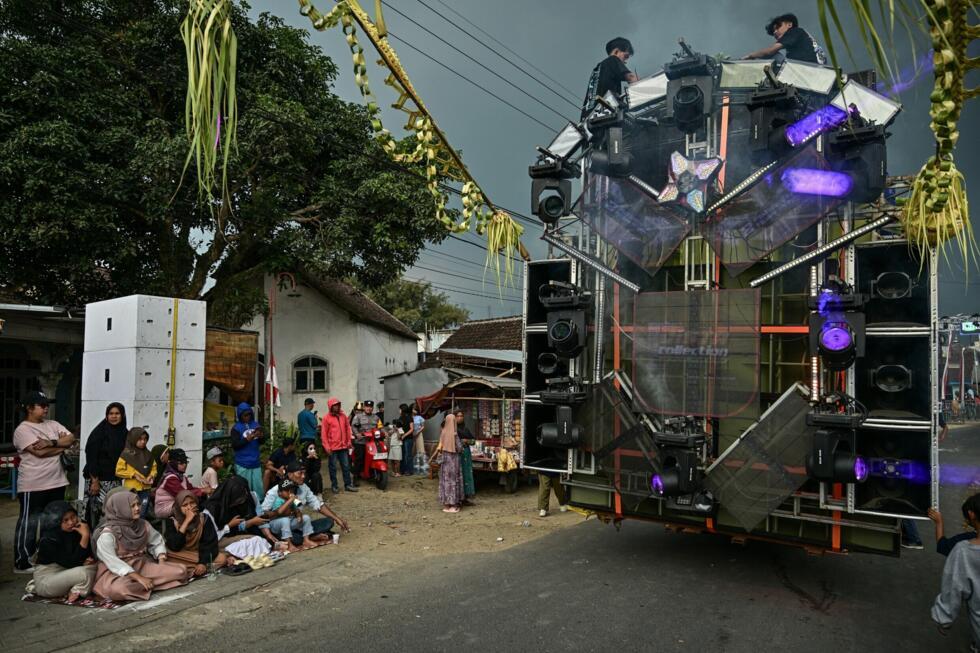
Medical experts have also warned that ear-splitting noise carries serious health consequences, including increased risks of hearing loss and heart problems. This month, a woman reportedly died of cardiac arrest after attending a carnival with massive loudspeaker towers, while doctors in the province noted rising cases of hearing difficulties among frequent partygoers. Officials have since capped fixed sound systems at 120 decibels and limited mobile units to 85 decibels.
Religious leaders have also stepped in, with a local Islamic council issuing a fatwa declaring that excessive and harmful noise is haram — forbidden under Islamic law. The ruling specifically condemned deafening music during weddings, street parades, and celebrations that disturb worship or endanger health. Despite the restrictions, enforcement remains weak, and AFP reporters observed loudspeaker towers blasting well above legal limits even in the presence of officials.
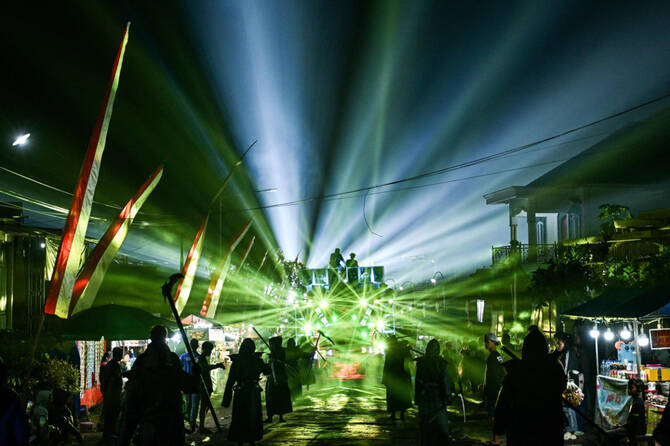
While many residents demand relief from the constant noise, some locals defend the practice as part of their cultural traditions. Loudspeaker rental owners argue the business employs thousands of people and boosts local economies during weddings, Independence Day festivities, and other celebrations. However, critics remain silent out of fear, with some claiming operators retaliate by blasting music outside the homes of complainants, leaving communities torn between culture, commerce, and peace.
The World Health Organization warns that noise levels above 85 decibels can cause lasting hearing damage, while exposure beyond 120 decibels can lead to immediate harm. Yet in parts of East Java, residents continue to report sound levels as high as 130 decibels, raising urgent concerns that unchecked street parties may further endanger public health and disrupt community life if regulations remain unenforced.