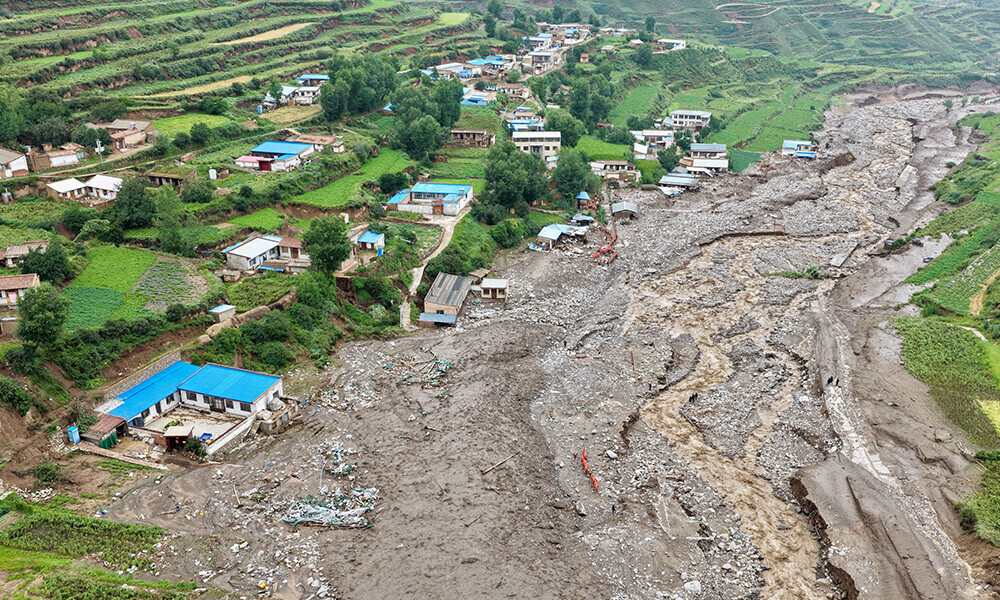
Flash floods and mudslides hit northwest China’s Gansu province starting Thursday. Torrents of mud and water swept through mountainous areas. Rescuers found three more bodies on Saturday, raising the death toll to 13. Authorities said 30 people remain missing as rescue operations continue. The disaster left many roads blocked and damaged communication lines, making rescue efforts difficult.
Thousands of people fled their homes as heavy rains battered the region. Officials evacuated hundreds and moved thousands to safer places. The situation remains serious due to rough terrain and ongoing rain. State media called the rescue effort “complex” because of mudslides and broken infrastructure. Local governments declared a yellow alert for more heavy rain and activated flood response plans.
China’s southern provinces also faced heavy rain this week. Tens of thousands evacuated from Guangdong as storms caused flooding. Last month, Beijing’s heavy rains killed 44 people and triggered deadly landslides in nearby areas. These events reflect the increasing frequency of extreme weather in China. Scientists warn that climate change is making storms stronger and more common worldwide.
Chinese President Xi Jinping urged officials to do their “utmost” in rescue missions. The government allocated $14 million to help the flood-affected areas in Gansu. Efforts focus on saving lives and restoring basic services like electricity and communication. Officials continue to monitor weather forecasts to prepare for further risks. Meanwhile, many people remain trapped or displaced by the floods.
China is the world’s largest emitter of greenhouse gases but also leads in renewable energy. These floods highlight the urgent need to tackle climate change. Officials stress the importance of improving disaster readiness across the country. The Gansu floods serve as a grim reminder of nature’s growing power. The rescue and recovery work continues as communities strive to recover.