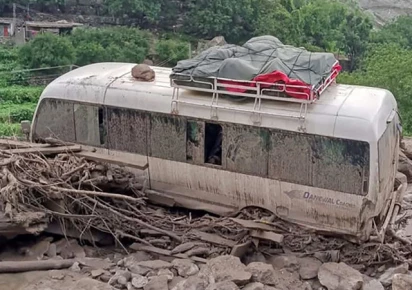
Search and rescue teams in Gilgit-Baltistan have recovered several vehicles swept away by recent floods, but there is still no trace of the missing people. According to the GB government spokesperson Faizullah Faraq, operations are ongoing along the Babusar Highway, but the fate of many missing tourists remains unknown. The floods struck earlier this week, triggered by cloudbursts that led to sudden landslides and massive destruction.
The natural disaster has caused widespread damage across the Ghizer and Hunza districts, destroying more than 500 houses, roads, and key infrastructure. So far, at least 10 people — mostly tourists — have been confirmed dead, while another 10 to 15 are still missing. Despite the discovery of vehicles buried under debris, rescue workers have not yet found any sign of the missing individuals.
Meanwhile, rehabilitation work in the affected areas has picked up pace. Spokesperson Faraq confirmed that power and water supply has been restored in many locations, including parts of the Babusar Highway. He also stated that communication systems in several regions are back online. These developments offer some hope, though challenges remain for the displaced families and rescue workers.
In a show of solidarity, Prime Minister Shehbaz Sharif is expected to visit Gilgit-Baltistan for a two to three-day trip. His visit aims to support ongoing relief efforts and meet with the victims. During a recent high-level meeting, the prime minister promised full federal assistance and discussed long-term plans for disaster preparedness and recovery.
Climate change is becoming increasingly evident in Gilgit-Baltistan, with heatwaves, irregular weather, and glacier melting now triggering frequent cloudbursts and flash floods. Just yesterday, a glacier burst in Bagrot Valley claimed one life, as a father and son were swept away by falling ice and debris. The region continues to bear the brunt of climate-related disasters.