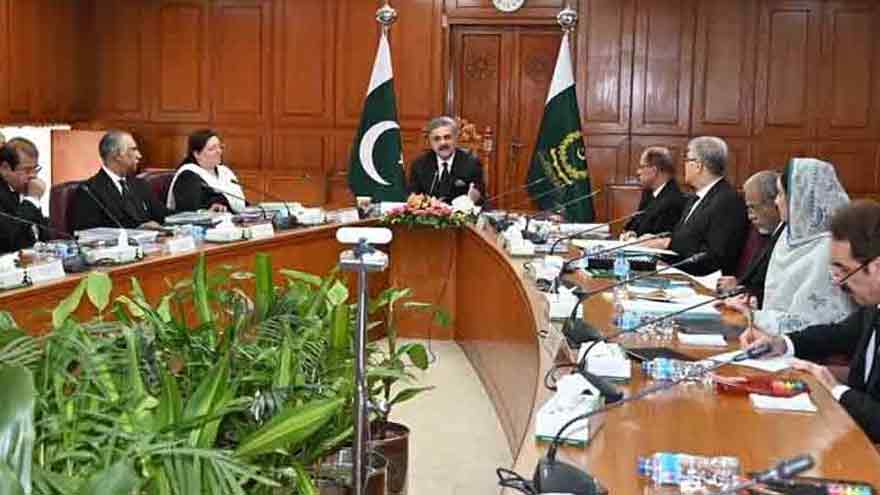
ISLAMABAD – The Supreme Judicial Council (SJC) met today under Chief Justice Yahya Afridi’s leadership to review judicial conduct. Senior judges, including Justice Mansoor Ali Shah and Justice Munib Akhtar, participated as Council members. Chief Justices of Lahore and Sindh High Courts, Aalia Neelum and Junaid Ghaffar, also joined. The meeting focused on complaints against judges, rules for handling them, and the overall judicial code of conduct.
The Council plans to assess judges’ behavior and professional standards. They will review past complaints and discuss letters written by senior judges. This step is seen as crucial for maintaining public trust in the judiciary. It also highlights the Council’s responsibility to uphold integrity and accountability in the justice system. Officials believe this meeting marks a key moment for reform and transparency.
Meanwhile, the National Judicial (Policy Making) Committee (NJPMC) also took major decisions in its 53rd meeting. Chief Justice Yahya Afridi chaired the session with high court chief justices and top legal officers. A new committee was formed to address enforced disappearances. It will examine concerns shared by the executive through the Attorney General’s office.
The NJPMC also launched judicial reforms to reduce case delays and improve court services. These include setting up a Commercial Litigation Corridor and Double-Docket Court Regime in select districts. New plans also support court-annexed mediation, criminal trial courts, and district-level family courts. These steps aim to make the justice system faster and more efficient.
Furthermore, the NJPMC approved training measures for police and judges. It introduced a Professional Excellence Index for lawyers’ selection. The use of generative AI in court processes was also discussed. A charter will be created to ensure its ethical use. Additionally, virtual court procedures for prisoners and police witnesses will follow new standard rules.