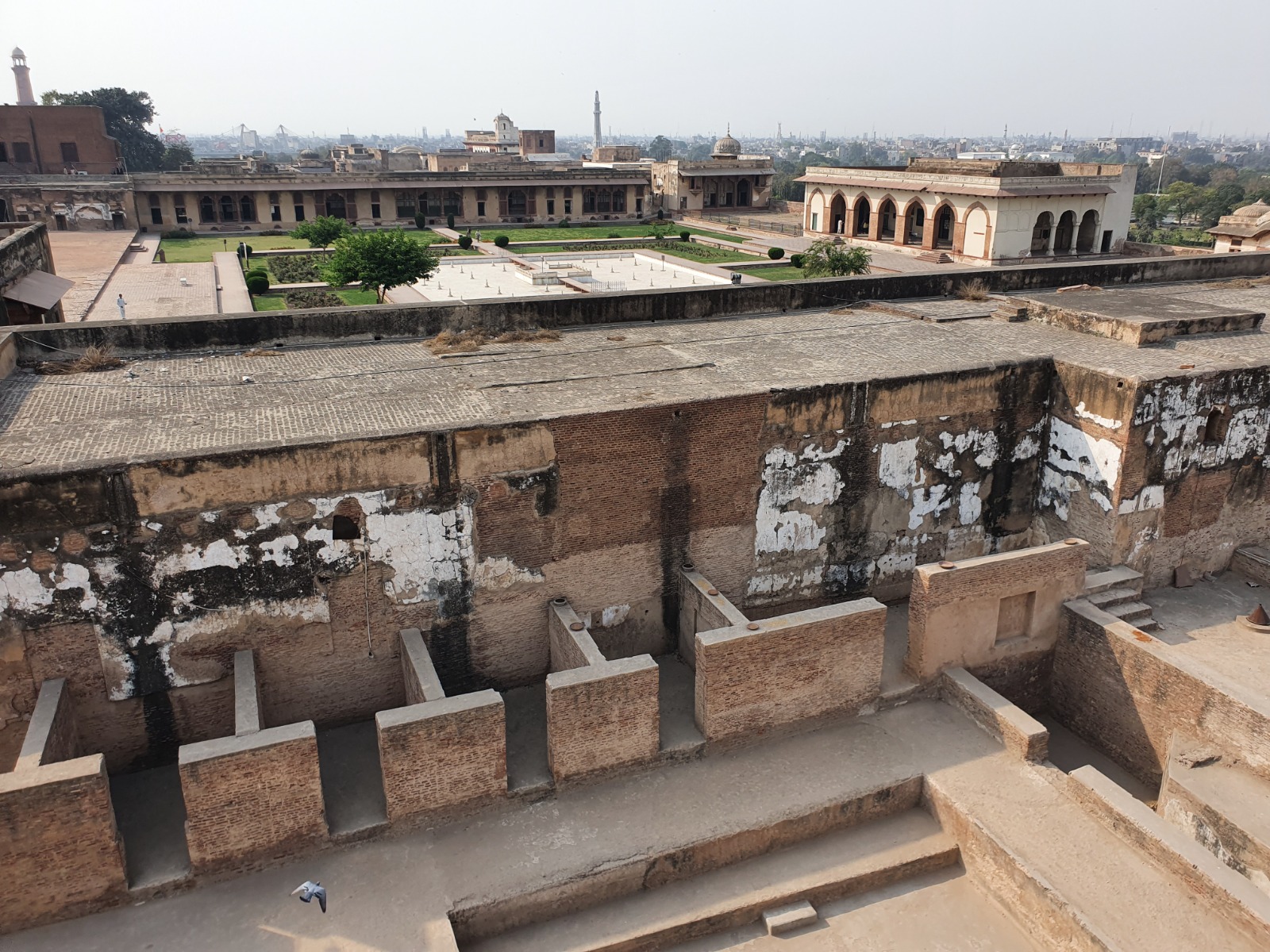
LAHORE: Who is not familiar with the Lahore Fort and twenty-one monuments that are inside it. Today let me take you to a masterpiece that is not included in the list of these twenty-one monuments and probably is the twenty second one!
This is the Hammam (bath area) that belongs to Mughal Emperor Akbar’s times. But before I take you to the details of this wonder, let us have an insight of why Hammams were important!
Concept of a Hammam
The hammam, which has its roots in Arabic culture, initially served as a facility for prayer preparation. As the late 1400s saw a surge in their popularity throughout the region, these exquisite bathhouses became a common sight adjacent to mosques. Hammams held a pivotal role in advocating for cleanliness and public health, while concurrently serving as gathering spots where individuals could unwind and engage in social interactions.
Mughals and Hammam
In the heyday of the Mughal era in in region, hammams became not just architectural features but essential components of Mughal homes, public structures, mosques, lush gardens, and grand architectural ensembles, thanks to the visionary emperors.
Mughal hammams were primarily exclusive and situated within the confines of imperial palaces. However, their presence extended to various locations, each tailored to specific needs and settings. They could be found in diverse forms, including mortuary hammams, public hammams, and those integrated into sprawling garden estates. Additionally, hammams were even a fixture in caravanserais, strategically placed along the prominent routes frequented by the emperors. This diversity of usage established the hammam as a pivotal architectural category within Islamic structures, making it an indispensable component of these grand complexes.
The designs, embellishments, and ornate details of these hammams served as poignant reflections of how cultural heritage was not only established but also perpetuated. Beyond their architectural and social significance, these hammams showcased the intricate systems used to introduce and manage hot and cold baths, underscoring their technical complexity.
With their mastery of architecture and appreciation for aesthetics, the Mughals accorded significant importance to Hammams. Mughal Hammams comprised three functional components: a rakht kan (dressing room), a garam khana (hot room) and a sard khana (cold room). The arrangement of these individual units did not adhere to any specific architectural standard and in various Mughal Monuments we see different sizes and styles.
Hammam in Old Lahore
Within the walled city of Lahore, the sole surviving specimen of a Turkish-style Hammam in Pakistan is the Shahi Hammam. This architectural gem was carefully conserved through the collaborative efforts of the Walled City of Lahore Authority and the Aga Khan Trust for Culture in 2014. While other Hammams can be observed within the Shalimar Gardens and near the Shah Jahan’s Quadrangle in Lahore Fort, the Shahi Hammam stands out as a unique and well-preserved example of its kind.
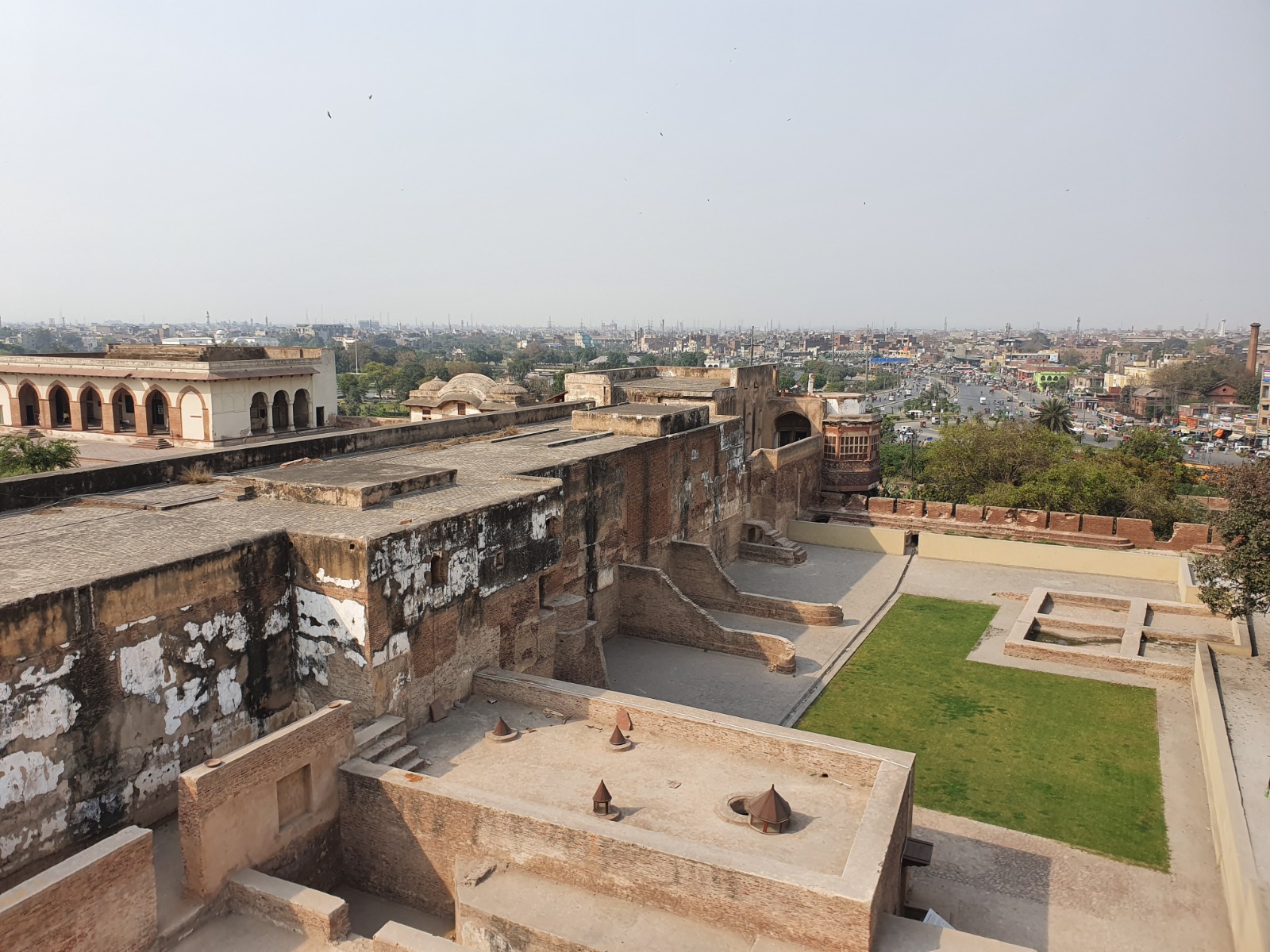
The discovery of another Hammam in Lahore Fort
During the process of clearing debris from the rear of Jahangiri Quadrangle within Lahore Fort, an ancient Hammam dating back to the era of Mughal Emperor Akbar was fortuitously unveiled. It was truly astounding to realize that this remarkable monument had remained hidden beneath layers of debris and even an overlaid garage structure.
Although this newly-revealed Hammam was smaller in comparison to the Shahi Hammam, also known as the Wazir Khan Hammam in Delhi Gate, it was clear that this bath had been designated for the exclusive use of the Royals.
About Akbari Hammam
Situated at the rear of Jahangir’s Quadrangle, this recently-discovered Hammam’s dimensions confirmed the belief of architects, experts, and historians that it had been reserved for royal usage. This was a common practice, as public baths were not typically housed within palace precincts. Another compelling piece of evidence linking the Hammam to the era of Akbar was its proximity to the Akbari Gate. The presence of Akbari Palace or Sarai nearby reinforced the historical context.
While exploring the interior of the Hammam, one encounters red sandstone slabs along with clearly visible water and steam channels within the bath area. The design points towards the use of a hypocaust system similar to the one present in the Shahi Hammam within Delhi Gate. This system employed steam circulation by burning logs and channeling the steam through the hypocaust structure. Chimney openings also exist in this newly revealed Hammam, further corroborating its connection to Akbar’s era and the advanced architectural techniques employed during that time.
Analyzing the structure and the materials utilized in the construction of this Royal Bath provides compelling evidence that it was established during the reign of Emperor Akbar. This was a period when Akbar had extensively reconstructed Lahore Fort, incorporating burnt bricks and introducing new structures.
The state of Hammam
Lying forgotten and concealed beneath layers of both concrete and debris, the Hammam had fallen into a state of neglect. It had become entombed beneath an astonishing mound of 100,000 cubic feet of rubble and overgrown vegetation. Adding to its obscurity, an unexpected discovery revealed that the space had been repurposed for a more modern purpose – a garage intended for vehicle parking. Unbeknownst to those above, this unassuming structure concealed a remarkable masterpiece of the past. Situated in the far eastern reaches of Lahore Fort, this hidden gem consisted of three identifiable rooms, while the fate of others that once existed remains veiled in the passage of time.
Conservation and Preservation of this Masterpiece
Appreciating its historical significance, the Walled City of Lahore Authority embraced the crucial responsibility of preserving and rejuvenating this often-overlooked piece of history, with the goal of transforming it into yet another captivating tourist attraction within Lahore Fort.
Throughout the restoration process, dedicated efforts were directed towards fortifying the structure, restoring the walls, and carefully conserving and revitalizing the intricate Ghalib Kari designs adorning its surfaces.
From 2019 to 2021, the Walled City of Lahore Authority embarked on the significant mission of safeguarding this remarkable discovery, ensuring its accessibility to tourists eager to immerse themselves in the rich historical tapestry of Lahore Fort.
A must visit Site now!
If you are in Lahore Fort, you must not miss this masterpiece! You will be mesmerized by its structure, detailing and the locale. Direction signs have been placed there for directing the tourists to this new discovery or else, you may ask for a guide there. Enjoy your trip!
The writer works with Walled City of Lahore Authority. She can be reached at [email protected].