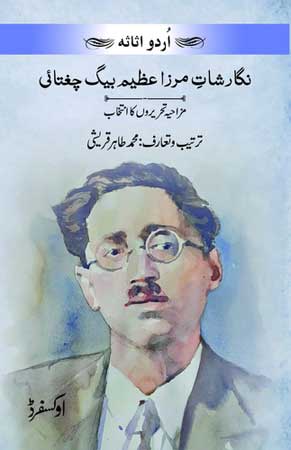
 Nigarshat-e-Mirza Azeem Baig Chughtai
Mazahiya Tehreeron Ka Intikhaab
Compiled by Muhammad Tahir Qureshi
The book aims at capturing the essential elements of Mirza Azeem Baig Chughtai’s humorous writings. It contains some of the most famous writings that Mirza Azeem Baig Chughtai is known for. The selection is based on the published works of Azeem Baig Chughtai and a brief intro by the compiler succinctly describes the biographical sketch as well as the characteristics of Mirza Azeem Baig Chughtai’s writings.
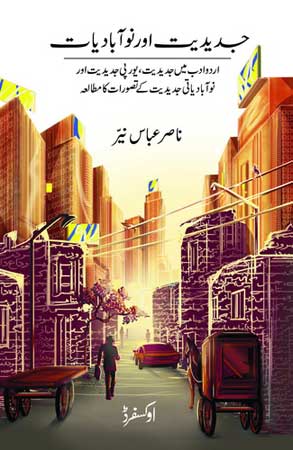 Jadeediyat aur Nauabadiyaat
Nasir Abbas Nayyar
This book investigates the relationship between modernity and colonial attitudes in the context of Urdu literature; and theories of modernity offered by Western critics/thinkers. It asserts that during colonial rule, a form of Western modernity was employed and disseminated across British India to disguise the economic and cultural exploitation and that precolonial India had its own kind of modernity that produced great poets such as Bedil and Ghalib. The book also discusses specific forms of modernity, which evolved at the cost of erasing precolonial memories and preventing the emergence of a national ethos with reference to modern Urdu writers of twentieth century.
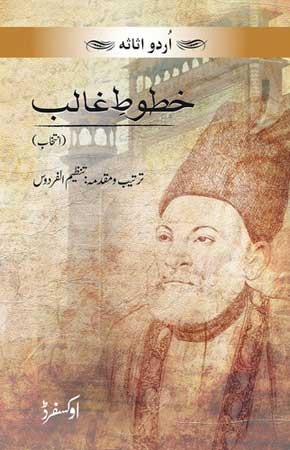 Khutoot-e-Ghalib: Intikhab
Compiled by Tanzeemul Firdous
This is a representative selection of Mirza Asadullah Khan Ghalib’s letters which are considered fine specimens of exquisite Urdu prose. At that time poetry was a more favoured form of expression in Urdu and modern Urdu prose was beginning to take shape. Ghalib’s letters along with Sir Syed Ahmed Khan’s essays are the most important landmarks in the history of modern Urdu prose. Ghalib’s bubbling wit and a keen sense of humour made these letters good examples of humour in prose, too. Also, some of his letters carry important information about his own life and works.
 Qurratulain Hyder
Zindagi aur Fann
Jameel Akhtar
This book encapsulates the life and works of Qurratulain Hyder, an influential Indian Urdu novelist and short story writer, an academic and a journalist. One of the most outstanding literary names in Urdu literature, she is best known for her magnum opus, Aag ka Darya, a novel first published in Urdu in 1959, that stretches from the 4th century BC to post Partition of India. Some extracts of her important works are also featured in this book.
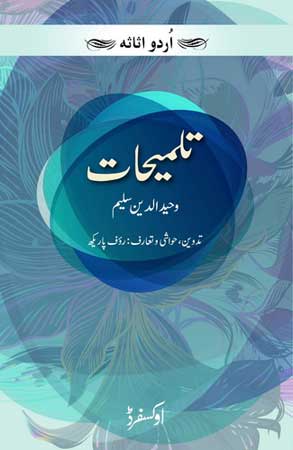 Talmeehat
Waheeduddin Saleem
Edited by Rauf Parekh
Talmeehaat means ‘Allusions’. As it is a literary device, allusion leaves to the reader to figure out the meaning or context of the expressions and the objects that the writer or poet intends to refer to. This work by Waheeduddin Saleem, first published some 90 years ago, is still relevant today and has some rare allusions richly and finely explained. It includes all the relevant allusions used in Uru including the ones taken from Persian, Arabic and Hindi sources.