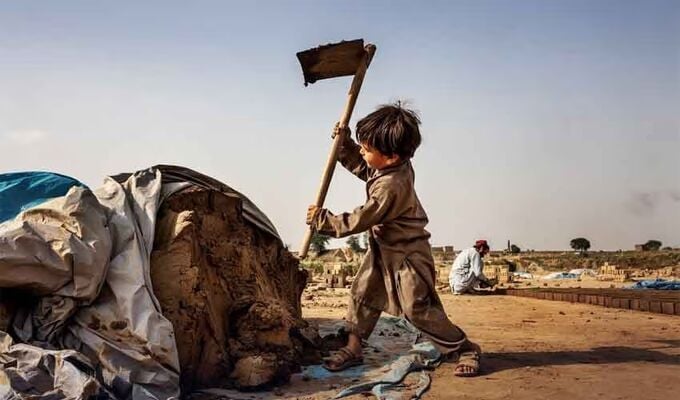
More than 8.6 million children are engaged in child labour across Pakistan, with over 6.6 million involved in hazardous work, according to a new report released by the National Commission for Human Rights and UNICEF. The findings highlight a growing social and economic challenge affecting children’s health, education and future opportunities. The report, issued after nearly three decades, calls for urgent action to protect vulnerable children nationwide.
The study found that hazardous labour remains one of the most serious threats facing working children. Many are exposed to dangerous conditions that jeopardise their physical and mental well-being while limiting access to education. Researchers warned that prolonged exposure to such environments could have lasting consequences for children’s development and future prospects.
Punjab recorded the highest number of children engaged in labour, with approximately 6.036 million working children. Sindh followed with around 1.610 million child labourers, while more than 745,000 children were reported to be working in Khyber Pakhtunkhwa. The report also identified 201,352 child labourers in Balochistan and 15,180 in Islamabad, underscoring the nationwide scale of the issue.
According to the report, poverty remains the primary driver of child labour in Pakistan. Families facing financial hardship often depend on children’s earnings to meet household expenses, particularly where parents have limited education and employment opportunities. Researchers noted that much of the labour occurs within homes, farms and family-run businesses, making monitoring and intervention more difficult.
Speaking at the report’s launch, Federal Minister for Human Rights Azam Nazeer Tarar stressed that eliminating child labour requires coordinated efforts from government institutions, civil society and communities. The report also revealed that between 32% and 58% of working children suffered work-related injuries or illnesses, while many experienced symptoms of depression. Experts warned that without stronger poverty reduction measures, better educational access and enhanced child protection mechanisms, millions of children could remain trapped in the cycle of labour.