When a global calamity befalls the world, it leaves a convoluted impact on its future. The exponentially increasing number of cases and deaths due to an unprecedented pandemic named coronavirus, which has affected hundreds of thousands of people around the world, is a demonstration that the full effect of the catastrophe is yet to be felt. The current status of the vaccine is indecisive; and even if the cure is found, there are numerous diverse barriers before the immunisation is globally conceivable.
We are already witnessing the shift in power with China coming out as the more resilient power dedicated to assist other countries and tackle the unprecedented cataclysm
Similar to the preceding calamities and adversities the world has faced such as Second World War or the financial crisis of 2008-which left a sizeable number of effects on the political realities of the world-the contemporary contagion also poses a few significant questions. Will there be a global repositioning in political and economic powers and sovereignties? There is no uncertainty regarding the unimaginable change in economic and social strata of the nations, but how will the unprecedented pandemic change the nature of world politics? To put it concisely: is this the beginning of the new world order or the end of this one?
Call for ‘closed door’ policies and national protectionism
If we recall the Second World War, it acted as an accelerator for the already rising nationalist movements in the European empires that had once controlled much of the world. It weakened the empires before globalisation. At present, the fear of recurring pandemics-based on the fact that the pathogen approached Italy from China-has driven the European nations and the United States-normally and enthusiastically supportive of neoliberal capitalism, globalisation, and free movement at borders-to take a step back and debate in favour of national protectionism and closed-door policies.
The deadly pathogen is now considered as a foreign threat in Europe, and the imposition is to “build walls and halt flights.” Marine Le Pen, right-wing populist and a nationalist leader from France, has called for closed borders with Italy. A colleague of hers has said that “the free circulation of supplies and goods accelerates the exponential spread of the disease.” Viktor Orban, Hungary’s prime minister, had also expressed concern and complained that Europe does not afford to have open borders. Therefore, given the current popular narratives, globalisation precipitates a threat to a nation’s prowess to save its borders from such pandemics.
Murky future for globalisation and neoliberal capitalism
The aftermath of the pandemic will be murky for the free-market globalisation of neoliberal capitalism. The financial crisis of 2008 already affected the dominant version of globalization-cross-border financial flows fell by more than sixty percent since 2007-that grew swiftly during the last three decades before the crisis. What saved capitalism from entirely collapsing in 2008’s financial crisis is the liquidity of the Federal Reserve System of the United States into the economy by central banks and China’s drastic investments in a globalised world.
Accordingly, the extravagant dependence on the nation-state can revive immoderate nationalism; global cooperation would be affected. Some experts argue that globalisation and capitalism might not recover from the economic and political shocks this time. The Organisation for Economic Cooperation and Development, an influential think tank, has warned that the economy could fall sharply for the first time since 2008 because of the outbreak.
 The pandemic has outmanoeuvred neoliberal capitalism with a complete global shutdown. The system has taken advantage of the core institution of capitalism, the labour market, for three decades; if the pandemic persists, small enterprises will be forced towards bankruptcy. The labour market cannot work in the crisis as advised by federal governments, ergo disrupting corporations and globally interconnected businesses. Anti-globalisers or nationalists also do not have the best-required solutions to revive stability; it is a global crisis that ultimately requires global assistance from international groups or organisations.
Rising authoritarianism and potential shift in power
Another impact COVID-19 might create is the rise of right-wing populist and nationalist groups, which would push a state to an authoritarian and centralised rule. The International Crisis Group, an independent monitoring organisation, has warned that fraudulent leaders “may exploit the pandemic” for their agendas and objectives. For instance, they could exploit people’s privacy and escalate the war with their adversaries believing that international institutions have no authority over their nationalised state. Stephen Walt, Professor of International Relations at Harvard University, said that the contemporary crisis will create a “less prosperous, less open and less free” world.
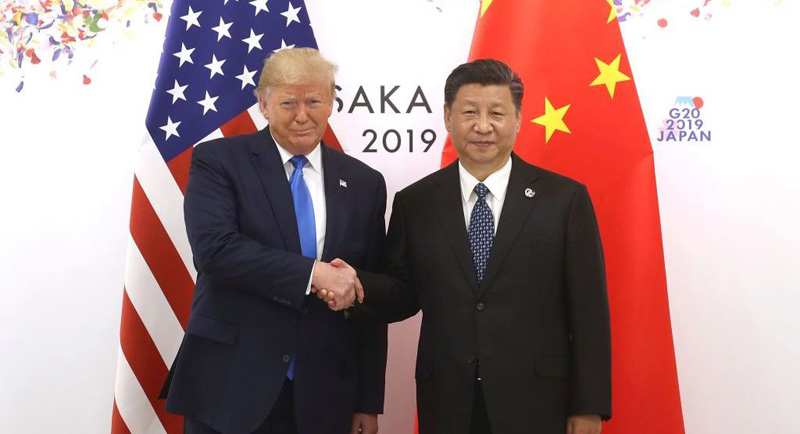
Dwelling into the effects, we are already witnessing the shift in power with China coming out as the more resilient power dedicated to assist other countries and tackle the unprecedented cataclysm as compared to the US that is struggling to restrain the pandemic. European countries and underdeveloped countries are looking towards China to send medical supplies and teams.
The pandemic so far
Catastrophic times bring out new aspects and changes to a nation’s view of conceiving and comprehending the current state of affairs. So far, the contemporary pandemic, according to the experts, has unveiled four key aspects: 1) in the times of crisis, people rely on the nation-state that has a strong financial, organisational and emotional attitude as compared to global institutions; 2) the pandemic is exposing the fragility of global institutions and supply chains; it is ambiguous and suspicious that a country would continue to send in food and other facilities with no ulterior motive; 3) rise in authoritarianism; and 4) it is already stipulating political trends such as protectionism, the need to develop local industry rather than relying on global institutions, and stringent monitoring on borders.
If we manage to control the pandemic, the aftermath would be a chaotic world. A swift and cooperative response is required from the international community. Social and economic disparities in the world are posing a significant threat to globalisation. The unequal share of economic gains-financial capital, human capital,and skills-is causing inequality in the global market. If the world fails to eliminate the disparity and the capitalistic standards, we might see narrow-minded nationalism infiltrating everywhere.
The writer is an independent researcher and a freelance columnist. He tweets at @ArsimTariq