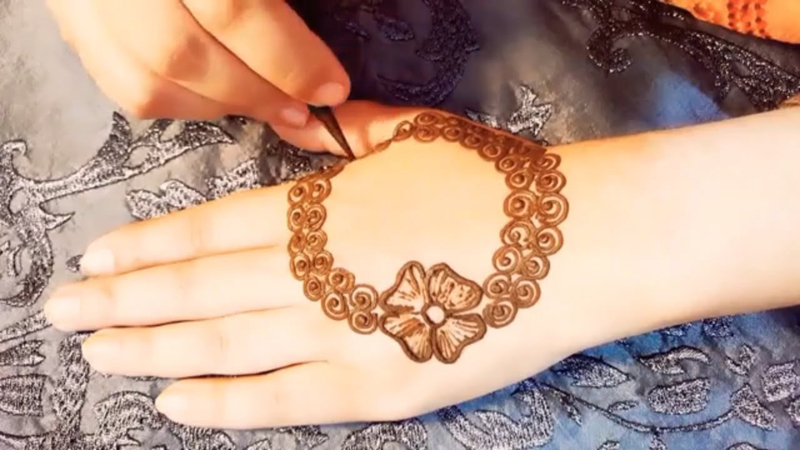
 Mehndi is a form of body art originating from the Indian subcontinent, in which decorative designs are created on a person’s body, using a paste, created from the powdered dry leaves of the henna plant.
Dating back to ancient India, mehndi is still a popular form of body art among the women of the Indian subcontinent, Africa and the Middle East.
Mehndi is derived from the Sanskrit word mendhik.
The use of mehndi and turmeric is described in the earliest Hindu Vedic ritual books. It was originally used for only women’s palms and sometimes for men, but as time progressed, it was more common for men to wear it. Haldi, as well as mehndi, are Vedic customs, intended to be a symbolic representation of the outer and the inner sun. Vedic customs are centred on the idea of “awakening the inner light”. Traditional Indian designs are representations of the sun on the palm, which, in this context, is intended to represent the hands and feet. Mehndi has a great significance in performing classical dance like Bharatnatyam.
There are many variations and designs. Women usually apply mehndi designs to their hands and feet, though some, including cancer patients and women with alopecia occasionally decorate their scalps.
The standard colour of henna is brown, but other design colours such as white, red, black and gold are sometimes employed.
Practiced mainly in the Indian subcontinent, mehndi is the application of a temporary form of skin decoration, popularized in the West by Indian cinema and the entertainment industry, the people in Nepal, Bangladesh and the Maldives also use mehndi. Mehndi decorations became fashionable in the West in the late 1990s, where they are called henna tattoos.
Mehndi in Indian tradition is typically applied during special Hindu weddings and Hindu festivals like Karva Chauth, Vat Purnima, Diwali, Bhai Dooj and Teej. In Hindu festivals, many women have Henna applied to their hands and feet and sometimes on the back of their shoulders too, as men have it applied on their arms, legs, back, and chest. For women, it is usually drawn on the palm, back of the hand and on feet, where the design will be clearest due to contrast with the lighter skin on these surfaces, which naturally contain less of the pigment melanin. Muslims in the Indian subcontinent also apply Mehndi during festivals such as Eidul Fitr and Eidul Azha.
The use of mehndi and turmeric is described in the earliest Hindu Vedic ritual books. It was originally used for only women’s palms and sometimes for men, but as time progressed, it was more common for men to wear it. Haldi, as well as mehndi, are Vedic customs, intended to be a symbolic representation of the outer and the inner sun
Alta, Alata, or Mahur is a red dye used similarly to henna to paint the feet of the brides in South Asia, for instance in the Bengal region where it is done.
Likely due to the desire for a “tattoo-black” appearance, some people add the synthetic dye p-Phenylenediamine (PPD) to henna to give it a black colour. PPD may cause severe allergic reactions and was voted Allergen of the Year in 2006 by the American Contact Dermatitis Society.
If you are planning to get mehndi or henna applied this Eid, then stay away from black mehndi as it contains hair dye chemical that can damage your skin.
Henna is the dried and powdered leaf of the Lawsonia inermis and is widely used in Pakistan as a dye for the skin, hair, and nails. As it stains the skin reddish brown, it is also called red henna. Pure red henna is made from a green-grey powder that tends to turn orange when moistened. It needs between two and 12 hours to be fixed on the skin. This is the safest form to use.
Black henna, on the other hand, is the combination of red henna with PPD or coal-tar hair dye. Adding the black PPD hair dye powder speeds up the process of dyeing and drying and gives a darker brown to black colour. It stains the skin black.
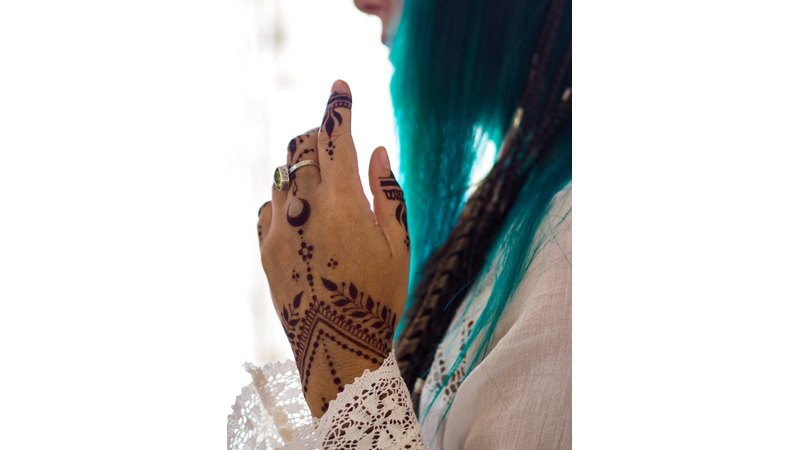 Some black mehndi can contain as much as 15 percent of PPD, which is much higher than what you will find in commercial hair dye. Your risk of allergic reaction to mehndi goes up if it contains hair dye or PPD. It can lead to pruritic dermatitis or itching and swelling.
Black henna became fashionable ever since the Spice Girls used it for body designs. It is also called blue henna but it is a combination of red henna and PPD. No natural black henna exists. Some of these ‘henna’ preparations do not even contain red henna at all.
The European Union (EU) allows the use of PPD and other diaminobenzenes for hair dyes. Some hair colouring has dyes based on diaminotoluenes which are textile dyes. The EU forbids the use of PPD for dying your eyelashes, eyebrows or skin.
The American Food & Drug Administration says PPD can cause dangerous skin reactions in some people.
“That is the reason hair dyes have a caution statement and instructions to do a ‘patch test’ on a small area of the skin before using them,” it said. “By law, PPD is not permitted in cosmetics intended to be applied to the skin.”
Cosmetics that are sold to people must have their ingredients listed on the label or they are considered misbranded.
The biggest market for mehndi in Karachi is Meena Bazaar in Karimabad. One mehndi artist, Rubina said that they get their supplies from a factory at Chandi Chowk in Paposh, Nazimabad. “They supply mehndi internationally,” she said. “The same people have another factory behind Memon Foundation in Karimabad.”
She has been buying from them for over eight years. The factory gives you the mehndi in plain wrapped cones. Salon owners and shopkeepers get their names custom printed on the cones and that is what they sell. This means that ingredients are often not mentioned at all or the chemicals inside.
The black mehndi costs Rs 500 per cone and Rubina confirmed that it contains hair dye. She added that they have found that people with “super-sensitive skin” get rashes. She added that the red mehndi that sells is also problematic as it contains a “fast” chemical that can blister the skin.
Normal raw green mehndi cones cost Rs 100. According to Rubina, people tend not to buy this option as it takes much longer to colour even though it is the safest. People don’t want to take the extra time to add mustard oil or steam to make the colour darker, she said.
People should be aware of variations of mehndi that are popular with young women. One is an ‘Emergency’ cones cost Rs 50 to Rs 60 but have chemicals that make it apply and dye quickly.
You can also find ‘Party’ mehndi which is scented apple, lemon or mango if you don’t like the smell of mehndi. But these have chemicals too.
Rubina added the tip that you should use mehndi within 15 days. If kept in the fridge you can go 10 days more. If you keep it longer then the paste starts to sediment and the fluid separates. This weakens its colouring effect.
To create the safe henna paste add water or oil to the green henna powder or to ground fresh henna leaves. You can add essential oils such as lemon, eucalyptus, clove, and dried powder of indigo plant leafs, mustard oil, lemon juice, beet root juice, nut shell, sugar, tannin concentrates from brewing tea leaves, instant coffee powder. But as with all natural chemicals be careful to research quantities and do a test patch.
This paste is applied to the skin and allowed to remain there for a minimum of 30?minutes to six?hours as the plant’s dye penetrates the skin. The longer the exposure, the darker the colour will be. The orange stain will darken over the next two to four?days. A temporary henna design should last for about two to six weeks, until the outer layer of the skin exfoliates, depending on skin type, the area of application, sun exposure, and other factors such as bathing and activity level.
In Arab countries, henna is also used for medicinal purposes, for example for the treatment of boils and folliculitis, by mixing it with vinegar and making a hot poultice. It may also be used to reduce pain, swelling, and high fevers, and to treat alopecia, burns and headaches.