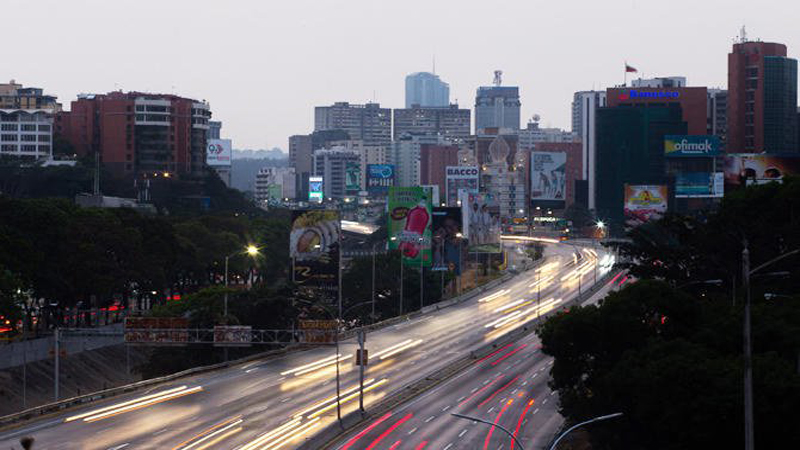
 Venezuelans reacted with despair and resourcefulness on Tuesday as nationwide power cuts closed schools and businesses, paralyzing a nation that was only starting to recover from its worst blackouts earlier this month.
The new outages, which began Monday, forced people to follow now-familiar routines: scour neighborhoods for food in the few shops that were open or seek out the few spots where they could find a signal on their mobile phones and get in touch with family and friends. The collapse of the power grid was yet another setback for a country whose oil reserves made it one of Latin America’s wealthiest decades ago.
“Venezuela doesn’t stand a chance anymore, there is no life here,” said Johnny Vargas, a frustrated restaurant worker who said he wishes he could leave the country. “People can’t work anymore; we can’t do anything.”
The new outage appeared to have affected the majority of the 23 states in Venezuela, whose steep economic decline contributed to the flight of more than 3 million people
In Caracas, lights flickered on and off in various districts, raising hopes and then dashing them as people once again reflected on divergent explanations from the government of President Nicolas Maduro, which alleged sabotage, and the US-backed opposition, which said state corruption and incompetence is to blame.
Communications Minister Jorge Rodriguez posted a video of a fireman training a hose on smoking equipment at a power facility, seeking to reinforce his claims that Venezuela is under attack by “terrorists” executing a US-led scheme to sow chaos. Authorities said they had detained six people in connection with the outage, but provided no details outlining the accusations against them.
The US and Venezuelan opposition leader Juan Guaido say allegations of sabotage are an attempt to deflect attention from government failures.
The government’s allegations aren’t credible in part because it said the military had deployed to protect the entire power grid after the last blackouts, Guaido said.