 Last week marked 38 years since Saudi Arabia took full control of Aramco. It was another eight years before the company’s registration was moved from the United States to Saudi Arabia and the name was changed to Saudi Aramco, but on March 9, 1980, the American oil companies relinquished all control of the company. Since then, the businessmen who ran Aramco have expanded on its American legacy and, with vision and planning, built a business giant.
Among energy historians, much is often made of the American business culture that Saudi Aramco inherited. The company itself often references the systems put in place by the early American executives at Aramco, and Aramco executives today still credit some of the American precedents for the company’s modern success. However, the company has grown exponentially faster in the 38 years since Saudi Arabia gained complete ownership than it did in its previous 47 years of existence.
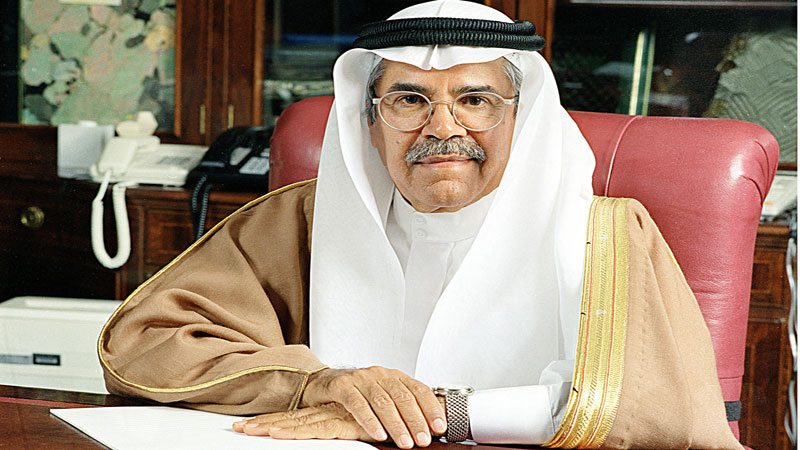
By far the greatest growth of Aramco occurred in the 35 years from Ali Al-Naimi becoming the first Saudi chiefs executive until today. In 1972, the year Saudi Arabia first began buying shares in Aramco, the company was valued at an estimated $2 billion (not adjusted for inflation). Today, it is arguably worth somewhere between 500 and 1,000 times that.
Starting with Al-Naimi, the Saudis who ran the company saw Aramco as a potential global energy power. Under Saudi ownership, the company was able to pursue that goal. In 1986, Aramco first invested in a foreign refining facility with a joint venture in what is now the Motiva refinery, the largest refinery in the United States. This began three decades of investment in and development of refinery projects across the globe, particularly in Asia. Over the years, Aramco invested in facilities in South Korea, the Philippines, China and Japan. The strategy has made Aramco the primary energy player east of India.
None of this push into refining and petroleum products (what is called downstream production) could have been pursued under American ownership. The American companies who owned Aramco saw the company as merely a producer to supply them with oil. They did not see the potential for Aramco to become a top global energy company. Moreover, they had no incentive to turn Aramco into a competitor against their own businesses.
More recently, Aramco has turned back home, with more investment in and more development of downstream operations in Saudi Arabia. These operations are bringing jobs and investment to the kingdom. The company is focusing on refining and petrochemicals in Saudi Arabia, both on its own and with partnerships such as the Sadara Chemical Company in Jubail, which is a joint venture with Dow Chemical. The expansion into downstream operations abroad and in Saudi Arabia is one of the reasons that Aramco was able to withstand the recent drop in oil prices so well.
The leadership of visionary Saudi businessmen has turned Aramco from simply a crude-producing firm into a two-pronged giant. It is now both a vertically integrated oil products company and a vertically integrated energy company. That corporate positioning has optimized Aramco’s opportunity to facilitate economic transformation within the kingdom through Vision 2030. It sounds odd that an oil company should have a major role in diversifying the economy away from its dependence on crude oil sales, but part of diversifying the economy is focusing on areas of strength and positioning them to attract more business.
The Saudi economy benefits because Aramco’s success encourages business in related industries such as engineering, technological innovation, petrochemicals, alternative energies and logistics. Now Saudi Arabia can, through Vision 2030, leverage the skills and experiences of Aramco’s 55,000 Saudi employees. The kingdom can leverage the partnerships and opportunities Aramco has provided for foreign companies now interested in building and operating in Saudi Arabia. Through Aramco, these have become areas of expertise for Saudi Arabia, just as banking and watches are areas of expertise for Switzerland or fashion and food are areas of expertise for Italy.
Economic diversification via Vision 2030 will come in many forms and involve many industries, but through Aramco Saudi Arabia has become an expert in fields outside of just oil production. These are good platforms to launch further industry. Thirty-eight years ago, Saudi businessmen took a successful oil company and made it a giant in related businesses. Today those businesses can help transform the whole economy.
Published in Daily Times, March 19th 2018.