
Even though the term of the Government is nearing its end, its challenges have not subsided by any means; in fact, with protests, jalsas by political rivals and not so favourable Judgments of the Supreme Court, becoming a common occurrence, the survival of the ruling party has been facing a continuous struggle.
In the legal profession, it is an established and common principle that negatio non-potest probari (negative cannot be proven), and therefore, one has to prove otherwise. However, this principle too has its limitations.
With the emergence of Panama Leaks, several Petitions were filed before the August Supreme Court of Pakistan challenging the qualifications of different politicians, including that of the then sitting Prime Minister of Pakistan, Mian Muhammad Nawaz Sharif. The superior Court, while exercising its power under Article 184(3) of the Constitution of Pakistan, 1973, disqualified Mian Nawaz Sharif for being dishonest, under Article 62(1)(F) and Section 99(F) of Representation of People Act, 1976 (ROPA), in Constitution Petition 29/2016 through its final Judgment dated 28.07.2017. Meanwhile, another Constitution Petition No 35/2016 was filed against the Chairman of Pakistan Tehreek-e-Insaaf, Mr Imran Khan challenging his qualification for being a member of the National Assembly.
The August Court gave its findings in the said Constitution Petition No 35 of 2016, and dismissed the same, declaring that Imran Khan was qualified to be a member of National Assembly, inviting serious criticism from the ruling party, and particularly from the ousted Prime Minister and his family.
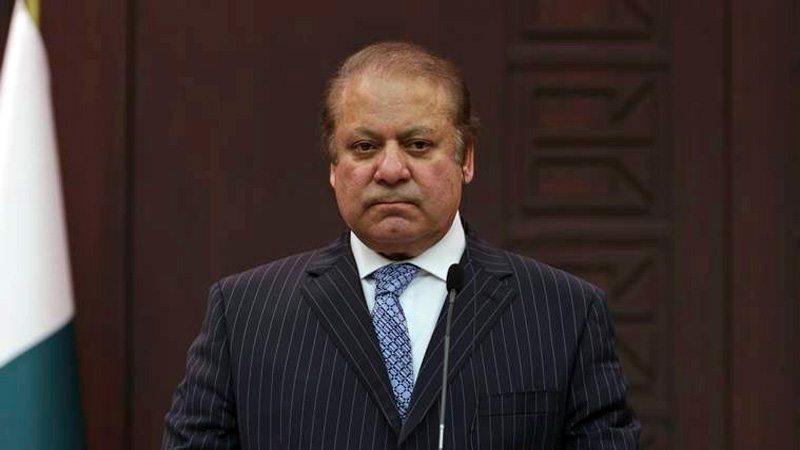 The electronic and print media, as well as the members of PTI have completely misinterpreted the observations of the Supreme Court of Pakistan made in the Constitution Petition No 35 of 2016. With the announcement of a decision in Petition No 35/2016, it was brought on the media that Mr Khan as been declared righteous, sagacious, non-profligate, honest and Ameen, and therefore he was to be called a ‘certified Sadiq and Ameen’.
The superior Court, while exercising its power under Article 184 (3) of the Constitution of Pakistan, 1973, disqualified Nawaz Sharif for being dishonest, under Article 62 (1) (f) and Section 99 (f) of Representation of People Act, 1976 (ROPA)
It is, important to understand not only the reasoning behind the decision dated 15.12.2017, in the Constitution Petition No. 35/2016, but also the intent of legislature behind Article 62 (especially 62 (1)(F)) and 63 of the Constitution read with Section 99(F) of ROPA.
There is no cavil to the preposition, and this has been affirmed and re-affirmed by numerous dictas of the superior Courts, that the qualifications and disqualifications, provided in Articles 62 and 63 of the Constitution, are to be read in consonance with each other. However, what needs to be understood, especially in the case of Mr Khan, is that a court of law cannot issue a positive declaration as to someone being Sadiq and Ameen. For this, there is a two-pronged argument; one is legal and the other is religious (keeping in view the fact that our laws and their interpretation may not be in derogation of the principles of Islam).
A simple reading of Article 62(1)(F) reveals that this specific article mentions the qualifications with a negative clause mandating that ‘[a] person shall not be qualified … unless-‘, and moves on to clause (1) sub-clause (F) saying ‘he is sagacious, righteous, non-profligate, honest and amen ….’ Therefore, a person having the qualities mentioned in first part of sub-clause (F), is qualified to be a member of Majlis-e-Shoora. Thereafter, the second part states, ‘there being no declaration to the contrary by a court of law; ….’ By only reading this part of Article 62(1)(F), it becomes clear that there can be a declaration ‘to the contrary’ by a court of law, as to a person lacking these qualities.
When the said Article 62(1)(F) is read in its entirety, it clarifies that a person is qualified only if he has the requisite qualities, and a court of law has not declared otherwise. As such, it becomes apparent that a court of law can only give a negative declaration, as to someone lacking these qualities, and upon that declaration, such person is disqualified from being a Member of Parliament. The same argument may also be delved upon through another perspective. As per the provisions of Article 62(1)(F), a person can only be disqualified from being a Member of Parliament, but he cannot be declared qualified through an order of a Court of law. Therefore, no positive declaration as to someone being ‘Sadiq and Ameen’ can be given, per se.
This fact finds its strength from the Order dated 15.12.2017, where the August Supreme Court has very carefully used the words along these lines that ‘the Respondent is not disqualified’; or ‘the Court is not inclined to declare that the Respondent is disqualified’. Nowhere, in the judgment has the August Court declared Imran Khan to be Sadiq and Ameen. In contrast to this, both in Mian Nawaz Sharif’s and Jahangir Tareen’s disqualification cases, the Court has categorically stated that he “is not honest in terms of Section 99(F) of ROPA and Article 62(1)(F) of the Constitution of the Islamic Republic of Pakistan, 1973, therefore, he is disqualified”, and that the ‘respondent is held not to be an ‘honest’ person … therefore, he has incurred the disqualification…’, respectively.
The other argument finds its roots in religion. Before getting into this argument, at the very outset, it is important to highlight that certain qualification and disqualifications, both in Article 62 and 63 of the Constitution, as well as the provisions of ROPA, are strictly applicable to the Muslim members of the Parliament. In this regard, Mr. Justice Qazi Faiz Esa, in the case titled Molvi Muhammad Sarwar, etc Vs Returning Officer PB-15, Musa Khail, etc (2013 CLC 1583 Balochistan) observed that ‘Since, Articles 62(1)(D), (E) and (F) of the Constitution and sections 99(1)(D), (E) and (F) of the Act [ROPA] refer to Islam, therefore, these may be interpreted in the light of Shariah’, which means that one cannot apply these qualifications or disqualifications in isolation from the religious principles.
Hence, declaring someone ‘Sadiq and Ameen’ does not fall within the jurisdiction of a Court of law. A court of law can only give a negative declaration that in light of the acts of a person, he is not Sadiq and Ameen, in accordance with the prevalent interpretation of these terms. In no way, can the court of law give a positive declaration in terms of Article 62(1)(F) of the Constitution, and as observed, the August Supreme Court in its entire decision has remained very careful in this regard.
However, the Court’s order has been misinterpreted by the media, as well as the keen workers of PTI, and by Mr Khan himself, who mistakenly believes that he is a certified ‘Sadiq and Ameen’.
The writer is Lahore-based lawyer. He can be reached at [email protected] or Twitter: @haseebajaved
Published in Daily Times, January 11th 2018.