• Skip to primary navigation
  • Skip to main content
  • Skip to primary sidebar
  • Skip to footer
Trending:
  • Kashmir
  • Elections
Tuesday, June 16, 2026

Daily Times

Your right to know

  • HOME
  • Latest
  • Iran-Israel war
  • Gilgit Baltistan Election
  • Pakistan
    • Balochistan
    • Gilgit Baltistan
    • Khyber Pakhtunkhwa
    • Punjab
    • Sindh
  • World
  • Editorials & Opinions
    • Editorials
    • Op-Eds
    • Commentary / Insight
    • Perspectives
    • Cartoons
    • Letters to the Editor
    • Featured
    • Blogs
      • Pakistan
      • World
      • Lifestyle
      • Culture
      • Sports
  • Business
  • Sports
  • E-PAPER
    • Lahore
    • Islamabad
    • Karachi

Agencies

Sirens, doves as China marks 80 years since Nanjing massacre

Published on: December 14, 2017 3:49 AM

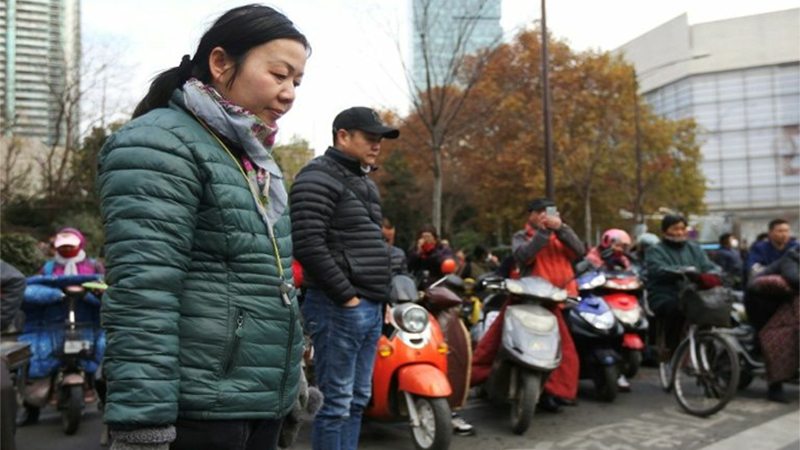
Sirens blared and thousands of doves were released as Chinese President Xi Jinping presided over a sombre ceremony in Nanjing marking 80 years since the wartime massacre in the city by Japanese troops.

Several thousand black-clad soldiers, civil servants and students with white flowers pinned to their jackets braved chilly temperatures at a monument to a dark World War Two chapter that still divides the two countries.

But while vowing never to forget the “great catastrophe” wrought by “Japanese militarism” in a speech to the mourners, a top Chinese official also stressed the need for the two rivals to move forward. “China and Japan are close neighbours, neighbours who can’t move away,” said Yu Zhengsheng, a former member of China’s top Communist leadership who now chairs a parliamentary body.

China and Japan should build on their “long, rich history” of links to deepen “friendship”, Yu said, avoiding reference to bitter disputes over the massacre.

According to China, 300,000 civilians and soldiers were killed in a frenzy of murder, torture, rape, arson and looting in the six weeks after invading Japanese troops seized Nanjing, then the capital city, on December 13, 1937. It remains a source of bad blood due to disagreement over the extent of the slaughter and periodic denials by Japanese arch-conservatives that it even took place.

Officially, Japan concedes that “the killing of a large number of noncombatants, looting and other acts occurred” but says it is “difficult” to determine precise figures. The issue receded during the Cold War but has re-emerged in recent decades, with China now striking an increasingly muscular stance under Xi, while critics say Japanese revisionists have grown bolder under conservative leader Shinzo Abe. China in 2014 formally made the anniversary a National Day of Remembrance, effectively raising its profile.

In an anniversary speech that year in Nanjing, Xi said the slaughter of 300,000 victims could not be denied.

But Xi did not speak Wednesday or lay any wreaths in the nationally televised ceremony that saw much of the city shut down by security measures.

Liang Yunxiang, an international relations expert at Peking University, said Beijing has kept wartime memories alive as leverage against Japan in modern-day disputes such as maritime territorial squabbles.

“There are current conflicts between the two countries, so historical issues are re-emerging. All history is contemporary,” Liang said.

But fewer than 100 people designated as massacre “survivors” remain alive, and both sides have repeatedly expressed desire to look ahead and avoid rocking their huge trade relationship.

“Xi cannot avoid anti-Japanese movements, as nationalism is a source of his political power. But deep down he must be hoping to improve ties with Japan,” said Mitsuyuki Kagami, professor of China studies at Aichi University. Soldiers carried eight large wreaths representing the decades into the memorial site as sorrowful music played. A “peace bell” was then rung. Sirens blared across the city for one minute and car horns could be heard as well. The two countries have struggled to put Japan’s wartime aggression behind them and Abe, the grandson of a wartime minister, has been accused of trying to gloss over history. In 2015, he expressed “deep remorse” for Japan’s actions in Asia, but also said future Japanese generations need not continually apologise, drawing criticism in China and South Korea, another wartime victim.

Published in Daily Times, December 14th 2017.

Filed Under: World

Submit a Comment


Primary Sidebar


Latest News

Neymar injury concern grows as Brazila wait medical update

Four GB independents join IPP

Taylor Swift friendship tensions rise amid Blake Lively claims

Princess Kate support for Eugenie sparks royal tension

PCB shifts to secret central contract system

Pakistan

Four GB independents join IPP

Heavy rains prompt nationwide flood alert

Pakistan seeks freedom for Somalia hostages

Khawaja Asif urges action against cross-border terrorism

Khawaja Asif

Khawaja Asif sees stronger economic recovery

More Posts from this Category

Business

Pakistan manufacturing output grows 6.44% amid monthly slowdown

Senate panel voices concern over fixed taxes in electricity bills

Petrol price relief likely as global oil falls

Punjab unveils Rs5.9 trillion development-focused budget

PSX extends rally on policy stability and oil price decline

More Posts from this Category

World

Princess Kate support for Eugenie sparks royal tension

Xi backs Myanmar leader during Beijing talks

Trump invites Iraqi premier to Washington

More Posts from this Category


Footer

Home
Lead Stories
Latest News
Editor’s Picks

Culture
Life & Style
Featured
Videos

Editorials
OP-EDS
Commentary
Advertise

Cartoons
Letters
Blogs
Privacy Policy

Contact
Company’s Financials
Investor Information
Terms & Conditions

Facebook
Twitter
Instagram
Youtube

© 2026 Daily Times. All rights reserved.

Manage Consent
To provide the best experiences, we use technologies like cookies to store and/or access device information. Consenting to these technologies will allow us to process data such as browsing behavior or unique IDs on this site. Not consenting or withdrawing consent, may adversely affect certain features and functions.
Functional Always active
The technical storage or access is strictly necessary for the legitimate purpose of enabling the use of a specific service explicitly requested by the subscriber or user, or for the sole purpose of carrying out the transmission of a communication over an electronic communications network.
Preferences
The technical storage or access is necessary for the legitimate purpose of storing preferences that are not requested by the subscriber or user.
Statistics
The technical storage or access that is used exclusively for statistical purposes. The technical storage or access that is used exclusively for anonymous statistical purposes. Without a subpoena, voluntary compliance on the part of your Internet Service Provider, or additional records from a third party, information stored or retrieved for this purpose alone cannot usually be used to identify you.
Marketing
The technical storage or access is required to create user profiles to send advertising, or to track the user on a website or across several websites for similar marketing purposes.
  • Manage options
  • Manage services
  • Manage {vendor_count} vendors
  • Read more about these purposes
View preferences
  • {title}
  • {title}
  • {title}
We use cookies to ensure that we give you the best experience on our website. If you continue to use this site we will assume that you are happy with it.