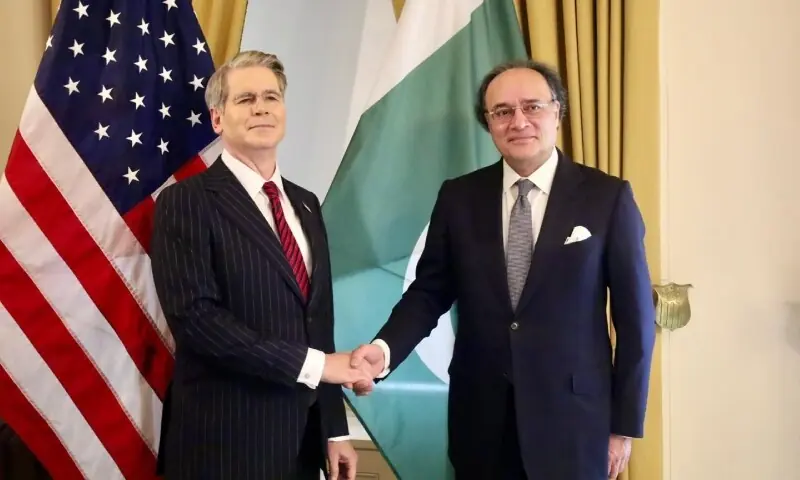
Pakistan has reportedly requested a $10 billion exchange stabilisation facility from the United States in a move aimed at strengthening its foreign exchange reserves, supporting the rupee and reducing dependence on multilateral lenders.
Read More: Federal government extends austerity measures to curb spending
According to a Reuters report citing a source familiar with the matter, Islamabad has proposed a Bilateral Exchange Stabilisation Support Facility worth $10 billion with a maturity of up to five years. If approved, the arrangement would provide a financial backstop to help improve Pakistan’s external position while complementing ongoing economic reforms.
The request reportedly follows Pakistan’s diplomatic engagement in efforts related to the US-Iran conflict and comes as Islamabad seeks to deepen economic cooperation with Washington.
Finance Minister Muhammad Aurangzeb discussed Pakistan’s economic outlook during a meeting with US Treasury Secretary Scott Bessent in Washington. According to Pakistan’s Finance Ministry, Aurangzeb highlighted the country’s vulnerability to regional geopolitical developments and sought greater US support for improving Pakistan’s access to international capital markets, boosting foreign exchange reserves and enhancing sovereign credit ratings. The ministry’s statement, however, did not mention the reported request for the stabilisation facility.
The US Treasury declined to comment on the report, while Pakistan’s Finance Ministry had not issued an official response regarding the request.
Pakistan is currently implementing reforms under a $7 billion International Monetary Fund (IMF) programme, which includes fiscal consolidation, tax reforms and tighter monetary policies. Although these measures have contributed to greater macroeconomic stability, the country continues to rely on official external financing and bilateral support to maintain reserve levels.
Analysts say a US-backed stabilisation facility would strengthen investor confidence, improve external liquidity and reduce pressure on the Pakistani rupee. It could also lessen reliance on emergency funding arrangements and provide additional financial flexibility during periods of global economic uncertainty.
Read More: Pakistan extends austerity measures for another year
Pakistan narrowly avoided a sovereign default in 2023 and has since worked to rebuild its economy through IMF-backed reforms, foreign investment initiatives and efforts to diversify sources of external financing.