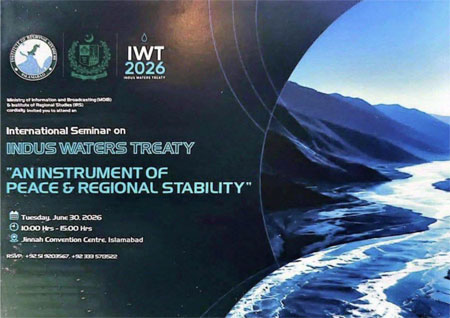
 Yesterday, I attended the landmark international seminar on the Indus Waters Treaty (IWT) at the Jinnah Convention Center in Islamabad. Organized by the Ministry of Information and Broadcasting (MoIB) and Institute of Regional Studies, the event brought together an exceptional gathering of local political leaders, seasoned policy makers, legal experts, and international scholars.
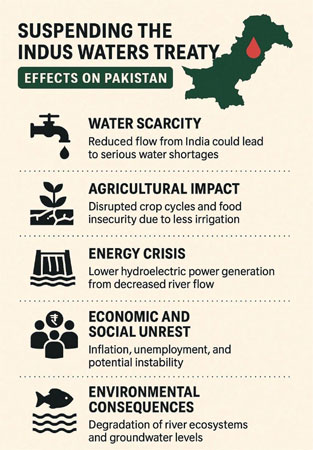
In an era dominated by escalating transboundary water friction, the hall shared a singular, pressing mandate: to address, analyze, and create global awareness around a unilateral crisis that threatens the human security of over 240 million people.
The Abeyance!
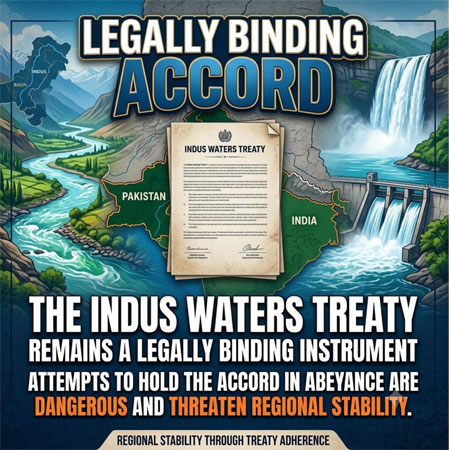
The context of the seminar is rooted in a dangerous precedent. On April 23, 2025, India unilaterally announced it was placing the 65-year-old Indus Waters Treaty in “abeyance”. For over six decades, the IWT has been celebrated as the world’s most resilient water-sharing pact, surviving three major wars because it successfully insulated shared hydrology from raw politics.
Legal Breaches
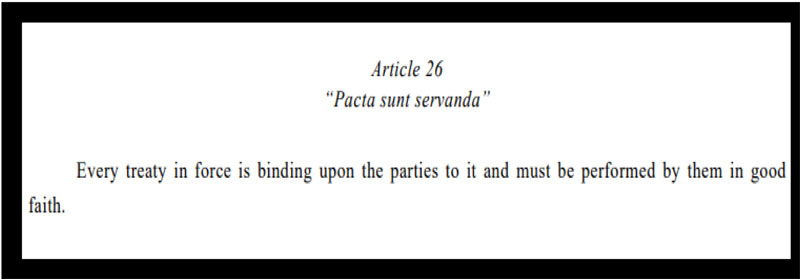
By freezing basic cooperative procedures like hydrological data exchange and mandatory inspections through the Permanent Indus Commission, New Delhi has committed a profound breach of international law. Under Article 26 of the Vienna Convention on the Law of Treaties (VCLT), agreements must be performed in good faith (pacta sunt servanda), and Article 57 explicitly limits treaty suspension to mutual consent or built-in provisions-neither of which apply here, as the IWT contains zero clauses for unilateral suspension.
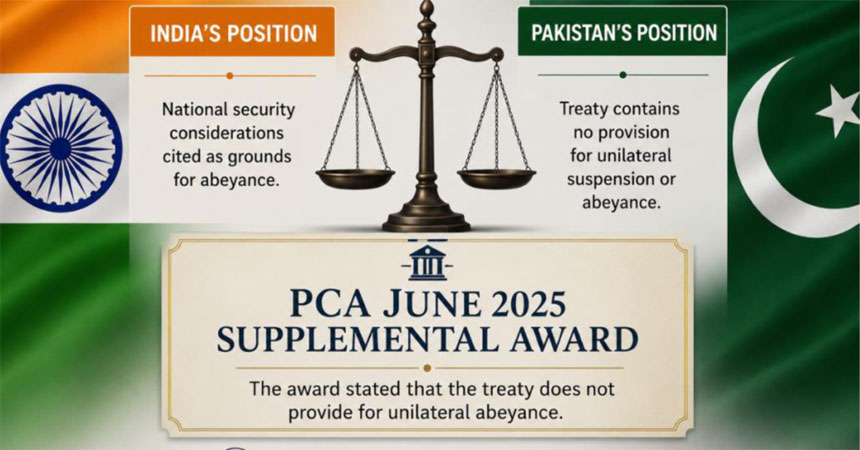
Furthermore, India’s attempt to claim a material breach because Pakistan utilized the treaty’s own tiered arbitration mechanism regarding the Kishanganga and Ratle projects holds no legal water. Seeking legal recourse is not a repudiation of an agreement. This foundational reality was explicitly validated by the Permanent Court of Arbitration (CoA) in its June 2025 Supplemental Award, which firmly rejected the legality of India’s abeyance and declared the treaty fully valid and binding.
While the Jinnah Convention Center featured dense technical and political panels, three distinct speakers fundamentally shifted the horizon of the debate, elevating the discourse from a localized resource row into a high-stakes struggle for regional stability and international law.
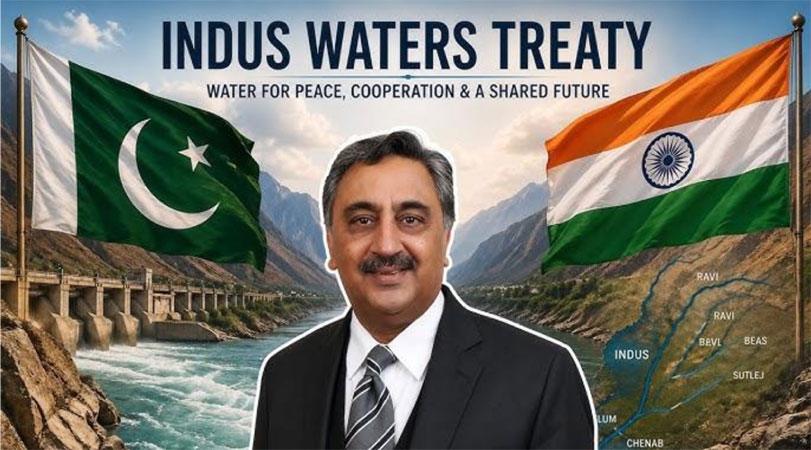
Structural Breach & Legal Diplomacy
Renowned international law expert Mr. Ahmer Bilal Soofi opened a severe legal front against New Delhi’s strategy, categorically defining the abeyance as a bad-faith breach of international legal norms.
He unmasked the political underpinning of the crisis, reminding the audience that as far back as 2016, Indian Prime Minister Narendra Modi propagated a dual political agenda to satisfy his ultra-nationalist base: the abrogation of Article 370 in Jammu and Kashmir, and the dismantling of the Indus Waters Treaty. Having accomplished the former, New Delhi is now actively targeting the latter. More strikingly, Mr. Soofi linked the hydro-crisis directly to sovereign security threats. He pointed that Operation Sindoor is still on through Indian proxies in Afghanistan that propels cross-border terrorism via the TTP in Khyber Pakhtunkhwa and the BLA in Balochistan. By weaponizing water while actively financing regional proxy networks, India has transformed the dispute into a matter requiring the direct intervention of the UN Charter framework.
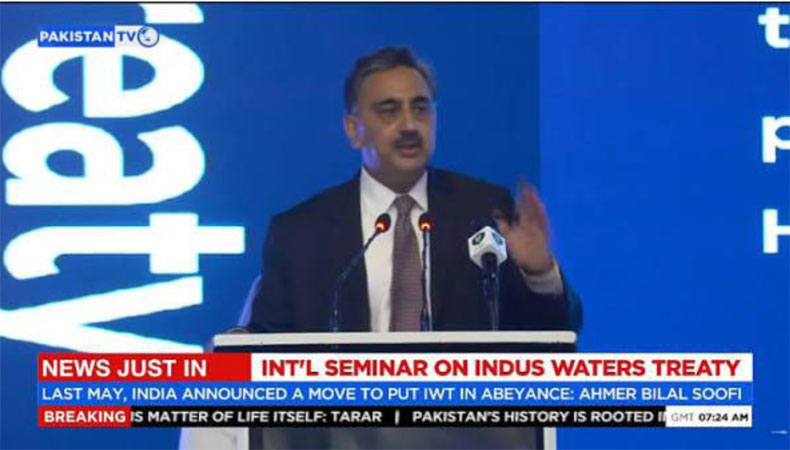
Mr. Soofi advocates for aggressive legal diplomacy. Instead of falling into cyclic political deadlock, Pakistan must force India onto an institutionalized legal playing field. By employing bilateral law-enforcement cooperation frameworks, such as UN Security Council Resolution 1373 for terrorism and strict evidence sharing, both states can be made to realize that what they demand from one another is precisely what international law already obligates them to perform.
Upstream Counter-weight
Dr. Victor Gao, Vice President of the Center for China & Globalization and a seasoned expert, delivered an eloquent yet sharp geopolitical reality check directed straight at New Delhi. He invoked a timeless philosophical maxim: “Do not do unto others what you do not want others to do unto you.”
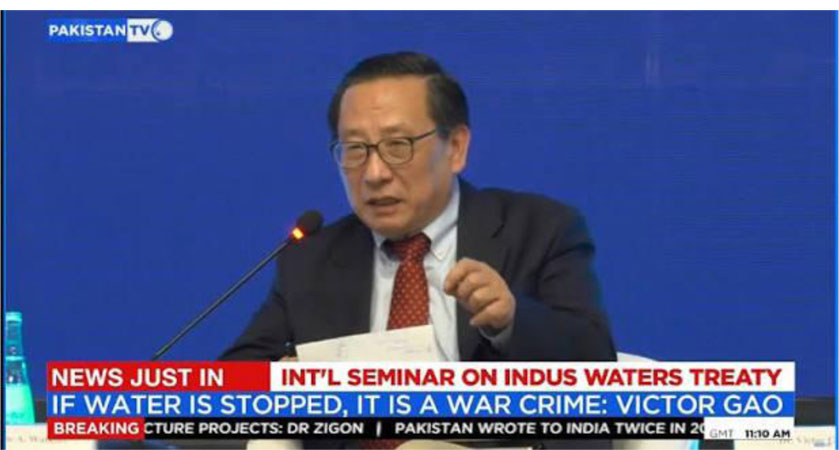
Dr. Gao reminded India that its geographical upper-riparian status is a localized mirage. India is not the ultimate upstream superpower; it sits directly downstream of the Tibetan Plateau, a massive hydrological heartland from which 18 separate countries draw their essential water flows from China. If India normalizes the lawless weaponization of downstream water flows to settle political scores, it sets an extraordinarily dangerous structural precedent that could easily backfire against its own domestic water security.
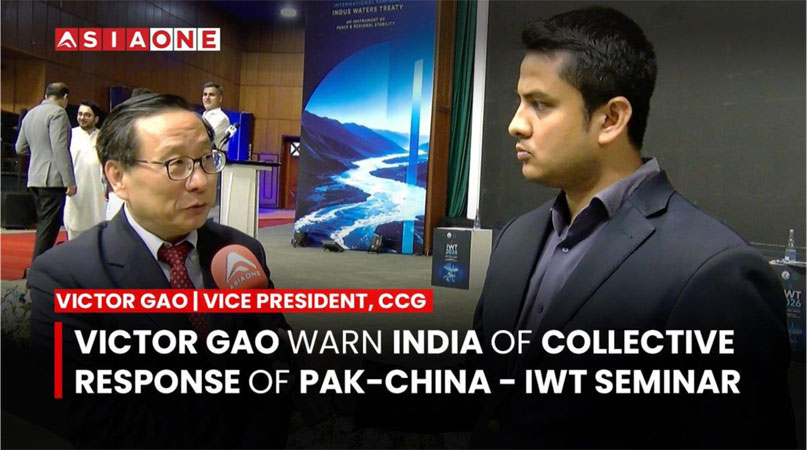
To systematically neutralize these violations, Dr. Gao urged that Pakistan and China must cooperate rigorously across shared regional water networks. He went a step further by proposing a bold, new trilateral water agreement between Islamabad, Beijing, and New Delhi-structuring a grand regional framework to guarantee that the life-giving flow of South Asian water remains permanently insulated from shifting political winds.
The Global Diplomatic Front
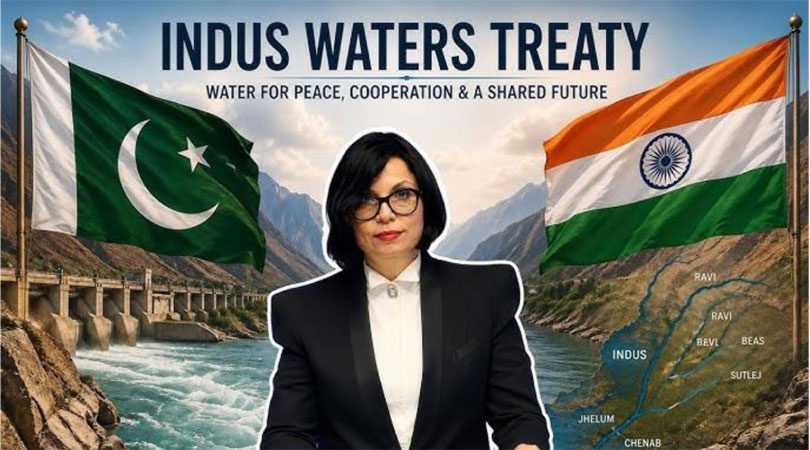
International humanitarian scholar Dr. Roxolana Zigon injected a sobering systemic comparison into the room. She noted that as an increasingly close ally of Israel, India has deliberately adopted a path of calculated disruption, explicitly mirroring Israeli strategies in the Middle East-disregarding long-standing international legal frameworks to assert raw, unilateral dominance over civilian populations.
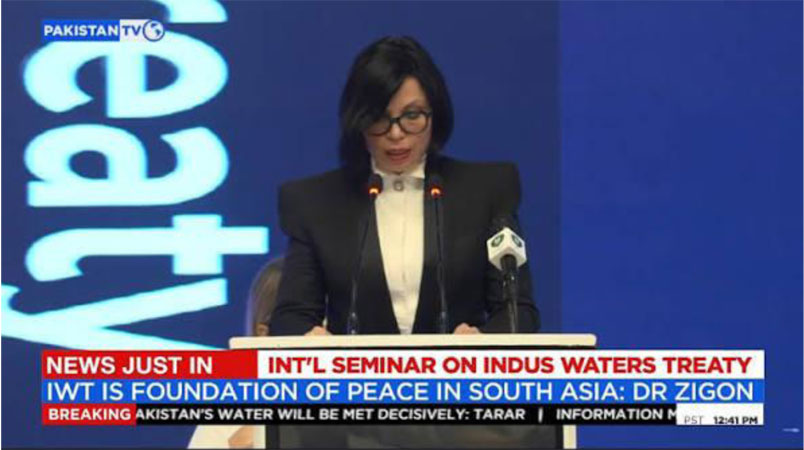
Dr. Zigon stressed that Pakistan must immediately shed the outdated view that the IWT crisis is merely a bilateral gridlock. Instead, Islamabad must launch a global diplomatic counter offensive. She urged Pakistan to utilize the Shanghai Cooperation Organization (SCO) and aggressively campaign for entry into BRICS to create deep institutional awareness about India’s water aggression. Global heavyweights like China and Russia must be pressured to take a firm, unambiguous stand on this violation of international treaty sanctity.
Concretely, Zigon proposed that Pakistan institutionalize this global narrative by launching a permanent international platform titled the “Islamabad Indus Waters Treaty Forum” to ensure continuous global oversight and legal accountability over the Indus Basin.
The Responsible Power
What tied the entire seminar together beautifully was a consensus that spanned every international and domestic panelist: resounding praise for Pakistan’s recent diplomatic maturity and peacemaking efforts during the US-Iran military flashpoint. The contrast presented to the world at the Jinnah Convention Center was stark. On one side stands India, acting as a premier regional destabilizer, funding proxy networks through Operation Sindoor, and holding the lifeblood of 240 million people hostage under the guise of “reversible pressure.”
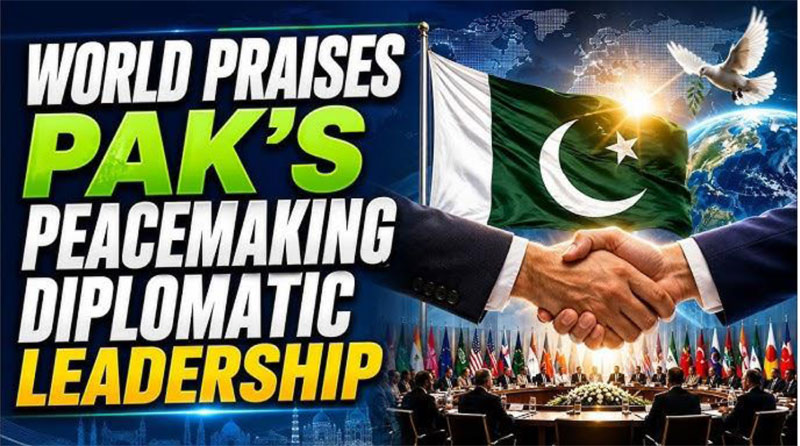
On the other stands Pakistan, acting as a mature middle power, an honest international mediator, and a strict custodian of the rules-based international order.
By transitioning from defensive technical arguments to active, law-grounded narrative sovereignty, Pakistan has sent a clear message from Islamabad to the global community: the preservation of the Indus Waters Treaty is no longer just a localized necessity, it is a frontline defense for the integrity of international law itself.