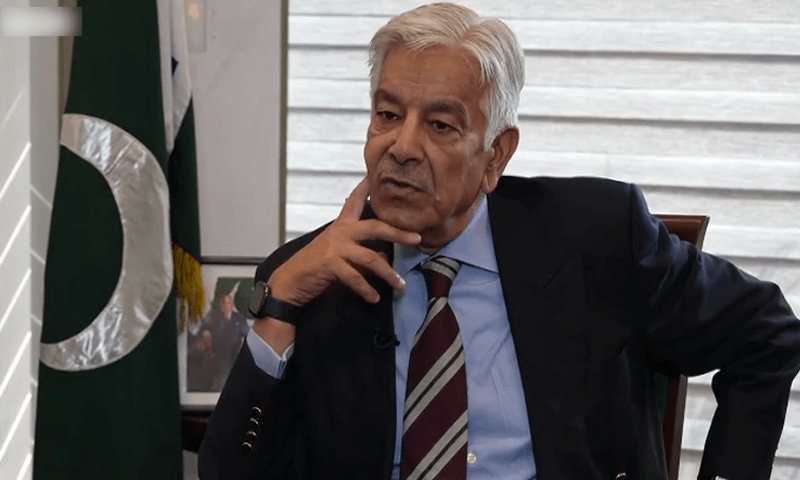
Defence Minister Khawaja Asif urged Pakistan Tehreek-e-Insaf (PTI) to become part of a broader Charter of Democracy, saying political parties must learn from past mistakes and strengthen democratic institutions through cooperation. Speaking in the National Assembly, he recalled how Pakistan Muslim League-Nawaz and Pakistan Peoples Party overcame intense political rivalry and later agreed on democratic reforms. He stressed that national politics should focus on reconciliation rather than repeating past conflicts.
Highlighting lessons from political history, Asif said former prime ministers Nawaz Sharif and Benazir Bhutto chose dialogue and consensus after experiencing years of confrontation. He invited PTI to support a similar democratic framework, arguing that all political stakeholders should contribute to protecting parliamentary traditions. According to him, strengthening democracy requires collective responsibility and a commitment to institutional stability across the political spectrum.
At the same time, the defence minister strongly criticized PTI’s period in government and accused the party of weakening parliamentary norms. He referred to controversial legislative decisions, the dissolution of the National Assembly and several incidents that, in his view, harmed democratic culture. Asif argued that political parties must reflect on their own records before presenting themselves as defenders of democratic values and constitutional principles.
He also praised Prime Minister Shehbaz Sharif for maintaining contact with opposition lawmakers and encouraging political engagement despite differences. According to Asif, the current government has demonstrated greater willingness to communicate with rivals and reduce tensions inside parliament. He maintained that meaningful dialogue remains essential for addressing political disagreements and creating a healthier democratic environment in the country.
During his speech, Asif commented on Opposition Leader Mahmood Khan Achakzai’s alliance with PTI, triggering a brief exchange in the House. He also defended his earlier remarks regarding Kashmir, saying they were intended to acknowledge the sacrifices made by Kashmiris. The minister emphasized that Pakistan’s support for the Kashmir cause remains firm and should be viewed in the context of decades of political and diplomatic commitment.
Concluding his address, Asif returned to the idea of political reconciliation and urged all parties to move beyond past disputes. He acknowledged that no political force has a perfect history but argued that progress depends on correcting mistakes and building consensus. The minister said strengthening parliament, democratic institutions and national unity should remain shared objectives for all political stakeholders.