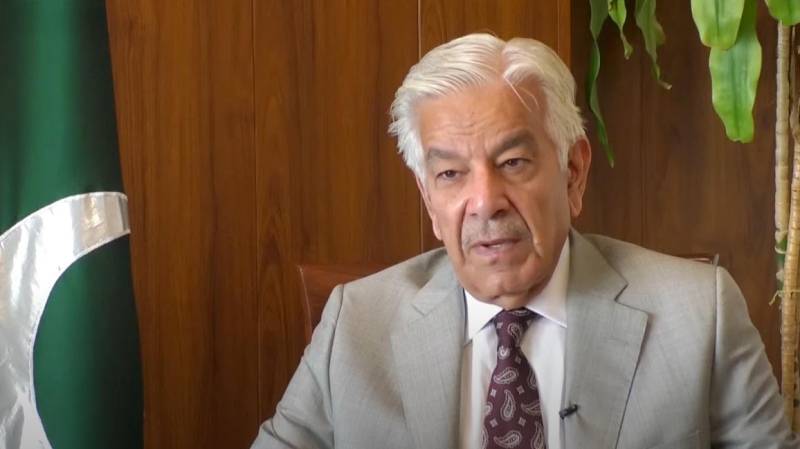
Defence Minister Khawaja Asif has called on opposition parties to move beyond past political disputes and sign a new charter aimed at strengthening democratic norms and parliamentary traditions in Pakistan.
Speaking during a session of the National Assembly, Khawaja Asif said political forces should learn from past experiences and work together to reinforce democratic institutions. He noted that both major parties, the Pakistan Muslim League-Nawaz (PML-N) and the Pakistan Peoples Party (PPP), had previously overcome political differences through the Charter of Democracy and benefited from that understanding.
The minister acknowledged that mistakes had been made by different political parties in the past but stressed the importance of learning from those experiences. He urged the opposition to support democratic values and contribute to strengthening parliamentary traditions.
Referring to recent political developments, Khawaja Asif said Prime Minister Shehbaz Sharif had engaged with opposition leadership in a manner that reflected democratic maturity. He contrasted the current political environment with earlier periods when dialogue between government and opposition was more limited.
The defence minister also criticized the founder of the Pakistan Tehreek-e-Insaf (PTI), alleging that significant damage had been caused to constitutional and democratic traditions during PTI’s tenure in power. He argued that parliamentary politics and democratic institutions had suffered as a result of political practices adopted by the party.
Commenting on opposition politics, Khawaja Asif expressed respect for opposition leader Mahmood Khan Achakzai but remarked that his presence among PTI lawmakers appeared unusual. The statement drew attention during the assembly proceedings and added to the ongoing political debate between the government and opposition.
The minister further emphasized that political parties should not be dependent on a single individual and that democratic organizations require strong institutional structures and internal consultation mechanisms.
His remarks come amid continued tensions between the government and opposition, with both sides exchanging criticism over governance, democratic practices, and the future direction of Pakistan’s political system. Calls for dialogue and political consensus remain central to discussions on strengthening democratic institutions and parliamentary functioning in the country.