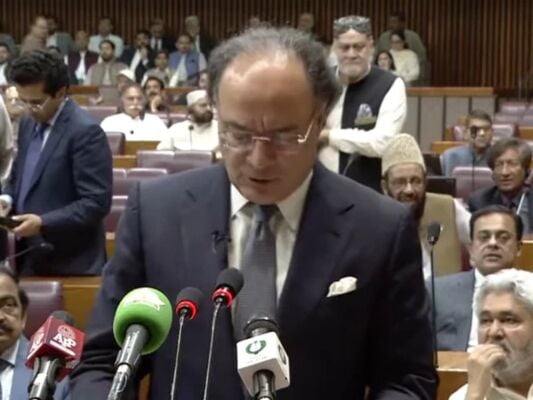
Finance Minister Muhammad Aurangzeb said the government is expanding the tax base instead of increasing pressure on salaried taxpayers. Addressing the National Assembly on Saturday, he defended the 2026-27 budget and highlighted measures aimed at economic growth and fiscal stability. The budget affects taxpayers, businesses, farmers, exporters, and industries across Pakistan.
Aurangzeb said the government had reduced the tax burden on salaried individuals, small businesses, exporters, and the construction sector. He added that retailers were being brought into the tax system through a simplified scheme to improve compliance and broaden the revenue base. According to the minister, these steps were designed to promote fairness while increasing overall tax collection.
The finance minister pointed to improving economic indicators, saying remittances reached $4.25 billion last month and were on track to hit $41 billion annually. He said IT exports had grown by 20 percent and were expected to exceed $4.5 billion. Freelancers, meanwhile, generated earnings of $1.6 billion. Aurangzeb also claimed the government collected an additional $14 billion in revenue over the past two years through improved tax administration.
Agriculture remained a major focus of the budget, the minister said. He announced collateral-free loans worth up to Rs300 billion for small farmers and allocated Rs109 billion under the Prime Minister’s Youth Agriculture and Business Loan Scheme. Additional support includes subsidies for fertilizer, agricultural credit, and urea, along with duty relief on tractors, harvesters, irrigation equipment, and related machinery.
Meanwhile, lawmakers continued debating the budget beyond the originally allocated 40 hours. Members discussed Senate recommendations on taxes, salaries, agriculture, and energy policy. Aurangzeb said several proposals would be reviewed for inclusion in the Finance Bill and reaffirmed the government’s commitment to fiscal discipline, economic reforms, and sustainable growth.