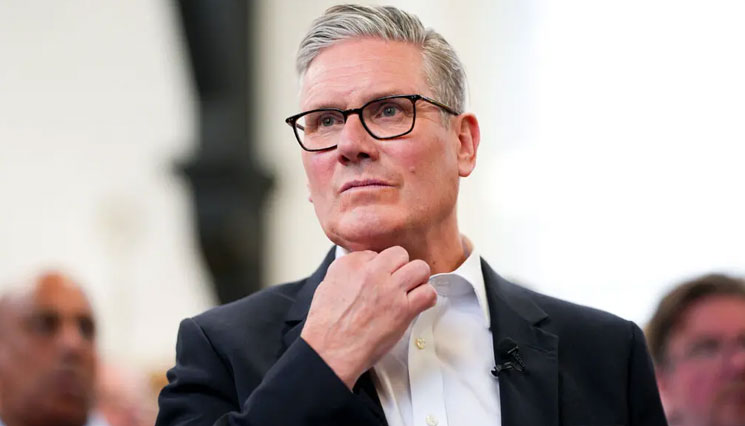
 British Prime Minister Keir Starmer said on Friday he would not walk away from his job, vowing to fight any challenge from his leading party rival Andy Burnham and potentially ushering in a new bout of political instability.
Burnham, the Greater Manchester mayor, won a decisive victory for Labour in an election for a parliamentary seat in northwest England, and has signaled that he will use it to enter any contest to replace Starmer. The scale of his victory in Makerfield prompted more Labour lawmakers to say Starmer should consider stepping down to choreograph an orderly handoverto Burnham.
But Starmer, who won a landslide election in 2024, said he was “not going to walk away,” reeling off a list of actions during his two years in power: closer ties to the European Union, stabilizing the economy and reducing waiting times for the health service.
“If there is a contest … then yes, I will run, I will stand, and I’ve said repeatedly I’m not going to walk away,” Starmer told reporters in London during a visit designed to indicate it was “business as usual” for him. He again warned of the dangers of a potentially disruptive leadership campaign.
His resistance to growing Labour calls to set a timetable to step down, coupled with the scale of Burnham’s win in Makerfield, could threaten hopes of an orderly transition by putting divisions on public display in a leadership contest.
Burnham, a 56-year-old career politician, won the contest in Makerfield in northwest England with 54.8 percent of the vote, beating the candidate for the populist Reform UK, on 34.5 percent, and boosting his image as someone who could halt the rise of veteran Brexit campaigner Nigel Farage’s party. Hours after claiming victory, he set out a national approach in what lawmakers described as a prime ministerial-style address.
“I did talk about the need to change Labour … and we’ve got to now take this moment and answer the challenges that have been laid down,” he told a crowd of supporters, listing areas that he said needed to be tackled: making life more affordable, reducing utility bills and driving reindustrialization.
“It is our last chance to change but we are going to take it … and we are going to lay out a new path for Britain.”
His victory not only sent him back to parliament, from where he can mount a leadership challenge, but also boosted the hopes of some worried Labour lawmakers that they can win the next national election, due in 2029.
That is something some Labour lawmakers say Starmer, struggling with some of the worst popularity ratings of any British leader, cannot achieve.
Polls indicate Burnham would win a formal leadership contest, which is decided by party members, although some Labour lawmakers hope that process can be avoided.
That would mean Britain installing its seventh prime minister in just over a decade, the highest turnover in nearly two centuries – a reflection of voter anger at successive failures to improve living standards and public services and tackle illegal immigration.