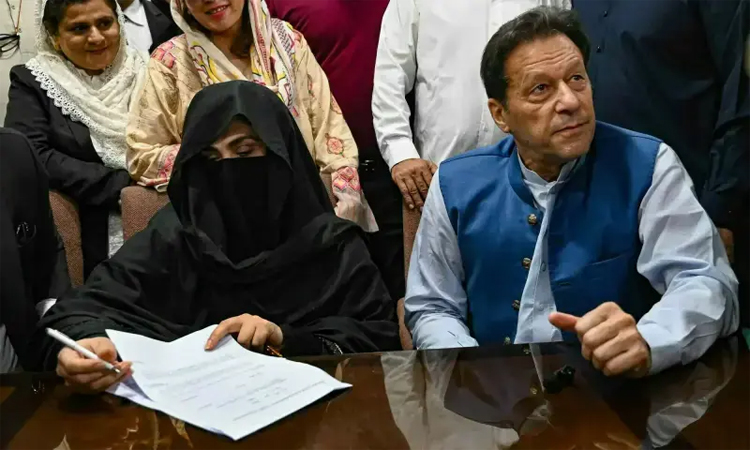
The Islamabad High Court (IHC) on Thursday directed jail authorities to obtain and provide signed power of attorney documents for former prime minister Imran Khan and his wife Bushra Bibi within seven days, paving the way for further legal proceedings related to their appeals in the £190 million case.
A two-member bench comprising Chief Justice Sarfaraz Dogar and Justice Muhammad Asif heard the appeals against the convictions handed down in the high-profile case. Barrister Salman Safdar appeared on behalf of the appellants, while National Accountability Bureau (NAB) prosecutors represented the prosecution.
During the hearing, Safdar informed the court that he had been unable to secure signed powers of attorney from his clients and had faced difficulties obtaining instructions due to restrictions on meetings. He argued that the documents were necessary for pursuing legal remedies, including potential proceedings before higher courts.
The court questioned why the required documents had not yet been signed and provided. Safdar maintained that despite earlier court directions, he had not been able to meet Bushra Bibi and had limited access to Imran Khan. He also informed the bench that Bushra Bibi was experiencing an eye-related medical issue and required consultation.
Chief Justice Dogar observed that if the appellants intended to approach another judicial forum, they were entitled to receive the signed documents. The court subsequently directed the Advocate General’s Office and relevant jail authorities to ensure compliance within one week.
The bench also fixed the hearing of the main appeals against the convictions in the last week of June.
The appeals stem from the Al-Qadir Trust or £190 million case, in which accountability authorities alleged irregularities in the handling of funds repatriated to Pakistan by the United Kingdom’s National Crime Agency during Imran Khan’s tenure as prime minister.
Imran Khan and Bushra Bibi have denied wrongdoing, while their legal team continues to challenge the convictions through the appellate process.