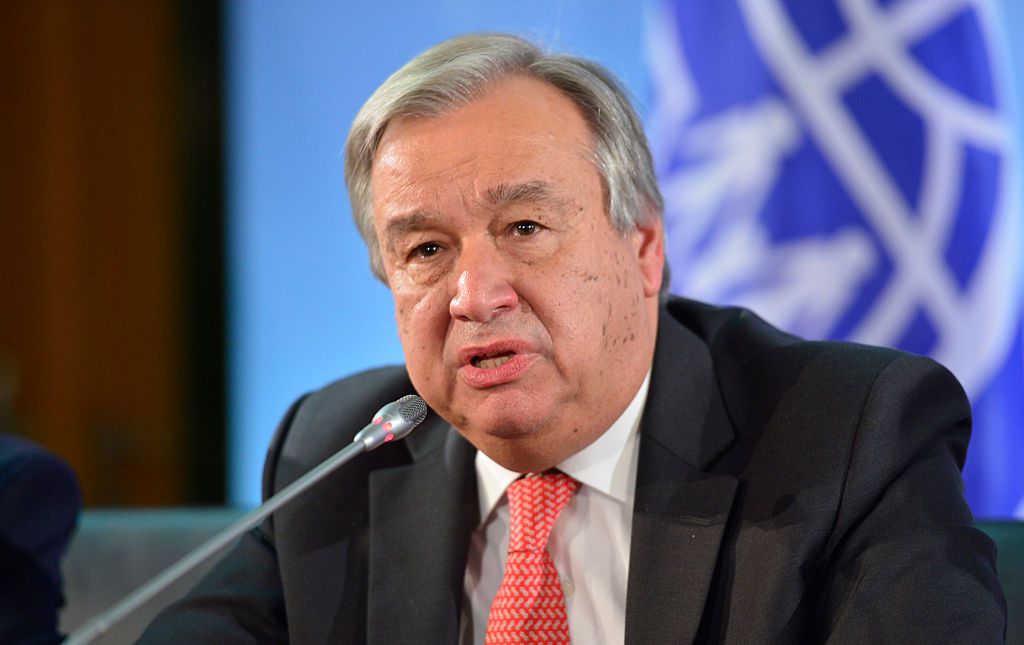
 Hate speech is a grave and growing threat to peace and security, UN Secretary-General Antonio Guterres has warned, calling for urgent action to break a cycle that can lead to genocide and other atrocity crimes.
The UN chief was speaking at UN Headquarters in New York at the launch on Thursday of the Muscat Plan of Action – an initiative that highlights the role of traditional and Indigenous leaders in promoting peace and strengthening social cohesion.
The Plans is the outcome of a multi-stakeholder process led by the Sultanate of Oman, the UN Office on Genocide Prevention and the Responsibility to Protect (UNOSAPG), and the Network for Religious and Traditional Peacemakers.
It was co-hosted by the UN Alliance of Civilizations (UNAOC) which promotes peaceful, inclusive and just societies through intercultural and interreligious dialogue.
In his remarks, the UN secretary-general said hate speech “divides communities, dehumanizes entire groups, and sets the stage for bloodshed.”
“It is also deliberate – and a core component in the playbook for virtually every genocide and atrocity crime.”
Breaking “this outrageous cycle” requires action through education, support for people targeted by abuse, stronger interventions by governments and technology companies, and deeper engagement with traditional and Indigenous leaders, he said.
These leaders “bring crucial knowledge of local realities” and command the respect and trust of their people.
Moreover, their authority and influence can help to ease tensions before they escalate, and their lived experience “makes it more likely that the mediation and settlement of disputes will be respected, implemented, and sustained.”
The Secretary-General noted that hate speech is spreading “faster than ever”, driven by unregulated platforms and intensified by artificial intelligence (AI).
Although States have primary responsibility for preventing genocide and other atrocity crimes, he stressed that all of society has a role.
During a discussion, Pakistan’s UN Ambassador Asim Iftikhar Ahmad supported the Plan, saying Pakistan would continue to work hand-in-hand with its international partners to dismantle the “twisted and flawed ideology of hate speech.”
Continuing, the UN secretary-general said hate speech “divides communities, dehumanizes entire groups, and sets the stage for bloodshed.”
“It is also deliberate – and a core component in the playbook for virtually every genocide and atrocity crime.”
Breaking “this outrageous cycle” requires action through education, support for people targeted by abuse, stronger interventions by governments and technology companies, and deeper engagement with traditional and Indigenous leaders, he said.
These leaders “bring crucial knowledge of local realities” and command the respect and trust of their people.
Moreover, their authority and influence can help to ease tensions before they escalate, and their lived experience “makes it more likely that the mediation and settlement of disputes will be respected, implemented, and sustained.”
The Secretary-General noted that hate speech is spreading “faster than ever”, driven by unregulated platforms and intensified by artificial intelligence (AI).
Although States have primary responsibility for preventing genocide and other atrocity crimes, he stressed that all of society has a role.
On his part, the Omani Minister of Endowments and Religious Affairs, Dr. Mohamed bin Said Al Mamari, said, “When my country, Oman, decided to give the world a plan for peace and development, it did not write it using ink alone.”
“Oman drafted this document based on decades of human connection and joint work – and it built this one stone at a time, based on its experience and coexistence and mutual trust.”
The UN chief also said the Plan is a reminder “that hate speech is both a warning sign that violence is coming – and a catalyst that speeds its arrival.”
He outlined four areas where Member States can play a vital role:
First, they should strengthen accountability for digital platforms and ensure that user safety is built into the design of online products and services.
Delegates will have an opportunity to address some of these concerns at the first Global Dialogue on AI Governance taking place next month, he added.
Second, countries should reinforce local capacity for prevention and mediation.