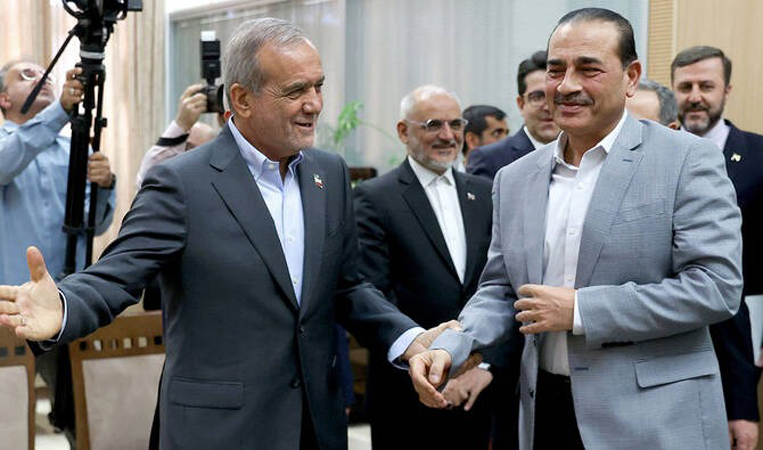
 Pakistan’s military said on Saturday that army chief Field Marshal Asim Munir’s visit to Tehran had contributed “meaningfully” to mediation efforts between the United States and Iran, as US Secretary of State Marco Rubio said there was a chance Tehran could soon accept a deal to end the conflict.
Munir wrapped up what the military described as a “short but highly productive” visit to Iran after holding meetings with President Masoud Pezeshkian, Parliament Speaker Mohammad-Bagher Ghalibaf, Foreign Minister Abbas Araghchi and Interior Minister Eskandar Momeni amid renewed diplomatic efforts to prevent a resumption of hostilities in the region.
The conflict, triggered by joint US-Israeli strikes on Iran in late February, has remained paused under a fragile ceasefire since Apr. 8, though tensions have persisted around the Strait of Hormuz and both sides have continued exchanging warnings amid stalled negotiations over a permanent settlement.
In a statement released after Munir’s departure from Tehran, Pakistan’s military media wing – Inter Service Public Relations (ISPR) – said the visit focused on advancing mediation efforts and supporting regional stability.
“The discussions remained focused upon expediting the consultative process underway to support peace and stability in the region and to reach to a conclusive agreement,” the Inter-Services Public Relations (ISPR) said.
“The engagements were held in a positive and constructive environment and contributed meaningfully toward the mediation process,” it added. “The intensive negotiations over the last twenty four hours have resulted in encouraging progress toward a final understanding.”
It added that the Iranian leadership appreciated Pakistan’s sincere and constructive role in facilitating dialogue and promoting peaceful settlement of regional issues.
Iranian state media earlier reported that Munir held separate meetings with Pezeshkian and Ghalibaf alongside two rounds of talks with Foreign Minister Araghchi.
According to Iranian media, the talks focused on diplomatic initiatives aimed at reviving negotiations after direct US-Iran talks hosted by Islamabad last month failed to produce a peace agreement.
During his meeting with Munir, Ghalibaf said Iran would continue pursuing its “legitimate rights” through diplomacy and military preparedness, according to Iranian state television.
Iranian media also quoted the parliamentary speaker as warning that Tehran had strengthened its military capabilities during the ceasefire period and would not compromise on its “national rights” in negotiations with Washington.
Iranian officials have repeatedly accused the United States of acting dishonestly in negotiations and making what they describe as “excessive demands,” while US President Donald Trump has continued to warn that military action could resume if diplomacy fails.
However, Secretary Rubio made an encouraging statement while interacting with reporters in New Delhi during a visit to India earlier in the day.
“There might be some news a little later today,” he said. “There may not be. I hope there will be.”
“There’s been some progress done, some progress made. Even as I speak to you now, there’s some work being done,” he continued, adding there was “a chance” that a deal could emerge within days.
President Donald Trump said on Saturday that negotiators for the United States and Iran were “getting a lot closer” to finalising an agreement to end the war, according to an interview with CBS News.
He said a final agreement would prevent Iran from obtaining a nuclear weapon and would ensure that Iran’s enriched uranium would be “satisfactorily handled”, according to CBS.
“I will only sign a deal where we get everything we want,” Trump was quoted as saying.
Trump has vacillated between the two poles of diplomacy and military strike since a ceasefire was declared six weeks ago to allow the sides to come to an agreement on Iran’s nuclear programme and on reopening the Strait of Hormuz, a critical oil and gas supply route now controlled by Tehran.
Pakistan has emerged as a key intermediary in the conflict, maintaining close coordination with Tehran and Washington while also engaging China and Oman in efforts to secure a lasting settlement.
Iran’s Foreign Ministry spokesperson Esmail Baghaei confirmed that a Qatari delegation is holding talks with Iranian officials, including FM Araghchi, while Pakistan continues to serve as the primary mediator in the negotiations.
The sources added that the current negotiations revolve around Iran’s nuclear programme and shipping through the Strait of Hormuz as Washington wants some “concrete and practical” assurances to be part of the interim deal. Tehran, however, insists the two issues be discussed in the second phase of talks after the agreement.
The temporary agreement proposals include an immediate end of war on “all fronts” that includes Lebanon, reopening of the strait, an end to the US blockade of Iranian ports and holding nuclear talks within the next 30 days, the insiders said.
However, they added, the issues of the release of Iran’s frozen assets, lifting of international sanctions and compensation for war damages may be discussed in direct talks between Washington and Tehran.
“If the two sides sign the agreement, a second round of direct talks between the two sides is highly expected to resume after Eidul Azha in Islamabad,” Anadolu previously reported, citing a Pakistani source.
CDF Munir, in a day or two, is expected to join Prime Minister Shehbaz Sharif, who is currently visiting China, to discuss the outcome of
his latest contacts with the Chinese leadership, the sources added.