When Microsoft AI chief Mustafa Suleyman warned that many white-collar tasks could be automated within the next 12 to 18 months, it sounded dramatic. But it did not sound impossible. He was not talking about robots replacing factory workers. He was talking about the work done by people sitting in front of computers: legal drafting, accounting, marketing, project management, coding, reporting, documentation, research and routine office decision-making. In other words, the jobs that keep most modern offices alive. https://fortune.com/article/why-microsoft-ai-chief-mustafa-suleyman-predicts-ai-automation-18-months/
Now ask the uncomfortable question: what happens to Pakistan? Pakistan has seen technology waves before. When the internet arrived, the world started changing fast. Businesses moved online. Global communication became instant. New companies were born. New careers were created. But Pakistan was slow. We adopted late, trained late, digitized late and paid the price in lost competitiveness.
Artificial intelligence is not like the internet. The internet gave people access to information. AI can do the work inside that information. It can write, summarize, design, code, analyze, automate, respond, research and increasingly act through agents. That makes AI a blessing, but also a shock. It can help a professional become ten times faster. It can also expose the professional who never upgraded
This is why Pakistan’s white-collar class should not feel too comfortable. The risk is not that every office worker will disappear overnight. The risk is that one AI-trained worker will start doing the work of five untrained workers. A young graduate using AI agents may outperform a senior employee who still depends on old methods. A small business using automation may move faster than a large department waiting for approvals. This is how disruption actually happens. Slowly at first, then suddenly

To be fair, Pakistan has started moving. The National AI Policy 2025 talks about building a national AI ecosystem, responsible adoption, innovation, industry-academia collaboration and large-scale training. A PIDE policy brief notes that the policy aims to train one million professionals and 10,000 new trainers by 2027. https://moitt.gov.pk/SiteImage/Misc/files/National%20AI%20Policy.pdf
That is a strong target. But targets do not save jobs. Training does. And not every training is equal. If Pakistan’s AI training remains limited to ‘What is AI?’, ‘What is generative AI?’, basic Python, web development, tool demonstrations and certificates, then we will only create a new generation of confused learners. They will know the vocabulary of AI but not the use of AI. They will attend workshops but not build systems. They will collect certificates but still ask the same question: ‘Now what?’

This is the gap Pakistan must close.
The world has already moved from AI awareness to AI implementation. ChatGPT has Codex. Claude has coding agents. New AI agents are launching almost every week. The conversation globally is no longer just about chatting with AI. It is about giving AI a task, connecting it with tools, letting it read data, perform actions and solve workflow problems.
Pakistan cannot afford to train people only for yesterday’s AI.
The real need is professional AI education by industry. A doctor should learn AI for healthcare workflows. A lawyer should learn AI for legal research and drafting. A journalist should learn AI for news monitoring, fact-checking and editorial assistance. A teacher should learn AI for lesson planning and student support. A business owner should learn AI for sales, customer service and operations.
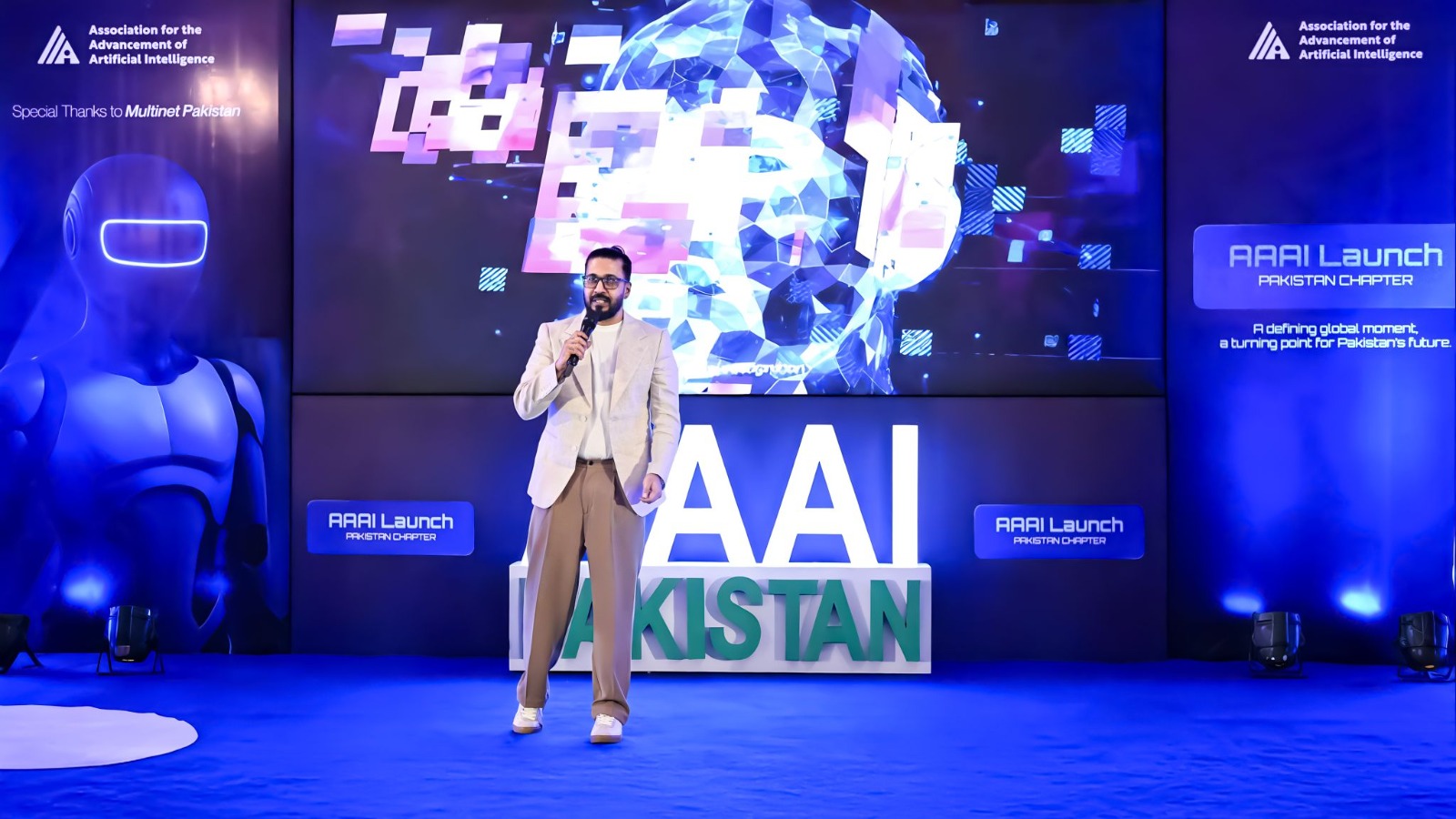
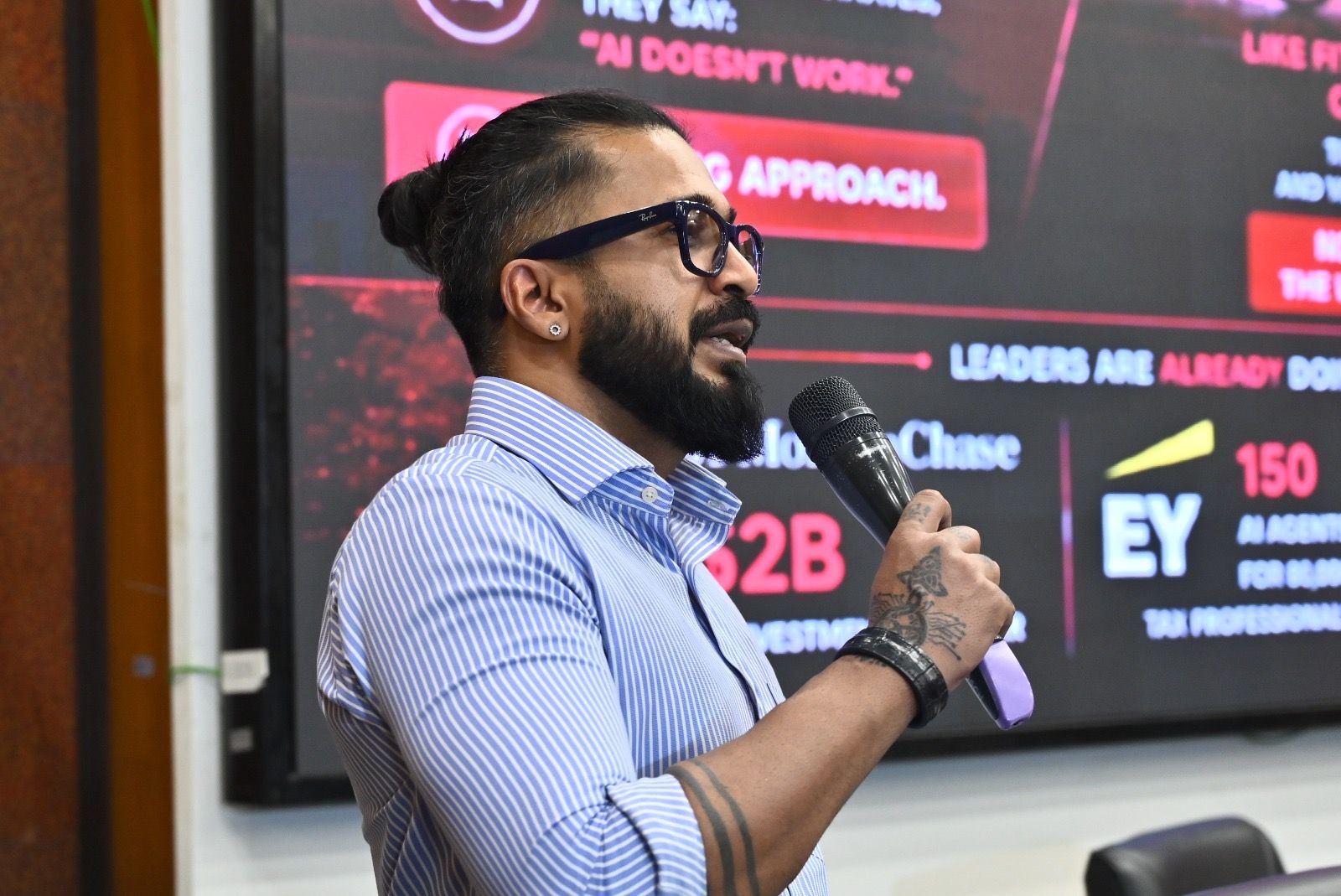
That is where a different kind of training model becomes important. In Pakistan, one name that stands out in this practical implementation space is Muhammad Tahir Ashraf, known publicly as Beyond Tahir. His official website, https://beyondtahir.com, presents a profile built around AI education, automation, AI agents, no-code development and implementation-focused training. His academy, https://academy.beyondtahir.com, is positioned around teaching people how to use AI in real work, not just how to talk about it.
This is important because Pakistan does not need more AI noise. It needs AI roadmaps.
Beyond Tahir Academy’s approach appears aligned with the question Pakistan is now facing: how do we train people according to their profession, their daily work and their real problems? Its courses and masterclasses focus on AI implementation, prompt engineering, AI agents, no-code systems and professional use cases. That is exactly the kind of bridge missing between national policy and practical survival. Muhammad Tahir Ashraf also brings an unusual mix of local and international credibility. He is associated with AAAI Pakistan through https://aaai.pk, connected with IBM Watsonx partnership work in Pakistan, and has positioned himself as a trainer who focuses on implementation rather than theory. In a country where many people can speak about AI, the more important question is: who can teach people how to build with it?
There are other Pakistani names contributing to the AI and technology space too. People like Irfan from Xeven Solutions and several local builders are proving that serious technology work can be done from Pakistan. Government figures such as Shaza Fatima Khawaja and Ahsan Iqbal have also been active in pushing digital policy, innovation and future-facing skills. Bilal Bin Saqib’s work in digital assets and emerging technology regulation shows that Pakistan is also trying to connect with the next financial and technological layer; PVARA describes itself as Pakistan’s dedicated authority for regulating virtual assets and service providers. https://pvara.gov.pk/
So the direction is not completely wrong.
But the speed and structure must improve.
Pakistan also has a path to become more visible in global AI governance. The Global Partnership on Artificial Intelligence brings together dozens of countries and is designed around responsible and human-centric AI development. Its membership framework is expanding, and Pakistan should seriously work toward such international participation. https://www.oecd.org/en/about/programmes/global-partnership-on-artificial-intelligence.html
But global participation requires local capacity.
We cannot enter the AI future only by celebrating Pakistanis who succeed in Silicon Valley. Their success is valuable, but it does not automatically train our workers, save our offices or create our own AI companies. Pakistan must build its own builders. It must support people who are here, teaching here, experimenting here and trying to create an AI workforce from inside the country.
This is where the government should look closely at platforms like Beyond Tahir Academy.
If the goal is to train one million people, then Pakistan needs partners who understand implementation. We need academies that can teach a journalist how to build an AI news assistant, a doctor how to use AI in patient workflow, a lawyer how to automate legal drafting, a student how to build projects, and a small business owner how to save time through AI agents.
Otherwise, the country may end up with exactly what it does not need: thousands of AI certificate holders and very few AI problem solvers.
The Microsoft warning should not be treated as foreign tech drama. It should be treated as an alarm bell.
White-collar work is changing. The comfortable desk job is no longer comfortable. The person who learns AI implementation will not just keep their job; they may redesign it. The person who refuses may slowly become optional.
Pakistan still has time. But this time, unlike the internet era, we cannot afford to be late.