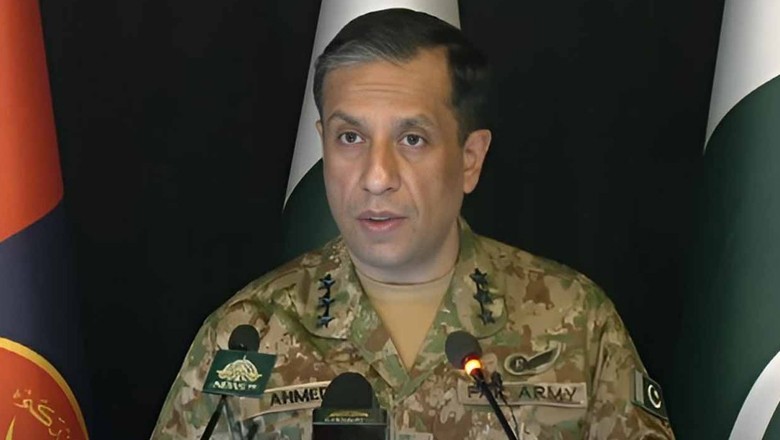
Pakistan Director-General of the Inter-Services Public Relations (DG-ISPR), Lt. Gen. Ahmed Sharif Chaudhry, has warned the Afghan Taliban that they face a clear choice: protect their regime or risk destruction by supporting terrorist groups such as the Tehreek-e-Taliban Pakistan (TTP).
Read More: Zardari warns Afghan Taliban crossed red line
In a television interview, Lt. Gen. Chaudhry stressed that Pakistan did not initiate war with Afghanistan, but was compelled to act due to repeated cross-border terrorist attacks. He said that militants frequently launch attacks on Pakistani soil from Afghan territory, urging the Taliban to prevent their land from being used against Pakistan.
DG ISPR warns Afghan Taliban: Protect your regime or risk self-destruction
More details: https://t.co/yVHCUf5gQQ#ARYNews pic.twitter.com/ZhkbdMW0Je
— ARY NEWS (@ARYNEWSOFFICIAL) March 18, 2026
“This will be the Taliban’s choice: whether their priority is extremists or the security of Pakistan,” he stated. He also highlighted that suicide attacks are prohibited under Islamic law, questioning the justification of such acts and recalling that Taliban leaders had pledged in Doha not to allow Afghanistan to serve as a base for terrorism—commitments that, according to him, remain unfulfilled.
Lt. Gen. Chaudhry underscored that terrorism imposes costs far beyond individual victims, affecting the wider society. Since the launch of Operation Ghazab Lil Haq, cross-border terrorism has reportedly decreased, though Pakistan continues to press for dialogue and the handover of terrorists. He cautioned that dialogue cannot coexist with acts of terrorism.
The DG ISPR also linked the Afghan Taliban regime to both terrorism and narcotics trafficking, emphasizing that Pakistan will continue its counterterrorism operations without haste, pursuing intelligence-based and precise actions against militant networks.
Read More: ISPR says no intel failure in Kabul strike on ammo storage site
His remarks reflect Islamabad’s firm stance that Afghanistan must not serve as a sanctuary for groups threatening Pakistan’s security, reiterating that the cost of inaction is too high for regional stability.