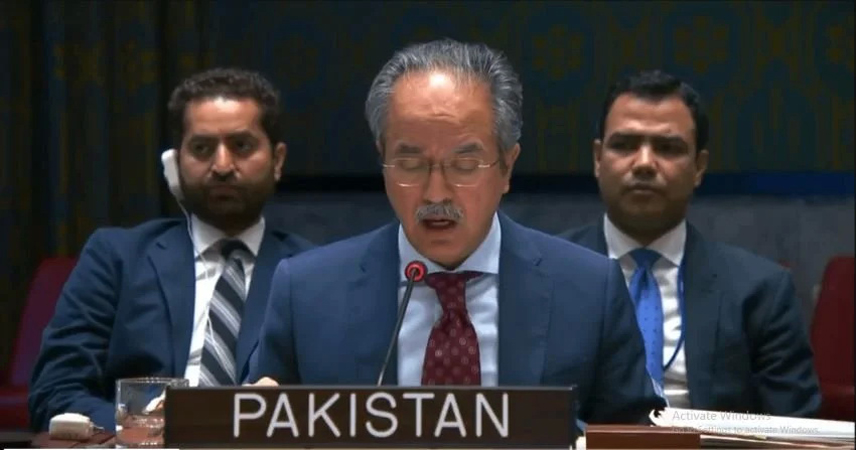
NEW YORK — Pakistan Permanent Representative to the United Nations, Ambassador Asim Iftikhar Ahmad, emphasized Islamabad’s serious concerns over terrorist groups operating from Afghanistan, including Tehreek i Taliban Pakistan (TTP), Baloch Liberation Army (BLA), Majeed Brigade, ISIL-K (Daesh-K), and Al-Qaeda.
Read More: UNSC rebuts Taliban denial, links Afghan networks to rising
Speaking after the United Nations Security Council (UNSC) unanimously adopted a resolution renewing the mandate of the Monitoring Team overseeing the 1988 Taliban sanctions regime for 12 months, Ambassador Ahmad described the resolution as “timely and necessary.” Pakistan voted in favor and praised the United States for facilitating consensus among council members.
Explanation of Vote by Ambassador Asim Iftikhar Ahmad
Permanent Representative of Pakistan to the UN
At the1988 Mandate Renewal of the Monitoring Team for the 1988 Taliban Sanctions Regime*
(12 February 2026)
***Thank you Mr. President,
Pakistan voted in favor of this… pic.twitter.com/rT665naqoK
— Permanent Mission of Pakistan to the UN (@PakistanUN_NY) February 12, 2026
He stressed that Afghan territory must not be used to plan or launch attacks against neighboring countries and called on the Taliban authorities to take decisive action against terrorist groups operating with impunity. The ambassador highlighted the UNSC’s expectation that all member states prevent ransom payments or political concessions from benefiting hostage-takers or terrorists, while ensuring safe release of captives.
Ambassador Ahmad noted that the unanimous adoption of the resolution sends a clear signal to the Taliban that Afghanistan must choose a path toward peace and prosperity rather than isolation. He expressed hope that the Monitoring Team would continue active reporting to support the 1988 Taliban Sanctions Committee in its work.
Read More: TTP continues to get support from Afghan regime with increased attacks against Pakistan
The statement underlines Pakistan’s ongoing focus on regional security and its insistence that Afghan soil should not serve as a safe haven for terrorist operations.