Beijing has rejected India’s claim over the Shaksgam Valley in Kashmir, asserting that the territory “belongs to China” and defending its infrastructure projects in the region.
Read More: China rejects India’s criticism of CPEC
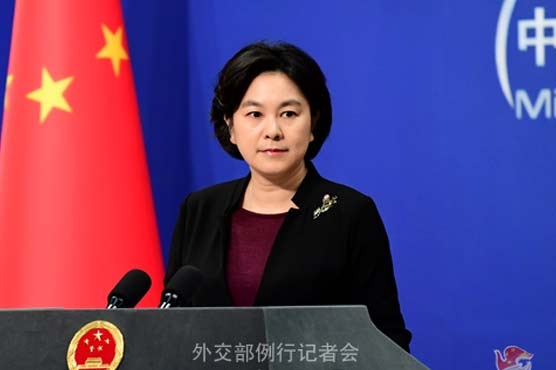
At a press conference on Monday, Chinese Foreign Ministry Spokesperson Mao Ning told reporters that China’s construction activities in the valley were “fully justified” as they were taking place on Chinese territory. She reaffirmed that China and Pakistan had signed a boundary agreement in the 1960s, delimiting the border, and described the China-Pakistan Economic Corridor (CPEC) as an initiative to promote local development and livelihoods.
BREAKING: 🇮🇳 🇨🇳 Foreign Policy 🚨
Yesterday, BJP RSS met with CCP delegation..
Media: Trump is scared of Modi and Xi Jinping’s friendship.
Today :
China rejects India’s claim to Shaksgam Valley.
“The territory you mentioned belongs to China and we will build Infrastructure in… pic.twitter.com/uNPwRUuQ4i— D (@Deb_livnletliv) January 13, 2026
India, however, maintains that Shaksgam Valley is part of its territory. An Indian foreign ministry spokesperson reiterated that New Delhi does not recognise the 1963 China-Pakistan boundary agreement or the CPEC. India also emphasized that Jammu and Kashmir, including Ladakh, are “integral and inalienable” parts of the country and has protested attempts to alter the ground reality in Shaksgam Valley.
The border dispute is part of a broader pattern of tensions between China and India, which includes disagreements over Arunachal Pradesh — referred to by Beijing as Zangnan — and other Himalayan territories. Despite a 2024 pact to lower military tensions following a deadly clash in 2020, territorial claims remain unresolved.
Mao Ning stressed that China’s position on the Kashmir issue remains unchanged and that bilateral cooperation with Pakistan does not affect this stance. The comments underscore the continuing strategic and diplomatic sensitivity surrounding the region, even as both countries have sought to resume trade, direct flights, and investment ties after the 2024 de-escalation measures.
Read More: India questions China’s role in 2025 ceasefire
Observers note that while infrastructure projects in Shaksgam may advance local development, they are likely to fuel ongoing diplomatic friction between Beijing and New Delhi.