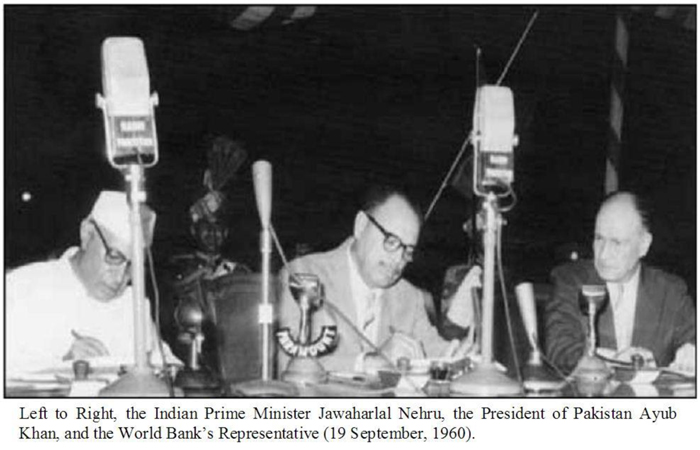
 For over six decades, the Indus Waters Treaty (IWT) stood as a rare beacon of conflict-resilient diplomacy in South Asia. Brokered by the World Bank in 1960, it successfully governed the sharing of the Indus basin’s six rivers through three wars and numerous standoffs.
However, this foundational stability was shattered on 23 April 2025, when India announced the unilateral ‘abeyance’ of the treaty following a false flag operation in Pahalgam that claimed 26 lives.

By suspending the functions of the Permanent Indus Commission and halting the exchange of hydrological data, India transitioned from a framework of treaty bound cooperation to one of strategic coercion. This move has transformed a technical water-sharing agreement into a high-stakes tool of national security, creating an unprecedented hydro-political crisis in a region home to two nuclear-armed rivals.
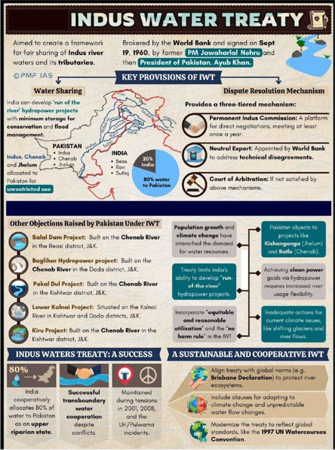
Why Unilateral Suspension is Invalid
Under the established norms of international law, India’s unilateral ‘abeyance’ of the Indus Waters Treaty lacks a valid legal foundation. The primary governing principle is pacta sunt servanda (agreements must be kept), a cornerstone of international diplomacy codified in Article 26 of the Vienna Convention on the Law of Treaties (VCLT).

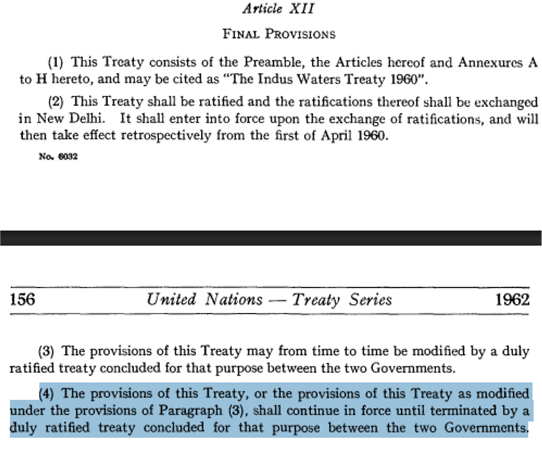
Furthermore, Article XII(4) of the IWT itself explicitly mandates that the provisions of the treaty remain in force until terminated by a “duly ratified treaty” concluded between both governments, providing no mechanism for a single party to suspend obligations at will.
While India has invoked Article 62 of the VCLT (Fundamental Change of Circumstances), the International Court of Justice (ICJ) has historically maintained an extremely high threshold for this plea; the change must be unforeseen and must “radically transform” the extent of obligations still to be performed. Security concerns or demographic shifts rarely meet this standard in the eyes of international tribunals. Crucially, as reaffirmed by the 2025 Court of Arbitration (CoA) Supplemental Award, unilateral suspension does not dissolve the jurisdiction of the treaty’s dispute resolution bodies.
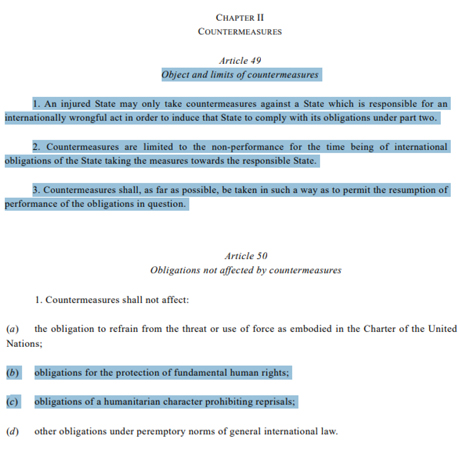
It also fails to meet the criteria for Countermeasures under the Articles on Responsibility of States for Internationally Wrongful Acts (ARSIWA), which strictly prohibit actions that are disproportionate or violate peremptory human rights- specifically the fundamental right to water access.

Water as a ‘Top Risk’
In its authoritative Top Risks of 2026 Report, the US based policy institute Eurasia Group has identified India’s actions as a definitive “weaponization” of water. Evaluating global political risks through the lens of mainstream US policy and investor forecasting, the report lists “The Water Weapon” as a primary threat to global stability.
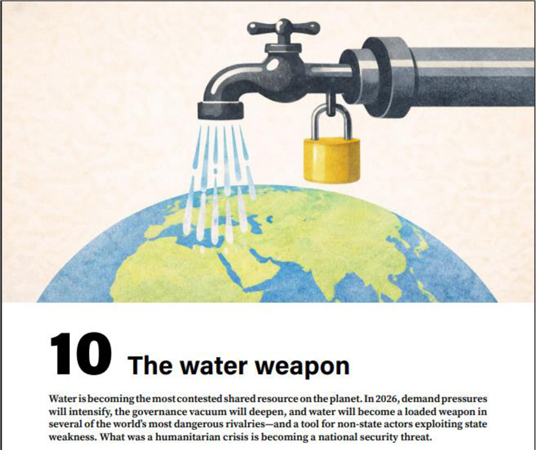
Eurasia Group warns that with the IWT held in abeyance, India’s manipulation of upstream flows directly threatens Pakistan’s agriculture, food security, and millions of livelihoods. In the volatile landscape of South Asia, the report illustrates how quickly essential resources can become instruments of war once broader tensions ignite. Despite a US brokered ceasefire in May 2025, the treaty remains suspended; India appears intent on maintaining the threat of water disruption as a permanent strategic lever.

The Chenab Flashpoint and Systematic Erosion
A particularly dangerous shift is evident in India’s manipulation of the Chenab River flows. Historically governed by strict treaty provisions, the Chenab has recently seen abrupt and unnotified variations. In late 2025, flows at Head Marala surged unexpectedly to 58,000 cusecs before being sharply reduced, a tactic perceived as deliberate “water terrorism.”
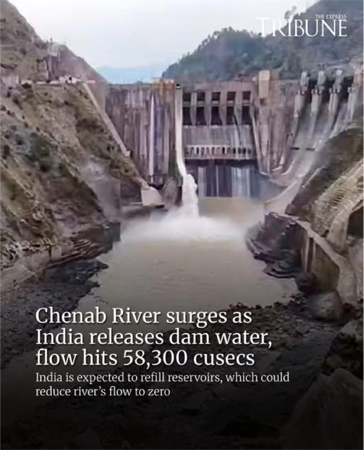
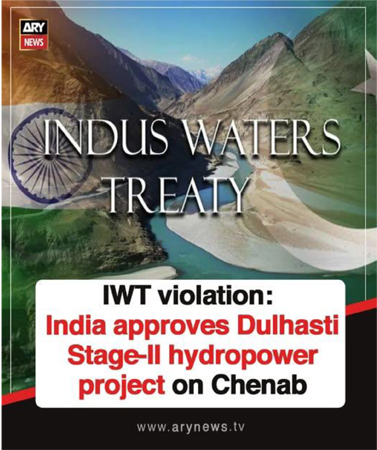
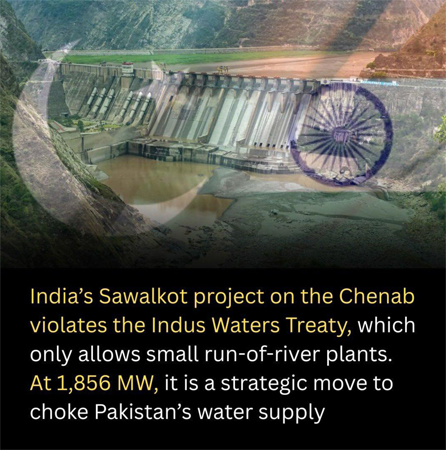
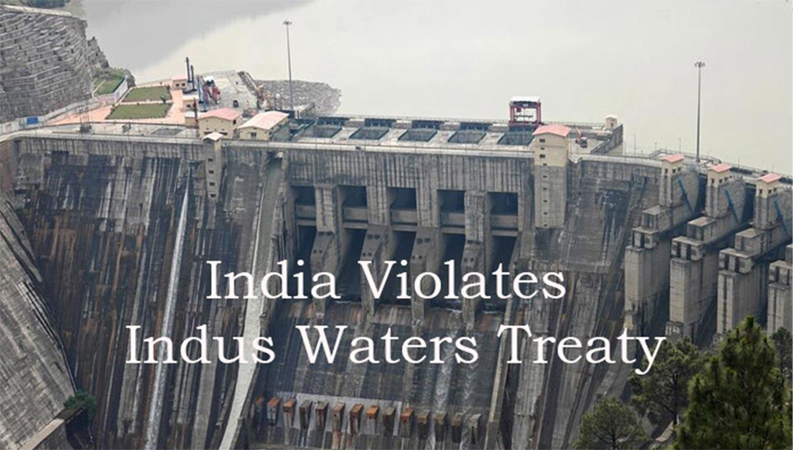
This selective reinterpretation of IWT provisions- characterized by delayed information sharing and unilateral design changes to projects like Sawalkote and Dulhasti Stage-II-is systematically weakening what was once the developing world’s most successful water-sharing agreement. These actions suggest a shift toward a heinous strategy, where infrastructure is built in disregard of treaty obligations to increase India’s capacity to store and manipulate water at will.
International Legal and Humanitarian Rebukes
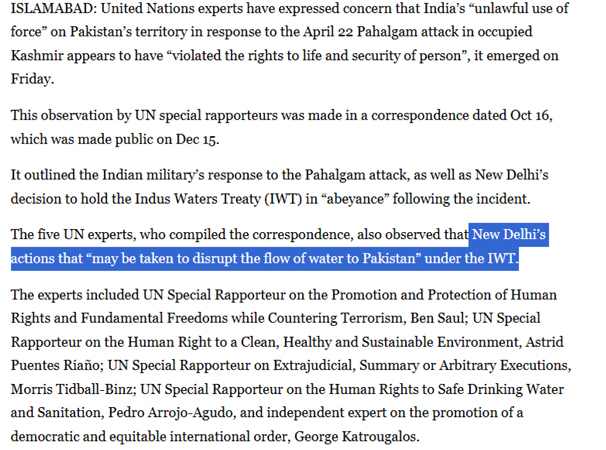
The international community has not remained silent. United Nations experts sharply criticized the abeyance as “ambiguous and unlawful.” UN Special Rapporteurs warned that disrupting cross-border water flows could unlawfully endanger the fundamental rights, livelihoods, and food security of Pakistanis. They emphasized a core principle of international law: water must never be used as a weapon.
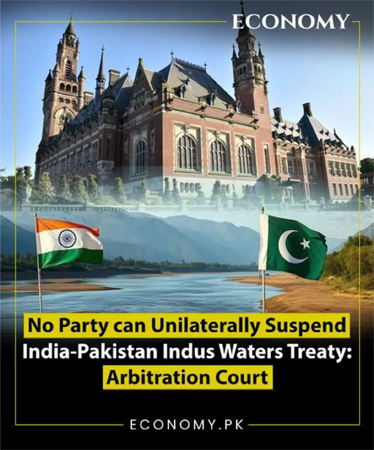
The UN findings corroborate Pakistan’s stance that countermeasures under international law cannot override human rights obligations. Arbitrary interference with river flows violates the rights to life, food, and an adequate standard of living. Furthermore, the Court of Arbitration reaffirmed in 2025 that the treaty remains valid and binding, leaving no legal room for unilateral abandonment.
Final Words
The erosion of the IWT is not merely a bilateral dispute; it is a global warning. In an era of climate uncertainty, the predictability provided by the treaty is more vital than ever. The treaty’s framework was designed to reduce political friction and stabilize flows amidst erratic weather patterns and melting Himalayan glaciers.
India carries the obligation to uphold international norms. Abandoning treaties and withholding hydrological data may offer short-term leverage, but it destroys the long-term credibility of regional governance.
For the stability of South Asia and the survival of millions downstream, the reinstatement of the Indus Waters Treaty is a humanitarian and strategic necessity.