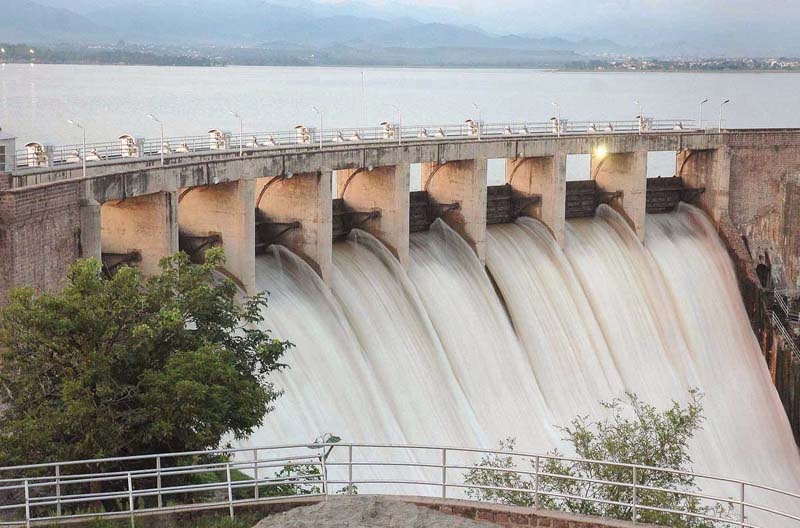
ISLAMABAD: Authorities have approved the construction of two new dams — Dotara and Shahdara — in a bid to ease chronic water shortages in Islamabad and Rawalpindi. Officials aim to complete both projects by December 2027, marking one of the most ambitious water-supply initiatives in recent years.
Read More: Severe water shortage hits Islamabad, CDA plans new two dams
The decision was taken at a meeting chaired by Interior Minister Mohsin Raza Naqvi, with senior federal and Punjab government representatives in attendance. Wapda shared preliminary feasibility findings for the Dotara Dam, to be built upstream of the Khanpur Dam, and was instructed to fast-track a detailed feasibility within two months.
According to initial estimates, Dotara Dam will be 122 metres high and 350 metres long, with the capacity to supply 72 million gallons per day (mgd) of water. Officials said the project’s gravity-based water supply makes it “ideal” for Islamabad, while its alignment covers a significant portion of Khanpur’s catchment area.
The tentative construction cost is around Rs40 billion, excluding land acquisition, and federal and Punjab governments will be asked to jointly finance the project. Participants also stressed the need for parallel upgrades, including leak control and replacement of old pipelines across the capital.
The meeting further approved the Shahdara Dam — a smaller project in the Margalla Hills — expected to supply 10 mgd at an estimated cost of Rs4 billion. Officials described both projects as short-term solutions that could be completed within two years, while longer-term mega projects such as the Ghazi Brotha/Indus River scheme remain under consideration.
Islamabad faces a widening demand gap as the Capital Development Authority currently supplies around 70 mgd from Simly Dam, Khanpur Dam and tube wells against a requirement of roughly 220 mgd. Rural areas largely depend on bore water or small schemes due to limited network coverage.
Read More: Drought alert: Pakistan’s major dams running dry
Officials indicated that the new dams — if delivered on schedule — could significantly improve water availability for the twin cities, where infrastructure upgrades and alternative supply sources have remained stalled for decades.