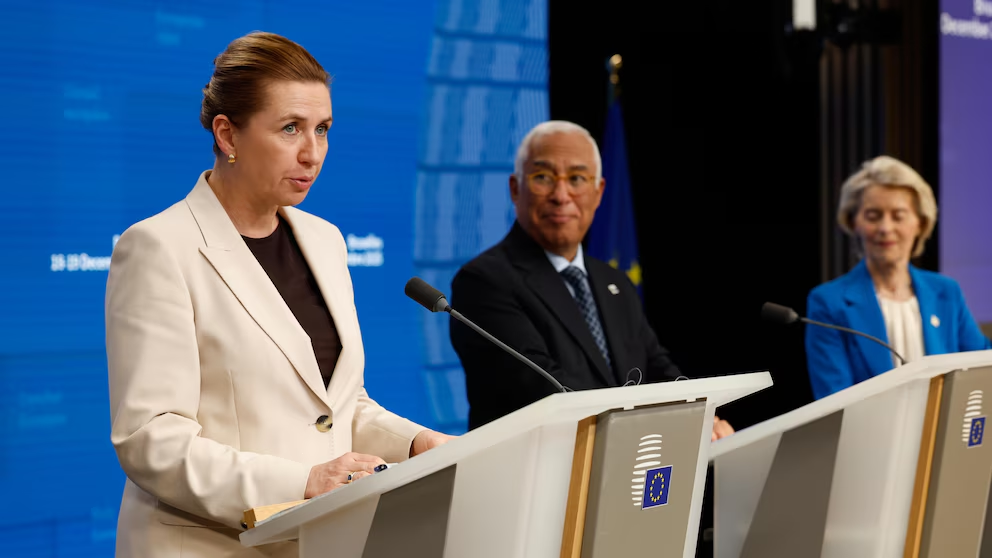
European Union leaders have agreed to provide 90 billion euros in funding to support Ukraine’s defence against Russia over the next two years, bypassing plans to use frozen Russian assets.
The EU will provide the money through a loan backed by its budget, while the European Commission will continue exploring a reparations loan based on Russian assets, which proved politically and legally complex to implement.
Initially, EU borrowing faced resistance as it required unanimity. Hungary’s Russia-friendly Prime Minister Viktor Orban opposed the plan, but Hungary, Slovakia, and the Czech Republic eventually agreed, provided it did not financially affect their countries.
Read more : Zelenskyy hails EU €90bn loan for Ukraine
Russian assets totaling 210 billion euros in the EU will remain frozen until Moscow pays war reparations to Ukraine. If Russia complies, Ukraine could then use the money to repay the EU-backed loan.
Leaders highlighted the urgency, warning that without immediate financial support, Ukraine could run out of funds by the second quarter of next year, potentially altering the course of its conflict with Russia.
Belgium, holding 185 billion euros of frozen Russian assets, raised concerns about legal and financial risks, making the use of these assets for immediate funding unworkable, leading to the adoption of the EU budget-backed loan instead.